
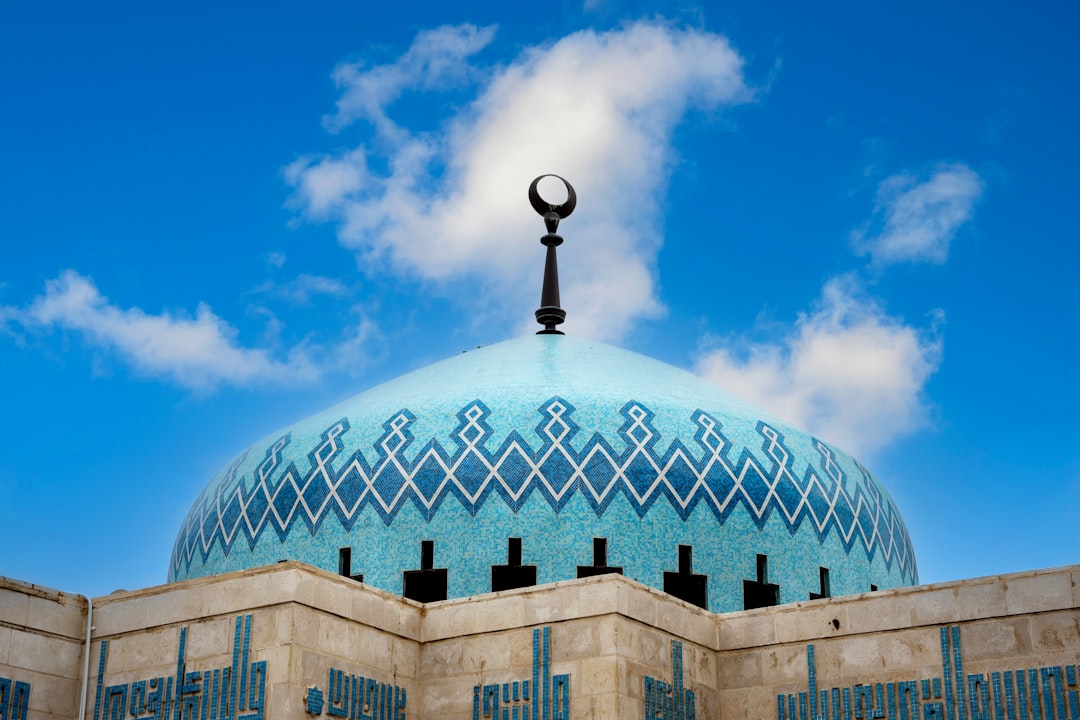

Located in the historic city of Irbid, the Ali bin Abi Talib Mosque is a place of worship that embodies Jordan's rich cultural heritage. Built during the Ottoman period, this mosque underwent significant renovation in 1998, expanding its area to about 600 square meters. The mosque is not only a place of prayer but also a symbol of the Islamic tradition in the country, attracting visitors and worshippers from various parts of Jordan.

The Ali bin Abi Talib Mosque stands out for its refined architecture and religious significance. It represents an important landmark for the local Muslim community and helps keep the historical memory of the city alive. Its presence in the heart of Irbid makes it a central element in the daily life of the citizens, reflecting the fusion of spirituality and culture.
Historical and Cultural Context
The Ali bin Abi Talib Mosque was built during a time when Jordan was under Ottoman rule, an era characterized by flourishing cultural and religious activity. The mosque is dedicated to Ali bin Abi Talib, cousin and son-in-law of the Prophet Muhammad, a figure of great importance in Islam. Its construction had a significant impact on the Muslim community, serving as a center for gathering and spirituality.
In addition to its religious function, the mosque is an example of Ottoman architecture, with details that reflect the artistic style of that period. The 1998 renovation preserved historical elements while enriching them with new features that enhance usability. This balance between past and present makes the mosque a place of great interest not only for worshippers but also for history and architecture enthusiasts.
What Stands Out About the Place
One of the most fascinating aspects of the Ali bin Abi Talib Mosque is its serene and contemplative atmosphere, inviting reflection. The spacious and bright interiors are decorated with elegant geometric patterns and Arabic calligraphy, creating an environment of beauty and spirituality. The mosque is surrounded by well-maintained gardens, offering an oasis of tranquility in the vibrant urban context of Irbid.
Moreover, the mosque's location in the city center makes it easily accessible, allowing visitors to immerse themselves in local daily life. It is common to see groups of people gathering to discuss, pray, or simply enjoy the beauty of the place. This social aspect makes the mosque not only a place of worship but also a cultural meeting point.
Visiting Experience
Visiting the Ali bin Abi Talib Mosque is an enriching experience for travelers, offering the opportunity to better understand Islamic culture and traditions. Entrance to the mosque is generally open to visitors, but it is advisable to respect the dress code by wearing appropriate clothing. Opening hours may vary, so it is helpful to check in advance.
During the visit, it is possible to observe daily religious practices, which can provide interesting insights into the spiritual life of the community. Additionally, the opportunity to interact with locals adds another dimension to the experience, allowing visitors to learn directly from those who live the Islamic culture firsthand.
Practical Information for Visitors
For those wishing to visit the Ali bin Abi Talib Mosque, it is advisable to plan the visit at a time of day when there are fewer crowds, to fully appreciate the beauty of the place. The mosque is located in an easily accessible area, with various public transport options available. It is also useful to have a guide or an app that provides historical and cultural details, thus enriching the experience.
Finally, don't forget to explore the rest of the city of Irbid, which offers many other cultural and historical attractions. By using the Secret World app, you can discover additional points of interest and deepen your travel experience in Jordan.


