
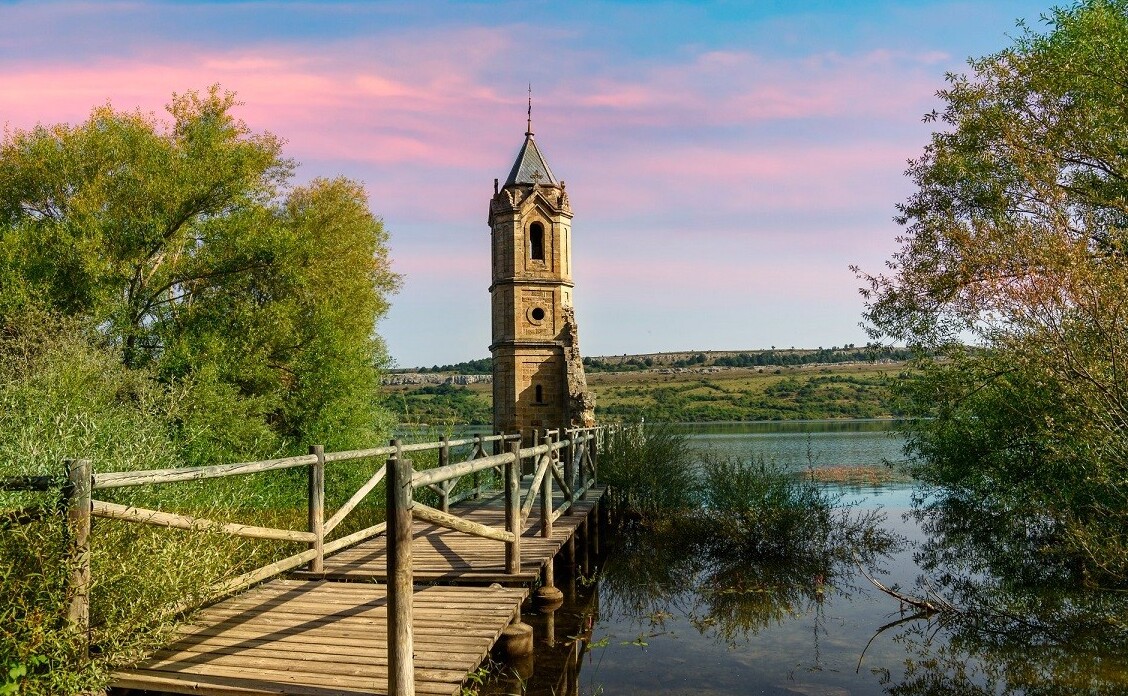

Nestled in the rolling hills of Campoo-Los Valles, the Ebro Reservoir, often referred to as the Cathedral of Fishes, is a hidden gem that captures the intersection of nature, history, and culture in northern Spain. Created in 1945 under the regime of Francisco Franco, this vast water body was designed to sustain the water supply for the surrounding towns. However, it is not just a reservoir; it is a liquid testament to the lives of the nine submerged villages, whose remnants lie beneath its shimmering surface.
History and Origins The history of the Ebro Reservoir is steeped in the mid-20th century, a period marked by significant socio-political changes in Spain. Commissioned by Franco in 1945, the reservoir was part of a broader strategy to enhance agricultural productivity and ensure a stable water supply for the region. The villages of Subijana, Villanueva, and others were submerged, yet some residents were relocated to new homes near the shore, preserving their community's essence. The underwater landscape is dotted with crumbling stone walls and forgotten streets, making it a haunting reminder of the past.
Art and Architecture While the reservoir itself is an engineering marvel, the true artistry lies in the remnants of the submerged villages. The architecture that can be glimpsed beneath the water showcases Romanesque and Gothic styles typical of the region. Structures like the Church of San Juan Bautista in Villar de Hoz are particularly notable, with stylized arches and intricate stonework that speak to a time when these communities thrived. On the shores, visitors can find modern sculptures and installations that celebrate the cultural heritage of the region, blending past and present into a unique artistic narrative.
Local Culture and Traditions The culture surrounding the Ebro Reservoir is vibrant and rich, marked by local customs and festivals that celebrate the land and water. One such event is the annual Fiesta de la Virgen de las Nieves, held in early August, where locals come together to honor their patron saint. Traditional music and dance fill the air, with vibrant attire and communal meals showcasing the region's culinary delights. The spirit of the community shines through in these gatherings, fostering a connection between the people and their historical roots.
Gastronomy The gastronomy of the Ebro Reservoir region is as diverse as its landscape. Visitors can savor traditional dishes such as Cocido Montañés, a hearty stew made with local beans, vegetables, and meats, or Sopa de Pescados, a fish soup that pays homage to the reservoir's aquatic heritage. The area is also known for its exceptional cheeses, particularly Queso de Nata, and artisanal breads that accompany meals. For those who enjoy local wines, the nearby Rioja region provides excellent pairings, enriching the culinary experience.
Lesser-known Curiosities Beyond its picturesque views, the Ebro Reservoir holds a treasure trove of stories. One fascinating aspect is the 'Cemetery of Villages', where visitors can explore the remains of the submerged towns through guided tours, often conducted by local historians who share poignant tales of life before the reservoir. Additionally, it is said that on particularly still mornings, the outlines of the submerged villages can be faintly seen beneath the water’s surface, creating an ethereal spectacle that is both haunting and beautiful.
Practical Visitor Information The best time to visit the Ebro Reservoir is during the late spring and early autumn months, when the weather is mild, and the natural beauty is at its peak. The area is accessible by car, with several viewpoints and hiking trails that offer stunning panoramas of the reservoir. Visitors should bring binoculars for bird-watching, as the region is home to diverse wildlife, including herons and eagles.
Exploring the Ebro Reservoir is an opportunity to connect with history, art, and nature in a uniquely Spanish setting. Each visit holds the promise of discovery, where the past whispers through the waters. For a personalized itinerary to make the most of your journey, consider using the Secret World app.


