
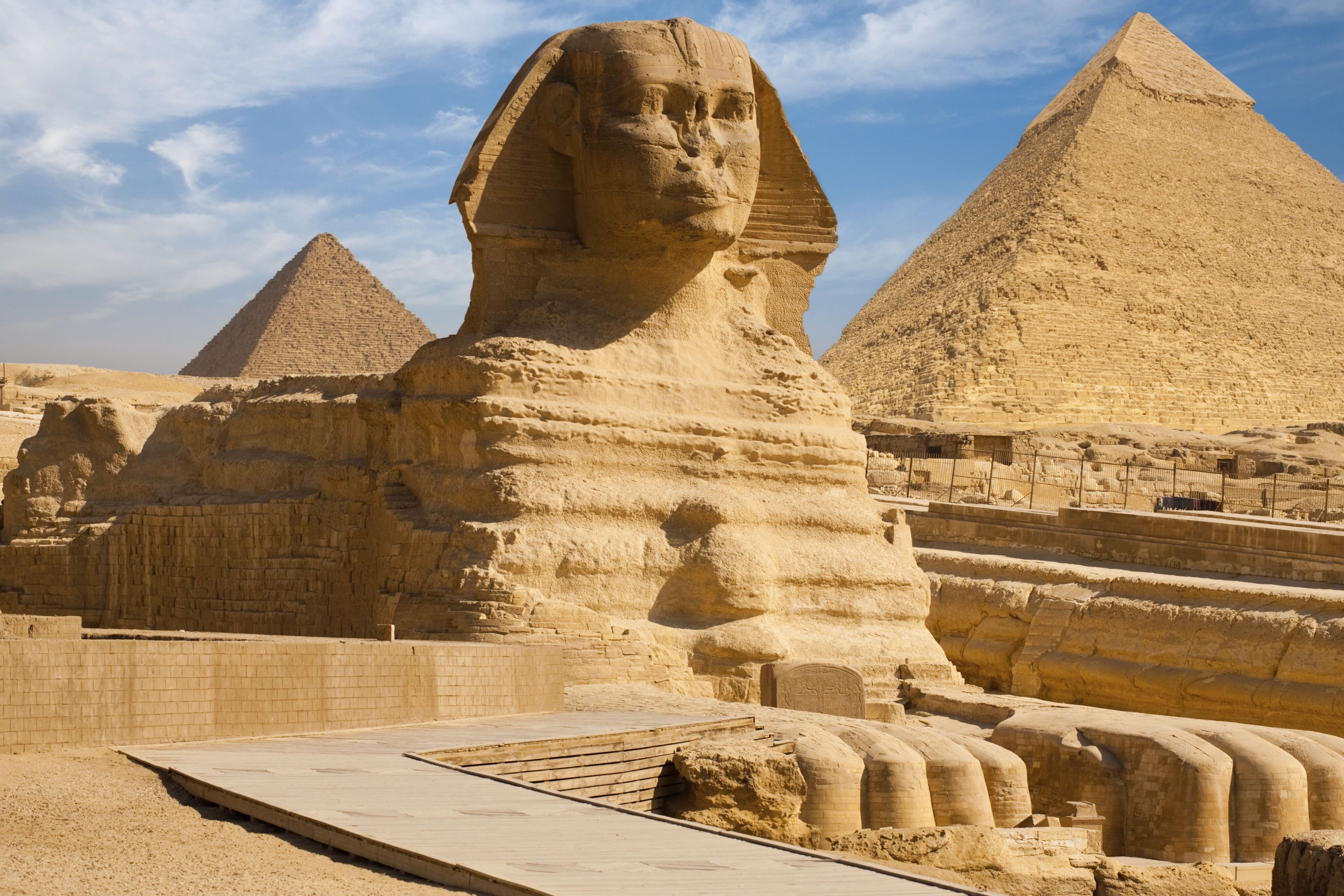

A colossal guardian of ancient mysteries, the Great Sphinx of Giza stands as a testament to Egypt's rich heritage. This iconic limestone sculpture, located in the Necropolis of Giza, is not only a marvel of engineering but also a significant cultural symbol that has captivated visitors for centuries.

History and Origins The origins of the Great Sphinx are shrouded in ancient mystery. Traditionally attributed to Pharaoh Khafre, who ruled during the Fourth Dynasty of the Old Kingdom around 2500 BCE, the Sphinx is believed to have been carved from the bedrock of the Giza plateau. This monumental statue represents the pharaoh's power and divine protection, serving as a guardian to the nearby Pyramids of Giza. Over the centuries, the Sphinx has witnessed significant historical events, including the rise and fall of empires, and has been a source of fascination for historians and archaeologists alike.
The Sphinx has endured the tests of time, weathering sandstorms and erosion, yet it remains a symbol of ancient Egypt's ingenuity. Several restoration efforts have taken place, notably in the 20th century, to preserve this architectural wonder for future generations.
Art and Architecture The Great Sphinx exemplifies the grandeur of ancient Egyptian art and architecture. Carved from limestone, it stands 73 meters long and 20 meters high, making it the largest monolithic statue in the world. The Sphinx's design features an intricately detailed head, which is believed to represent Pharaoh Khafre himself. Its proportions are stunning, with a head that reaches 4 meters in height, merging seamlessly with the powerful body of a lion.
The sculpture's architectural style embodies the principles of symmetry and balance prevalent in ancient Egyptian art. The Sphinx was originally plastered and painted, although much of this has worn away over millennia. The eyes, which appear to gaze eternally towards the east, are particularly striking, capturing the essence of the pharaoh's watchful presence.
Local Culture and Traditions The Great Sphinx is more than just a relic; it is deeply rooted in local culture and traditions. The area surrounding Giza bustles with life, hosting a variety of customs and festivals that celebrate Egypt's rich history. One such event is the Wafaa el Nil, an annual festival celebrating the Nile River's importance to Egyptian civilization. Locals gather to honor the river that has sustained life and culture for thousands of years.
Additionally, the Sphinx itself is an object of reverence, often featured in local folklore and traditions. Tales of its mystical powers and the secrets it guards continue to captivate the imagination of both residents and visitors.
Gastronomy A visit to Giza is not complete without indulging in local culinary delights. The region is known for dishes such as koshari, a hearty mix of lentils, rice, pasta, and topped with a spicy tomato sauce. Foul medames, a dish made from fava beans, is a popular breakfast choice among locals. For a sweet treat, try basbousa, a semolina cake soaked in syrup, often enjoyed with a cup of strong Egyptian tea.
Moreover, the vibrant markets near the Sphinx offer a variety of local spices and delicacies, allowing visitors to immerse themselves in the flavors of Egyptian cuisine.
Lesser-Known Curiosities While many tourists are drawn to the grandeur of the Sphinx, several lesser-known facts can enhance your visit. For instance, the Sphinx has suffered damage over the centuries, with its nose famously missing. The exact reason for its loss remains debated, with theories ranging from natural erosion to intentional vandalism by iconoclasts.
Moreover, the Dream Stele, erected by Pharaoh Thutmose IV in 1401 BCE, lies between the Sphinx's paws and tells the story of how he fell asleep near the statue and dreamed of becoming pharaoh. This stele is a fascinating insight into the Sphinx’s significance in ancient Egyptian politics and mythology.
Practical Visitor Information The best time to visit the Great Sphinx of Giza is during the cooler months, from October to April. Early mornings or late afternoons offer the most pleasant weather and stunning light for photography. Visitors should take time to explore the surrounding area, including the nearby Pyramids and the Giza Plateau.
When planning your visit, consider hiring a local guide who can provide rich historical context and help you navigate the site. Don't forget to bring water, wear comfortable shoes, and have your camera ready to capture the breathtaking views.
As you plan your journey through the wonders of Egypt, consider using the Secret World app to create a personalized itinerary that includes the majestic Sphinx.


