
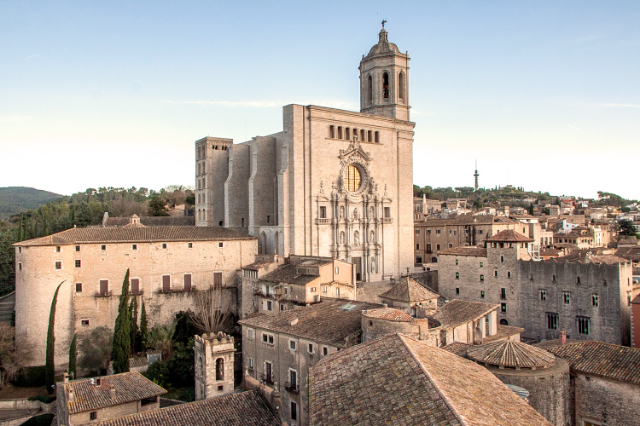

My first encounter in Girona was with the Església de Sant Feliu — the city’s oldest basilica and one of its most revered sacred sites. Nestled just outside the ancient walls of the old town, this church holds within it the earliest traces of Christianity in Girona, and its stones speak quietly of faith, resilience, and history.
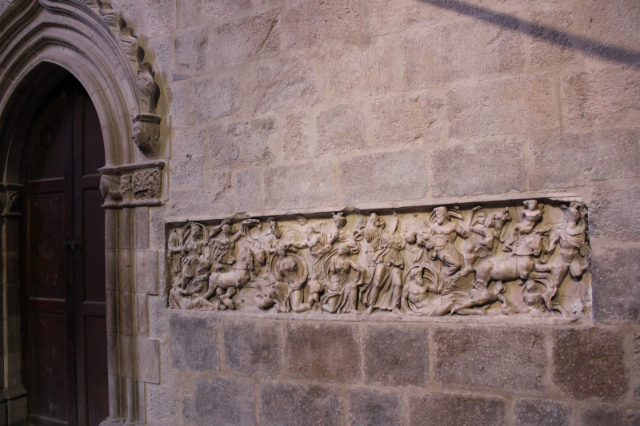
Originally built in the early Christian period, the church has endured centuries of destruction, rebuilding, and transformation. As a result, its exterior resembles a fortress, with merlon-like battlements under the roofline giving it a defensive, almost military appearance — a striking contrast to the spiritual calm found within.
????️ A Blend of Styles: Gothic, Romanesque, and Baroque
While the main façade and staircase are unmistakably Baroque, the interior reveals a much older soul: a solemn blend of Gothic and Romanesque architecture, with high vaults, sculpted chapels, and soft natural light filtering through narrow windows.
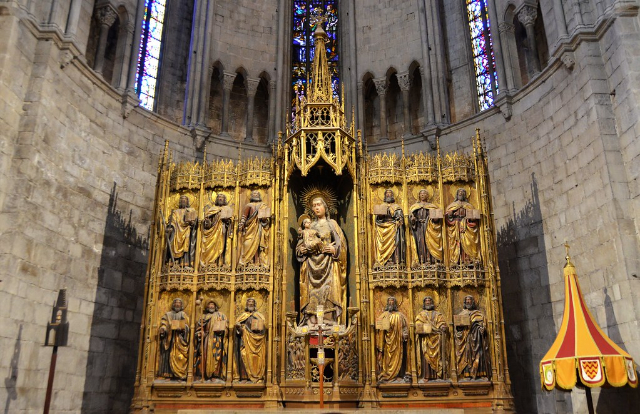
The church is also home to numerous sarcophagi, some dating back to the 3rd and 4th centuries. Most notably, it holds the Sepulchre of Saint Narcís, the city’s patron and martyr bishop, venerated since the 4th century.
???? Local Legend: The Lioness of Girona
At the base of the staircase leading to the church, you’ll find one of Girona’s quirkiest and most beloved symbols: La Lleona, a stone sculpture of a lioness climbing a column. According to local legend, touching (or kissing!) the lioness’s bottom brings good luck — a humorous tradition that visitors and locals alike continue to this day.
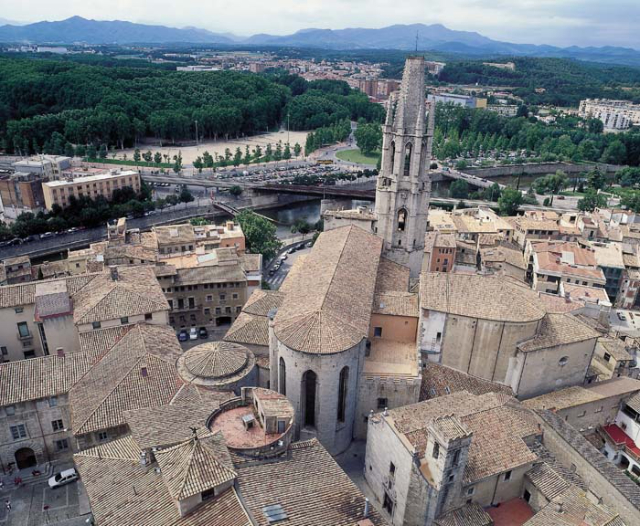
More than just a religious site, Església de Sant Feliu is a mosaic of Girona’s spiritual, architectural, and legendary heritage — a place where history and superstition meet beneath ancient vaults and timeless stone.


