
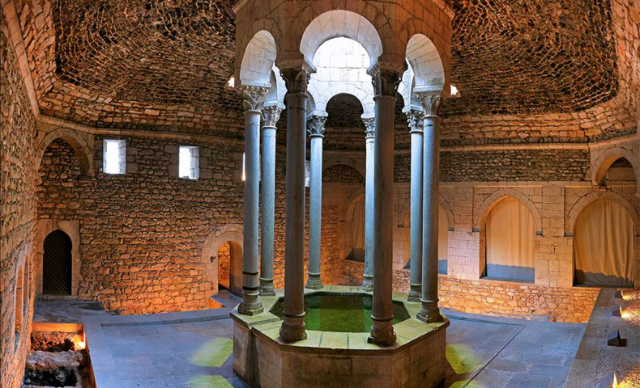

Tucked away within Girona’s medieval quarter lies one of the city’s most enchanting historical gems: the Arab Baths, or Banys Àrabs. Despite the name, this remarkably preserved structure is actually a Romanesque bathhouse dating back to the 12th century, inspired by a blend of Roman, Muslim, and Jewish bathing traditions that once coexisted in this region.
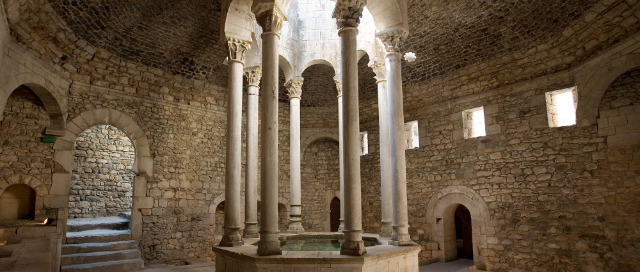
Built in a time when Girona was a vibrant crossroads of cultures, the baths were designed not just for hygiene, but for ritual, relaxation, and social gathering. Today, they offer a fascinating glimpse into the medieval lifestyle — and a striking example of architectural elegance in stone.
????️ A Journey Through Five Ancient Chambers
The bathhouse is divided into five distinct rooms, each with its own purpose and ambiance:
-
The apodyterium (changing room), with a central octagonal pool and stunning domed roof supported by gracefully carved columns and capitals
-
The frigidarium, a cool chamber
-
The tepidarium, or warm room
-
The caldarium, a hot steam chamber
-
And finally, the furnace and boiler room, which once provided the essential heat and steam
????️ A Masterpiece of Light and Balance
What truly captivates visitors is the central hall, where soft natural light filters down through small oculi in the dome, casting reflections over the water and stone. The symmetry of the pillars and the silence of the space evoke a sense of tranquility, almost sacred in nature.
These baths may no longer function, but their architecture still whispers the rituals of the past. They are not only one of the best-preserved examples of medieval bathhouses in Europe, but also one of the most atmospheric — a place where time seems suspended.


