
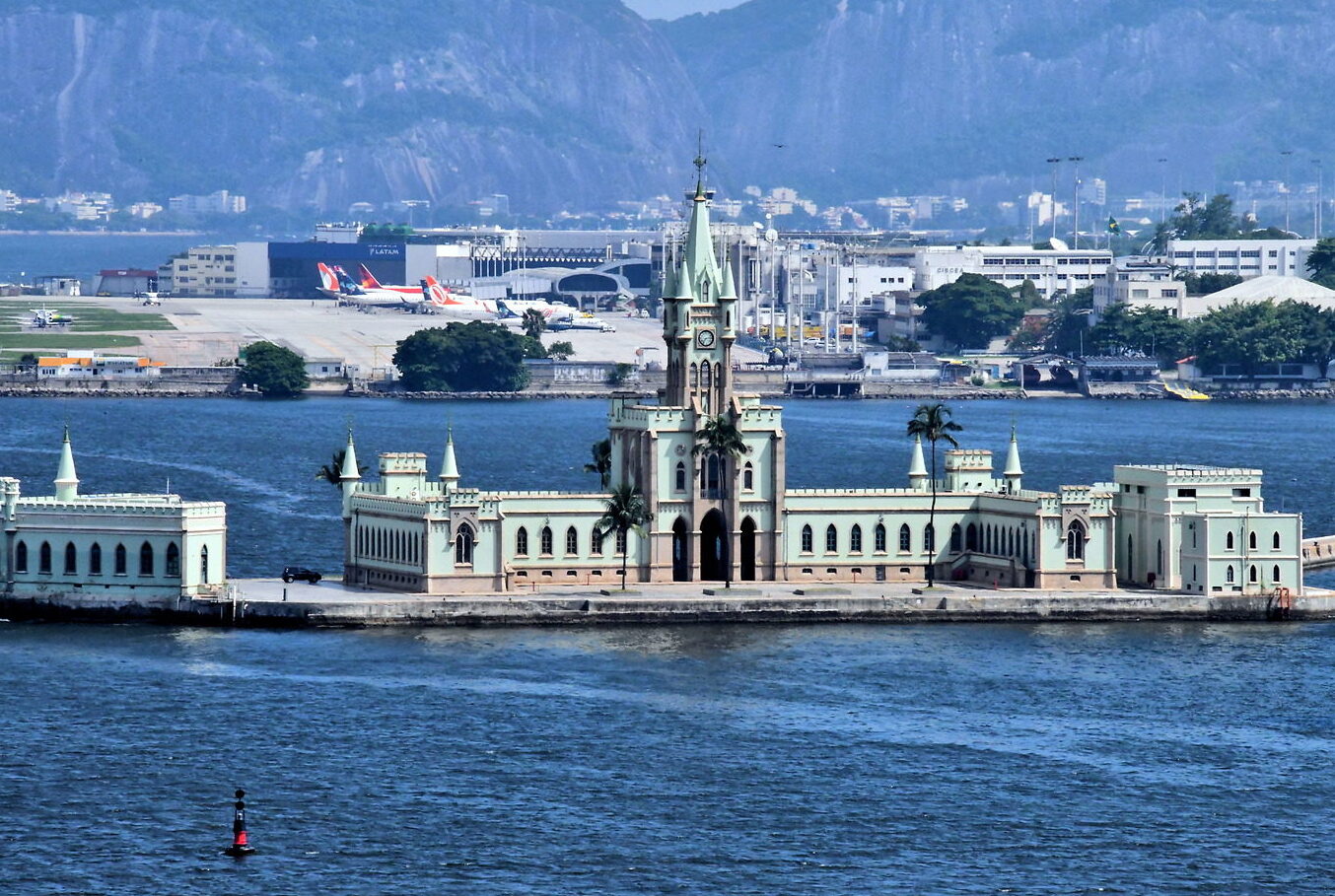

Nestled in the shimmering waters of Guanabara Bay, the Fiscal Island Palace (Palácio da Ilha Fiscal) stands as a stunning testament to Brazil's imperial past. Often referred to as the “little castle,” this neo-Gothic palace was commissioned by Dom Pedro II in the 19th century, reflecting both architectural grandeur and historical significance. Its construction began in 1884 and was completed in 1889, just before the end of the Brazilian Empire, marking it as a symbolic piece of the nation’s transition into a republic.
The palace was initially intended to serve as a customs house, strategically positioned to oversee maritime trade. However, it quickly became a venue for various significant events, including the last official ball of the Brazilian monarchy in 1889, just weeks before the republic was proclaimed. The opulent interiors and meticulously landscaped gardens make it a prime example of Brazilian Romanticism in architecture.
The architectural style of the palace is a blend of neo-Gothic and other European influences, evident in its pointed arches, intricate carvings, and ornate decorations. The building's façade, adorned with striking turrets and a captivating color palette, makes for a picturesque view against the backdrop of the bay. Inside, visitors can marvel at the grand ballroom, which features stunning Murano glass chandeliers and intricate wooden panels that tell stories of Brazil's vibrant past. The palace also houses a remarkable collection of artworks, including portraits of the imperial family and historical figures, adding to its artistic significance.
Local culture is deeply intertwined with the heritage of Ilha Fiscal. The island's history is celebrated through various community events and cultural activities. One of the notable traditions includes the annual Cultural Festival of Ilha Fiscal, where music, dance, and art come together to celebrate Brazilian heritage. Visitors often witness local artists showcasing their talents, from traditional samba performances to contemporary art installations, reflecting the island's vibrant culture.
When it comes to gastronomy, Ilha Fiscal offers a taste of Rio's culinary delights, although the palace itself does not host restaurants. However, nearby, one can find local eateries serving traditional dishes such as feijoada, a hearty black bean stew with pork, and pão de queijo, delicious cheese bread that is a favorite among locals. The island's proximity to the bay also means fresh seafood is a staple in the area, with dishes like moqueca (a fish stew) being particularly popular.
For those keen on uncovering lesser-known curiosities, Ilha Fiscal is full of surprises. One intriguing fact is that the palace's design included a lighthouse that was operational until the 20th century, guiding ships safely through the bay. Additionally, the island is rumored to be haunted; stories abound of ghostly apparitions of past dignitaries wandering the halls, adding an air of mystery to its already rich history.
When planning a visit to Ilha Fiscal, timing is crucial. The best months to explore are from May to October, when the weather is cooler and drier, making for a more enjoyable experience. Guided tours are available, providing insights into the palace's history and architecture. Be sure to take advantage of the stunning views from the palace’s terrace, where you can see the breathtaking skyline of Rio de Janeiro.
Practical tips include arriving early to avoid the crowds and ensuring you book your tickets in advance, especially during peak tourist seasons. Don’t forget to bring a camera; the picturesque setting of Ilha Fiscal offers ample opportunities for stunning photographs.
In conclusion, the Fiscal Island Palace is not just a beautiful landmark; it is a cultural treasure that encapsulates the spirit of Rio de Janeiro’s imperial history. To truly appreciate its charm and plan your visit, consider using the Secret World app for a personalized itinerary. Experience the magic of Ilha Fiscal firsthand.


