
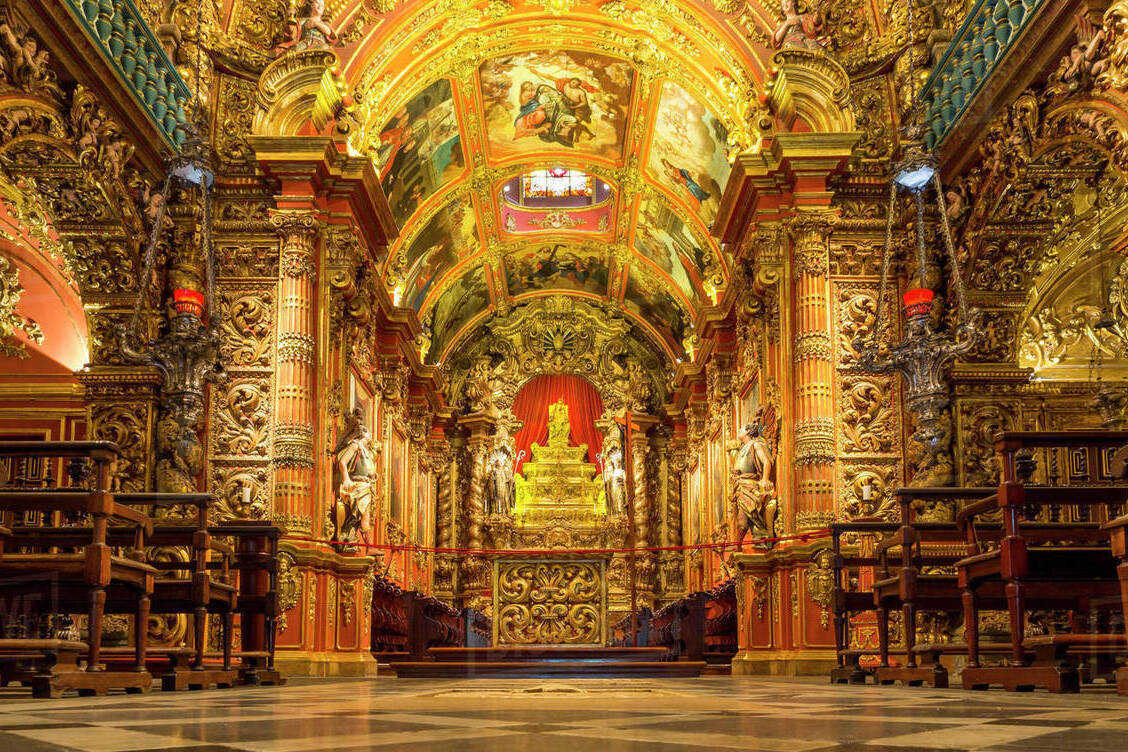

Perched majestically on Morro de São Bento, the Mosteiro de São Bento is a testament to Brazil's rich colonial heritage. This stunning monastery, constructed between 1617 and 1641, stands as one of the finest examples of Baroque architecture in the country. Its exterior, characterized by a simple yet imposing facade, belies the lavish interior adorned with gold leaf, intricate wood carvings, and masterful paintings. Visitors are often captivated by the historic treasures crafted by skilled artisans such as Frei Domingos da Conceição and Alexandre Machado, alongside the exquisite works of José de Oliveira Rosa that grace its walls.

The origins of the Mosteiro de São Bento can be traced back to the arrival of the Benedictine monks in Brazil during the early 17th century. The monastery was not only a spiritual haven but also played a crucial role in the cultural and educational landscape of the region. Over the years, it has witnessed significant events, including the rise of the Benedictine order in Brazil and the influence of the church on local society.
Architecturally, the monastery is a striking example of Portuguese Baroque style, with its elaborate altars and decorative motifs reflecting the opulence of the period. The gold-plated altars, carved wood details, and stunning chapel are must-sees for art enthusiasts and history buffs alike. The interior is a harmonious blend of artistic expression and spiritual devotion, making it a significant cultural landmark.

Local culture is deeply intertwined with the Mosteiro de São Bento. The Benedictine monks continue to contribute to the community, hosting various events and engaging with local traditions. One of the most notable customs is the celebration of Benedictine feasts, which attract both locals and visitors. These events showcase traditional music, dance, and culinary delights, allowing attendees to experience the rich tapestry of Brazilian culture.
Speaking of culinary experiences, the region surrounding the monastery offers a variety of local dishes that reflect its Portuguese heritage. Feijoada, a hearty black bean stew traditionally served with rice and orange slices, is a staple. Additionally, pastéis—crispy pastries filled with cheese or meat—are popular snacks among visitors. For those looking to quench their thirst, the local cachaça—a Brazilian spirit made from sugarcane—is an essential accompaniment to any meal.
For curious travelers, there are lesser-known stories that add depth to the monastery's allure. One such tale involves the legend of the sacred relics believed to be housed within its walls, said to have miraculous healing powers. Additionally, the monastery’s library contains ancient texts and manuscripts, some dating back to the 17th century, offering a glimpse into the scholarly pursuits of the monks.
The best time to visit Mosteiro de São Bento is during the dry season, from May to September, when the weather is pleasant, and the views from Morro de São Bento are breathtaking. Visitors should take time to wander through the monastery’s peaceful gardens, which provide a serene backdrop for reflection. Also, be sure to catch one of the Gregorian chant performances, where the monks sing in harmony, creating a hauntingly beautiful atmosphere that resonates throughout the monastery.
For those planning their visit, it’s advisable to check the schedule for mass and special events, as they can enhance the experience significantly. Photography is allowed in many areas, but visitors should be respectful of the sacred nature of the space.
As you stand before the gilded altars and absorb the tranquil ambiance of the Mosteiro de São Bento, you’ll find that this historical site is not just a monument; it’s a living testament to Brazil's spiritual and cultural journey. To ensure you experience all the hidden gems in the area, consider using the Secret World app to plan a personalized AI itinerary tailored to your interests.


