

In the heart of Tuscany, Florence stands as a testament to human creativity and ingenuity, a city where the echoes of the Renaissance still resonate through its cobblestone streets. As the birthplace of this pivotal cultural movement, Florence offers a profound journey through time, where history and art coalesce into an experience that is nothing short of transformative.

Florence's origins date back to 59 BC when it was established by Julius Caesar as a settlement for veteran soldiers, known then as Florentia. Strategically positioned along the Arno River, it grew into a bustling trade hub during the Middle Ages. However, it was the 14th and 15th centuries that marked Florence's meteoric rise as a center of Renaissance thought and innovation. Guided by the patronage of the Medici family, the city nurtured some of the most brilliant minds and artists of the time, including Leonardo da Vinci, Michelangelo, and Dante Alighieri.
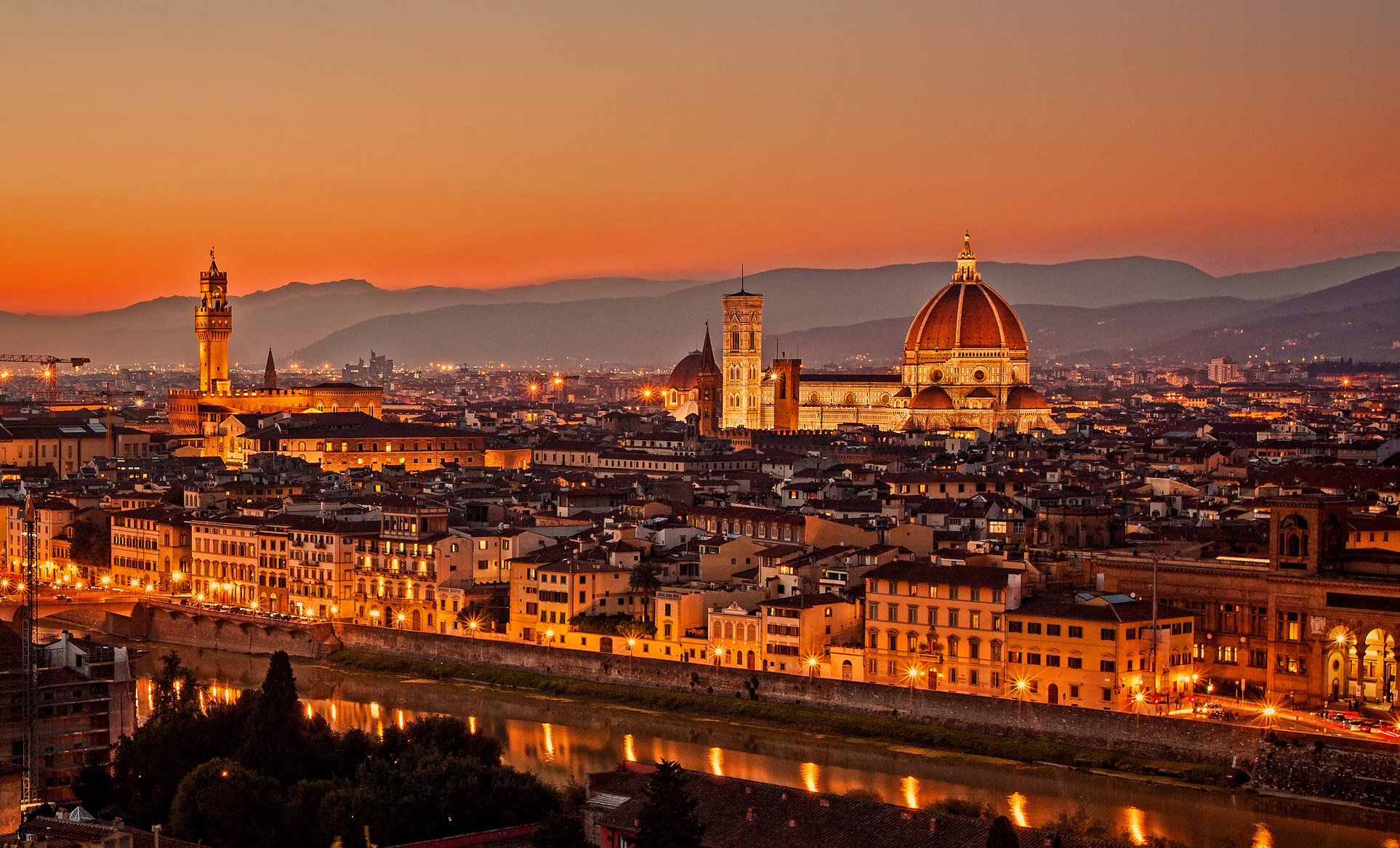
As you wander through Florence, the grandeur of its architecture is undeniable. The skyline is dominated by the iconic Duomo di Firenze, or Cathedral of Santa Maria del Fiore, with its breathtaking dome engineered by Filippo Brunelleschi. This structure is a masterclass in Gothic architecture, while the nearby Baptistery of San Giovanni boasts stunning bronze doors, aptly called the "Gates of Paradise" by Michelangelo. Art enthusiasts will find nirvana in the Uffizi Gallery, where the works of Botticelli, Titian, and Raphael are on display, offering a rare chance to witness the evolution of Western art.

Cultural vibrancy in Florence is not limited to its museums and galleries; it thrives in its traditions and festivals. The Scoppio del Carro (Explosion of the Cart), a centuries-old Easter ritual, fills the streets with pyrotechnics and pageantry. Meanwhile, the Calcio Storico, a historic football match played in Piazza Santa Croce, combines sport with medieval costume, reflecting the city's deep-rooted traditions.
Florentine gastronomy is a feast for the senses, steeped in simplicity and tradition. Bistecca alla Fiorentina, a succulent T-bone steak, is a must-try for meat lovers, best accompanied by a glass of robust Chianti. Sweet cravings can be satisfied with cantucci dipped in Vin Santo, a delightful ending to any meal. The city's bustling markets, such as Mercato di Sant'Ambrogio, offer fresh produce and local delicacies, perfect for a midday snack.
Beyond the well-trodden paths, Florence harbors lesser-known gems. The Vasari Corridor, an elevated passageway linking Palazzo Vecchio to Palazzo Pitti, offers a unique perspective on the city, though access is limited to special tours. Another hidden treasure is the San Marco Museum, where the serene cells of the Dominican monks still hold frescoes by Fra Angelico, providing a quiet retreat from the city's hustle.
For those planning a visit, the best time to explore Florence is during the spring months of April to June, or in the fall from September to October, when the weather is pleasant and the tourist crowds are thinner. To truly capture the essence of the city, consider taking a leisurely stroll through the Oltrarno district, where local artisans keep traditional crafts alive. Be sure to climb the Piazzale Michelangelo for a panoramic view of the city, especially at sunset when the golden light bathes the cityscape.
Florence beckons travelers with its rich tapestry of history, culture, and art. Every stone, every painting, every dish tells a story of a city that not only witnessed the rebirth of art and science but continues to inspire the world with its timeless beauty and enduring legacy.


