
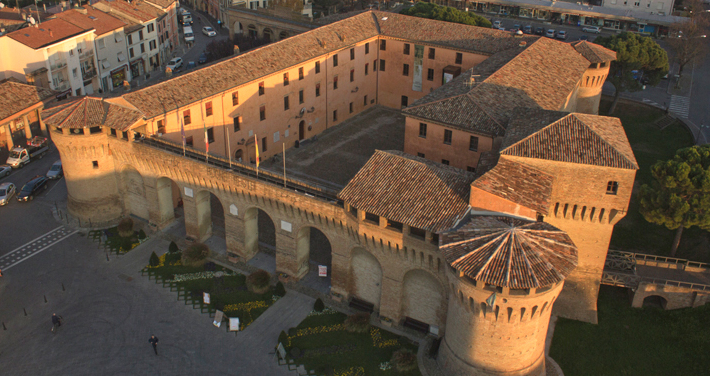

The Fortress of Forlimpopoli stands as a silent sentinel over the small town that cradles its history in the heart of the Emilia-Romagna region of Italy. Built by Cardinal Egidio Carrilla de Albornoz in the latter half of the 14th century, this fortress is not just a structure but a testament to the turbulent history and cultural richness of the area. It is here that the renowned gastronome Pellegrino Artusi was born, whose influential work, *"Science in the Kitchen and the Art of Eating Well,"* transformed Italian cuisine.
The fortress itself is a remarkable example of medieval military architecture. With its quadrangular plan and mighty round towers, it dominates the old town, providing a striking contrast to the quaint streets below. The surrounding moat, now a tranquil reminder of its defensive past, enhances its imposing presence. The fortress has served various functions throughout its history, including housing the Town Hall and the Civic Archaeological Museum "Tobia Aldini," which showcases artifacts from the Lower Paleolithic era through to the Renaissance.
Historically, Forlimpopoli has been a site of strategic importance. Its location near the ancient Roman road, the Via Aemilia, made it a crucial point for trade and military movements. The fortress itself has witnessed significant events, including the infamous "Passatore" gang’s raid in January 1851, which is now commemorated in the local theatre named after Giuseppe Verdi. This rich tapestry of events is what makes the fortress not just a relic but a vibrant part of the town’s living history.
In terms of art and architecture, the Fortress of Forlimpopoli is a prime example of Gothic military architecture, characterized by its robust walls and imposing towers. The blend of functionality and artistry is evident in the intricate stonework and the strategic placement of the towers, which provided panoramic views of the surrounding countryside. Visitors can appreciate various artistic elements that reflect the medieval period, although the fortress's primary focus remains on its historical significance rather than ornate decorations.
Forlimpopoli's local culture thrives through its traditions and festivals, many of which celebrate its rich history and culinary heritage. One of the town's most beloved events is the Sagra del Pignoletto, a wine festival that showcases the region's celebrated Pignoletto wine. This festival typically occurs in late spring and attracts visitors eager to taste local delicacies paired with the region’s finest wines. The town also honors Pellegrino Artusi with various culinary events that highlight traditional recipes, allowing locals and tourists alike to indulge in the flavors that shaped Italian cuisine.
When it comes to gastronomy, Forlimpopoli is a treasure trove of culinary delights. The local cuisine is deeply influenced by the traditional recipes immortalized by Artusi. Expect to find dishes like tagliatelle al ragù, a classic pasta dish that embodies the essence of Romagna, along with piadina, a flatbread often stuffed with various fillings such as cheese, cured meats, and vegetables. Wine enthusiasts will appreciate the local Sangiovese and Pignoletto, both of which complement the area's hearty dishes beautifully.
Curiosities abound in this charming town. For instance, the Civic Archaeological Museum houses not only items from ancient times but also some surprising artifacts, including remnants of ancient Roman mosaics and relics from the medieval period that showcase the evolution of art in the region. Additionally, the fortress is said to be haunted by the spirits of its past, with local legends hinting at ghostly figures seen wandering its grounds, particularly during the quiet nights.
For those planning a visit, the best time to explore Forlimpopoli is during the spring and early autumn months. The weather is mild, perfect for strolling through the picturesque streets and enjoying al fresco dining. To fully appreciate the fortress, it’s advisable to reserve a guided tour, allowing you to delve into its storied past while gaining insights from knowledgeable locals.
Be sure to take your time exploring the fortress’ grounds, looking for hidden details like the original stonework or the remains of the moat. Don't miss the chance to visit the Cinema-Theatre "Giuseppe Verdi," where you can catch a performance or simply soak in the historical ambiance of the space.
For an enriched experience that captures the essence of Forlimpopoli, consider using the Secret World app to craft a personalized itinerary.


