
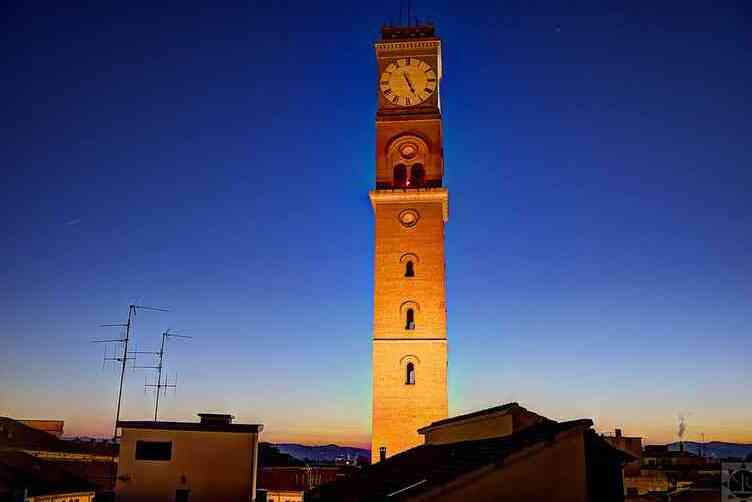

Rising proudly behind the Town Hall in the heart of Forlì, the Civic Tower—also known as the municipal tower or clock tower—is more than just an architectural landmark; it is a poignant symbol of the city's rich history and municipal identity. First erected in the 13th century, its towering presence has witnessed countless historical events, including the tumultuous periods of the Middle Ages and the Renaissance, all while serving as a beacon of civic pride.
The origins of the Civic Tower trace back to a time when Forlì was emerging as a significant political center. Initially built in 1250, the tower was designed in the Romanesque style, characterized by its robust structure and minimal ornamentation. It stood as a testament to the growing power of the Aldobrandini family, who ruled the region. Over the centuries, the tower underwent various modifications, reflecting the architectural trends of different eras. In 1944, during the retreat of the Nazis, the tower was tragically demolished, leaving a void in the city's skyline and history.
The reconstruction of the tower, completed in the 1970s, aimed to restore the historical silhouette of Forlì. The new structure, while modern in its materials, was designed to echo the original Romanesque features, ensuring that the spirit of the past lived on. Visitors today can admire its elegant lines, the clock that proudly ticks away the hours, and the bell that tolls with a resonant echo through the city.
Art and architecture intertwine beautifully around the Civic Tower. The adjacent Town Hall, or Palazzo Comunale, complements the tower with its Gothic influences and intricate details. Inside, visitors can find frescoes and artworks that narrate the story of Forlì through the ages, including pieces by renowned local artists. The surrounding piazza often serves as a stage for local events and gatherings, further enhancing the tower's role as a focal point of community life.
In terms of local culture and traditions, the Civic Tower is not just a monument but a hub of activity and celebration. The Fiera di San Mercuriale, held annually in early October, honors the patron saint of Forlì and features stalls, local delicacies, and cultural performances that draw visitors from across the region. The tower often serves as a backdrop for these festivities, reinforcing its role as a symbol of unity and local pride.
Gastronomy in Forlì is a delightful aspect of its cultural fabric. The region is known for its rich culinary heritage, where traditional dishes reflect the agricultural bounty of Emilia-Romagna. Visitors should not miss trying Piadina, a thin flatbread often stuffed with local cheeses and cured meats, or Passatelli, a unique pasta made with breadcrumbs and eggs, often served in broth. Pair your meal with a glass of Sangiovese, a red wine that embodies the essence of the region.
For those intrigued by lesser-known curiosities, the Civic Tower has its share of secrets. Legend has it that the tower's bell was cast using metal from the weapons of defeated enemies, symbolizing victory and resilience. Moreover, many locals believe that if you make a wish while standing at the base of the tower, it is destined to come true—a tradition that adds a mystical charm to this historical landmark.
When considering the best time to visit the Civic Tower, spring and early autumn offer the most pleasant weather, perfect for exploring Forlì’s vibrant streets. Early mornings or late afternoons are ideal for avoiding the crowds and enjoying a serene experience. Look for guided tours that often include access to the inside of the Town Hall, providing deeper insights into the tower's significance.
In conclusion, the Civic Tower of Forlì is not merely a structure; it encapsulates the essence of this enchanting Italian city. Its historical, cultural, and culinary treasures await those willing to explore beyond the surface. For a personalized itinerary that allows you to discover the hidden gems of Forlì, consider using the Secret World app.


