
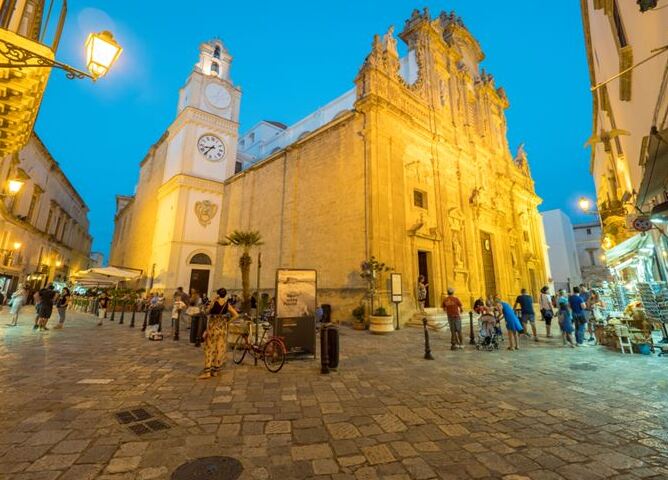

In the enchanting coastal town of Gallipoli, nestled in the heart of Puglia, the Cathedral of Saint Agata stands as a testament to centuries of faith and artistic expression. This magnificent structure, completed in 1629, is not only the most significant example of Baroque architecture in Gallipoli but also a cornerstone of the town's historical and cultural identity.
The origins of the cathedral trace back to an earlier church dedicated to Saint John Chrysostom, which dates to the 11th century. By 1126, this church was repurposed to honor Saint Agata, the revered patron saint of Gallipoli. Unfortunately, the original structure succumbed to the ravages of time and was ultimately destroyed, paving the way for the magnificent cathedral we see today.
As you approach the cathedral, its stone façade immediately captivates with intricate carvings and sculptures. Statues depicting Saint Agata and other saints adorn the exterior, inviting visitors to explore the sanctity within. The building’s design follows the traditional Latin cross layout, featuring three spacious naves separated by two rows of majestic Doric columns. The altar, composed of striking polychrome marble, serves as the focal point of the interior, while the two side aisles house 12 minor altars, each embellished with fine artistic details.
The artistic brilliance of the cathedral can be attributed to several notable figures. Francesco Bischettimi and Scipione Lachibari, following the drawings of Giovan Bernardino Genuino, played pivotal roles in its creation. The interior decorations, particularly the altars, are the work of Giovanni Andrea Coppola (1597-1659), a native of Gallipoli whose talent contributed significantly to the cathedral’s artistic heritage. His paintings breathe life into the sacred space, enhancing the spiritual experience of all who visit.
Beyond its architectural grandeur, the Cathedral of Saint Agata is deeply woven into the cultural fabric of Gallipoli. The town comes alive in early February during the Feast of Saint Agata, a vibrant celebration that honors its patron saint. Locals participate in a series of processions, with the statue of Saint Agata being paraded through the streets, accompanied by music, prayers, and a palpable sense of community. This festival not only highlights the town’s devotion but also showcases traditional Puglian customs, from food offerings to folk performances.
Speaking of food, Gallipoli is renowned for its rich culinary traditions, many of which are influenced by the region's maritime heritage. Visitors can indulge in local delicacies such as friselle, a twice-baked bread topped with fresh tomatoes and olive oil, and purpu alla pignata, a savory octopus dish simmered with spices. Pair these with a glass of Primitivo di Manduria, a robust red wine that embodies the essence of Puglian viticulture, and you have a dining experience that is truly unforgettable.
For those who think they know all about Gallipoli, the cathedral holds a few lesser-known curiosities. One fascinating detail is the relics of saints housed within its walls. These sacred artifacts draw not only the faithful but also history enthusiasts eager to learn more about the town's spiritual past. Additionally, the cathedral’s bell tower, which rises impressively above the town's skyline, offers panoramic views of Gallipoli and the surrounding coastline — a hidden gem for photographers and nature lovers alike.
If you’re planning a visit to the Cathedral of Saint Agata, timing is key. The best time to explore this architectural marvel is during the spring and early autumn months when the weather is mild, and the crowds are manageable. Arriving early in the day or later in the afternoon allows for a quieter experience, giving you the space to appreciate the intricate details of the architecture and the serene atmosphere of the interior.
As you wander through the cathedral, take a moment to absorb the spiritual ambiance and reflect on the generations that have come before you, each adding their own thread to the rich tapestry of Gallipoli’s history. Don’t forget to look for the small chapel dedicated to Saint Agata, where you may find locals lighting candles, a simple yet profound reminder of faith and community.
To make the most of your journey through this captivating town, consider using the Secret World app to craft a personalized itinerary that unveils the best of Gallipoli and its treasures.


