
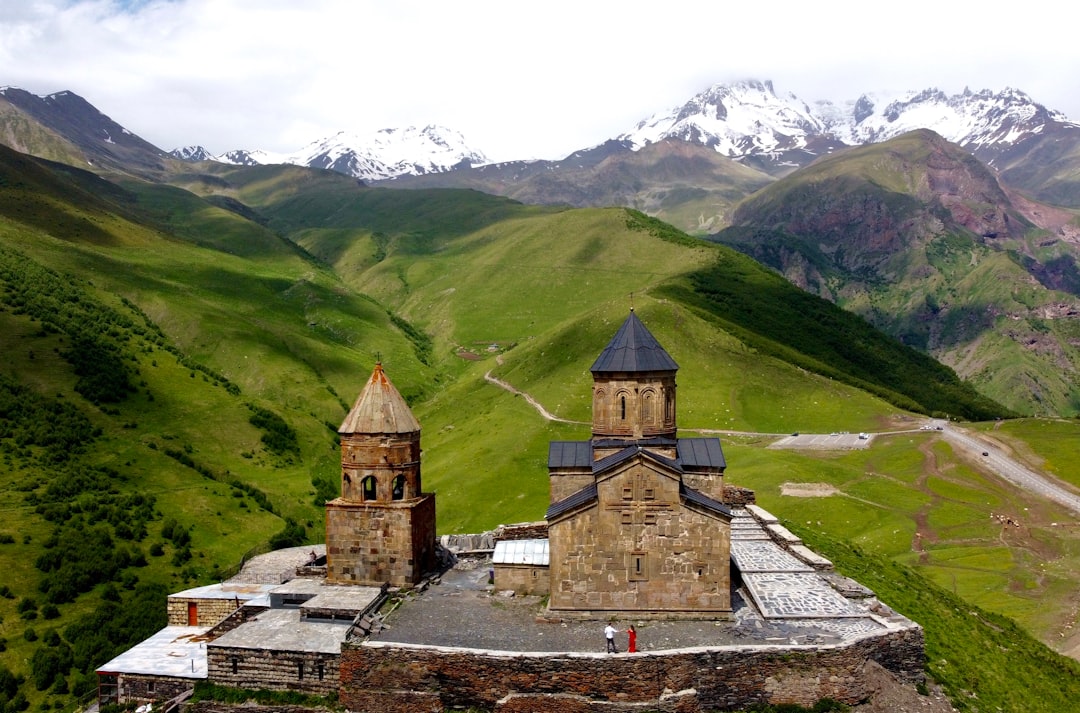

The sound of footsteps echoes amplified between the walls of living rock, and the air carries with it a scent of damp stone and candle wax. The Geghard Monastery, nestled in the gorge of the Azat River in central Armenia, is not simply a medieval building: it is a complex literally carved into the mountain, where the rock-cut chambers open like sacred caves illuminated by thin rays of filtering light.
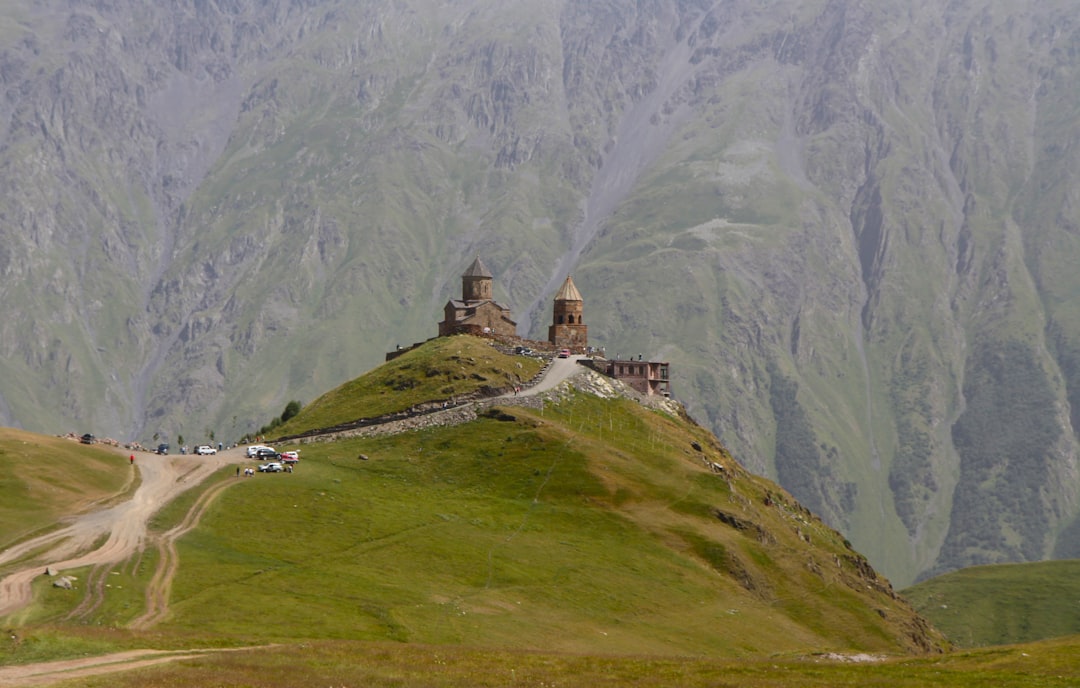
Recognized as UNESCO World Heritage Site in 2000, along with the site of Aziz, Geghard represents one of the most extraordinary examples of medieval Armenian architecture. Its original name was Ayrivank, which means "monastery of the cave," but over the centuries it took its current name from the spear — geghard in Armenian — which according to tradition wounded Christ's side during the crucifixion and which, according to legend, was brought here by the apostle Thaddeus.
A construction between rock and sky
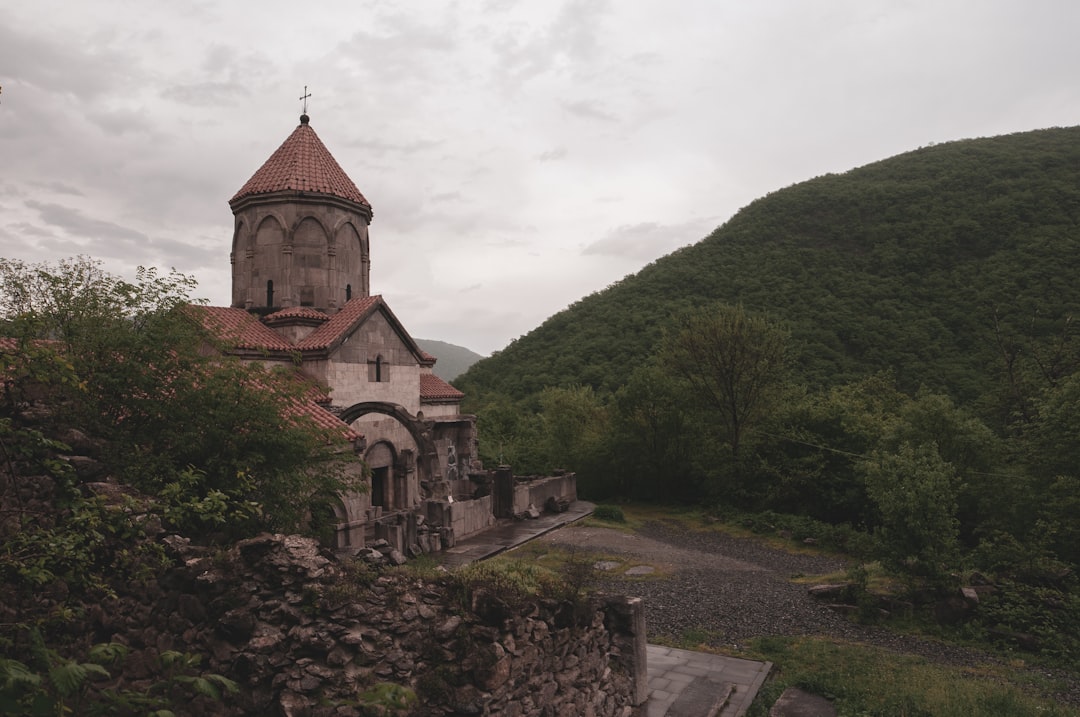
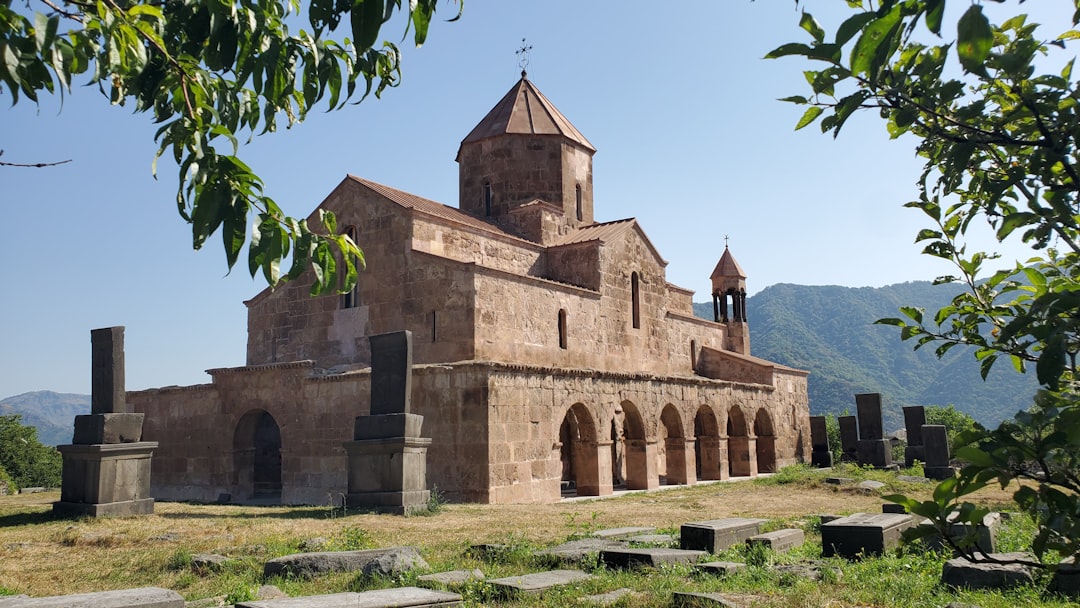
The main core of the complex was built in the 13th century, under the patronage of the powerful princely family of the Zakarians, and includes the main church of Katoghike, consecrated in 1215. What immediately strikes the visitor is the contrast between the massive solidity of the dark basalt stone outer walls and the decorative refinement of the interiors: carved capitals, intertwined rose windows, and the famous khachkar, the Armenian stone crosses with floral and geometric motifs of extraordinary complexity.
The rock-hewn chambers carved directly into the rock — called gavit — are perhaps the most evocative part of the monastery. Natural light penetrates through circular openings in the ceiling, creating beams of light that cut through the darkness and illuminate the engraved walls. In some of these halls, ancient Armenian inscriptions and reliefs depicting heraldic animals, including eagles and lions, symbols of the noble families that financed the works, can still be observed.
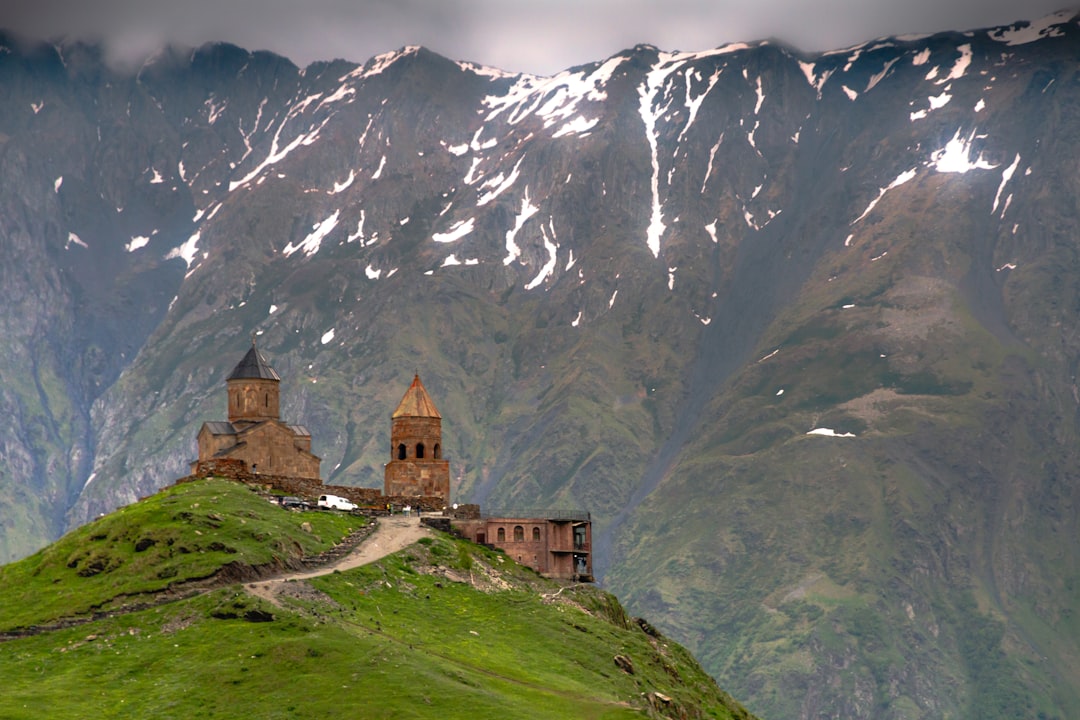
The khachkar is the language of stone
Among the details that an attentive visitor should not miss are the khachkar scattered along the outer walls and inside the chapels. These stone steles, some over a meter tall, bear crosses intertwined with plant motifs so fine that they resemble carved lace. The tradition of Armenian khachkar dates back at least to the 9th century and each cross is unique: they were commissioned to commemorate the deceased, celebrate military victories, or give thanks for received blessings.
Inside the main church, the drum that supports the dome is decorated with blind arches and small columns, an example of how medieval Armenian artisans knew how to blend Byzantine and local influences into a completely original style. Bring a flashlight or use your phone's light to better observe the details of the capitals in the less illuminated areas: the quality of the sculpture is such that every element deserves close observation.
How to get there and when to visit
Geghard is located about 40 kilometers east of Yerevan, in the gorge of the Azat River, not far from the Garni site with its Hellenistic temple. The road leading to the monastery is paved and accessible by car: the journey from Yerevan takes about an hour. The most convenient option for those without their own vehicle is to take one of the shared minibuses — the marshrutka — that depart from the stop near the Gai metro station in Yerevan, or to arrange for a private taxi or a guided tour, often offered in combination with a visit to Garni.
The best time to visit is early in the morning, preferably between 9 and 11, when the natural light enters the rock-cut chambers at the right angle and tourist groups have not yet filled the spaces. The monastery is open every day and entrance to the site is generally free, although it is customary to leave a donation in the churches. Plan for at least an hour and a half to calmly visit all the chapels, courtyards, and rock-cut chambers, without rushing. On summer weekends, the site can be crowded, especially since Armenian worshippers continue to use it as an active place of worship.
A place still alive
Geghard is not a museum: it is an active church. On religious holidays, liturgies are still celebrated according to the rite of the Armenian Apostolic Church, and it is not uncommon to encounter families bringing votive offerings or lighting candles in the niches carved into the rock. This sense of continuity — between the 13th century and the present — is perhaps the hardest thing to describe and the easiest to perceive as soon as you pass through the entrance portal.
Wear comfortable shoes with non-slip soles: the floors of the rock chambers can be slippery due to humidity, and some passages between the chapels require you to lower your head. A light sweater is also useful in summer, because inside the caves the temperature remains cool regardless of the season.


