
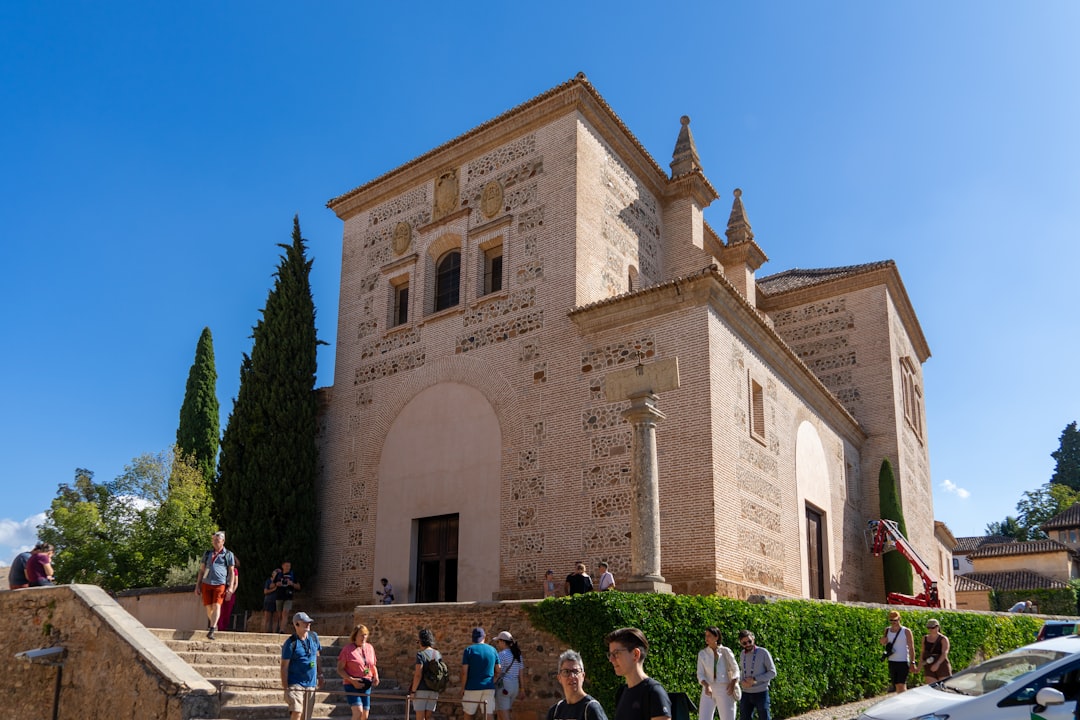

The water still flows today along the stone channels of the Generalife just as it did in the 13th century, when the Nasrid sultans built this summer palace on the hills above the Alhambra. The sound of the fountains accompanies every step among the cypress hedges and rose trellises, creating an atmosphere that distinctly separates this space from the monumentality of the halls of the royal palace below.
The Generalife — whose name derives from the Arabic Jannat al-'Arif, which roughly translates as "garden of the architect" or "garden of paradise" — was built during the reign of the Nasrid dynasty, with the main structures dating back to the 14th century, under Sultan Isma'il I. It is not a representative palace, but a place designed for private retreat, contemplation, and refreshment during the summer months in Granada.
The architecture of the palace: simplicity and Nasrid refinement
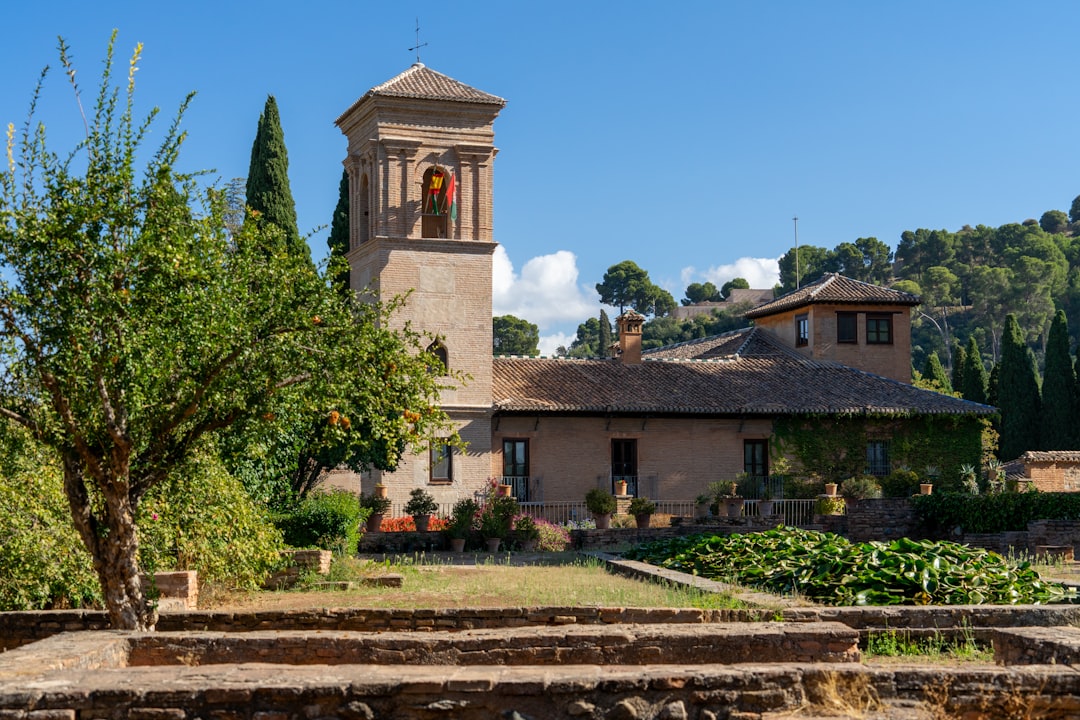
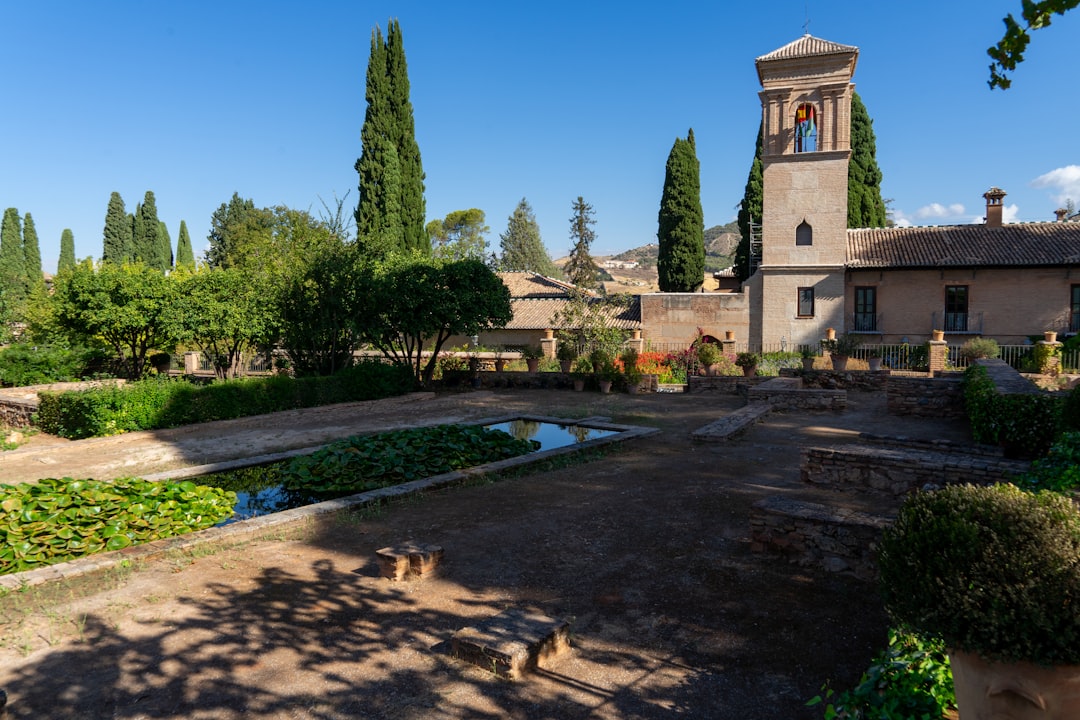
Unlike the richly decorated halls of the Alhambra, adorned with stucco and muqarnas, the interiors of the Generalife display a deliberate sobriety. The rooms open onto internal courtyards where the main decorative element is the water itself: the famous Patio de la Acequia, or courtyard of the channel, is the heart of the complex. A long straight channel runs through the center of the space, flanked by two rows of low-jet fountains that intersect above the water's surface.
The arches of the portico that frames the courtyard feature geometric stucco decorations, sober compared to the standards of the Alhambra but perfectly integrated with the light and shadow that change throughout the day. The arched windows allow views of the Darro valley and the rooftops of the Albaicín neighborhood, transforming each opening into an architectural frame.
The terraced gardens: cypress, rose, and geometry
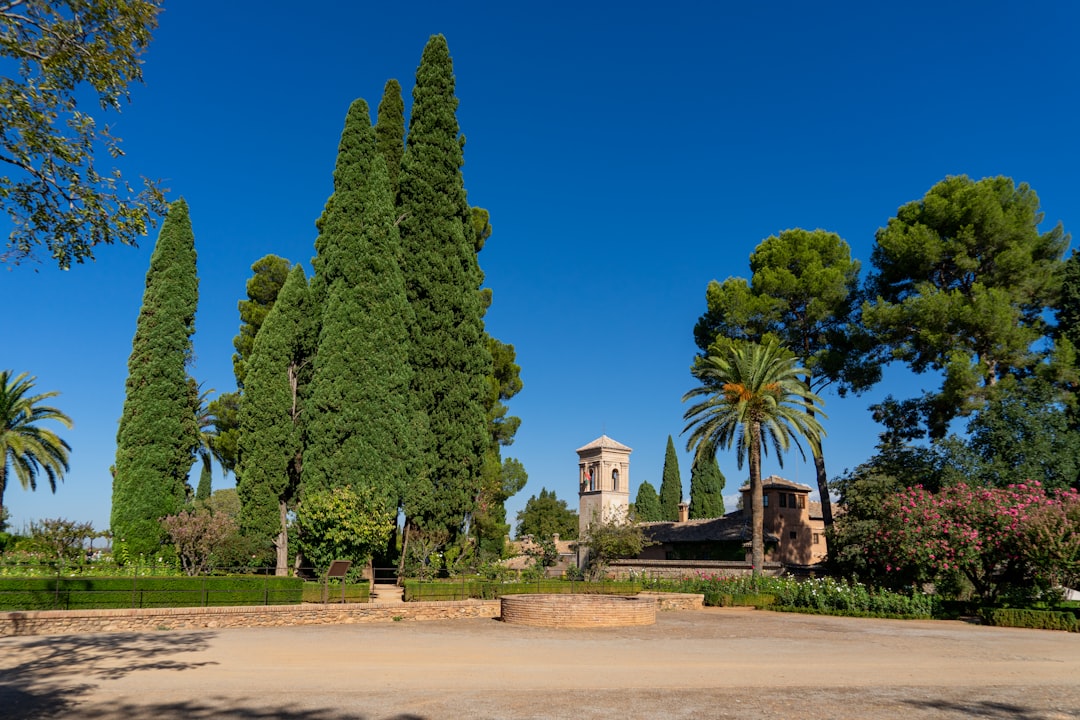
Climbing through the terraced gardens that develop along the slope of the hill, one passes through progressively more informal spaces. The centenary cypress trees, some of which reach considerable heights, delineate the paths and create corridors of natural shade. The roses are cultivated according to traditions that date back to the Moorish era, although the current gardens are the result of interventions following the Reconquista of 1492.
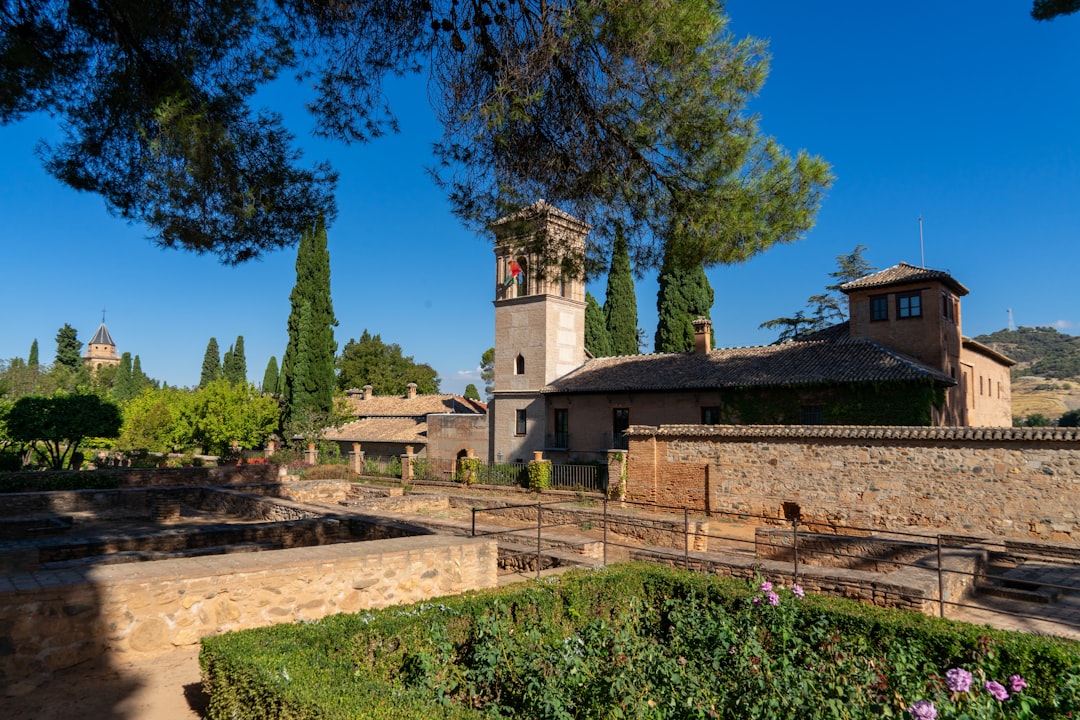
A physically observable detail that surprises many visitors is the presence of stone irrigation channels — the acequias — that run along the edges of the open-air paths. These hydraulic systems, derived from Arab water engineering, channel water from the Sierra Nevada through a distribution system that served both the gardens and the fountains of the palace. The slope of the land is precisely utilized to ensure a constant flow without mechanical pumps.
The Mirador and the Visual Relationship with the Alhambra
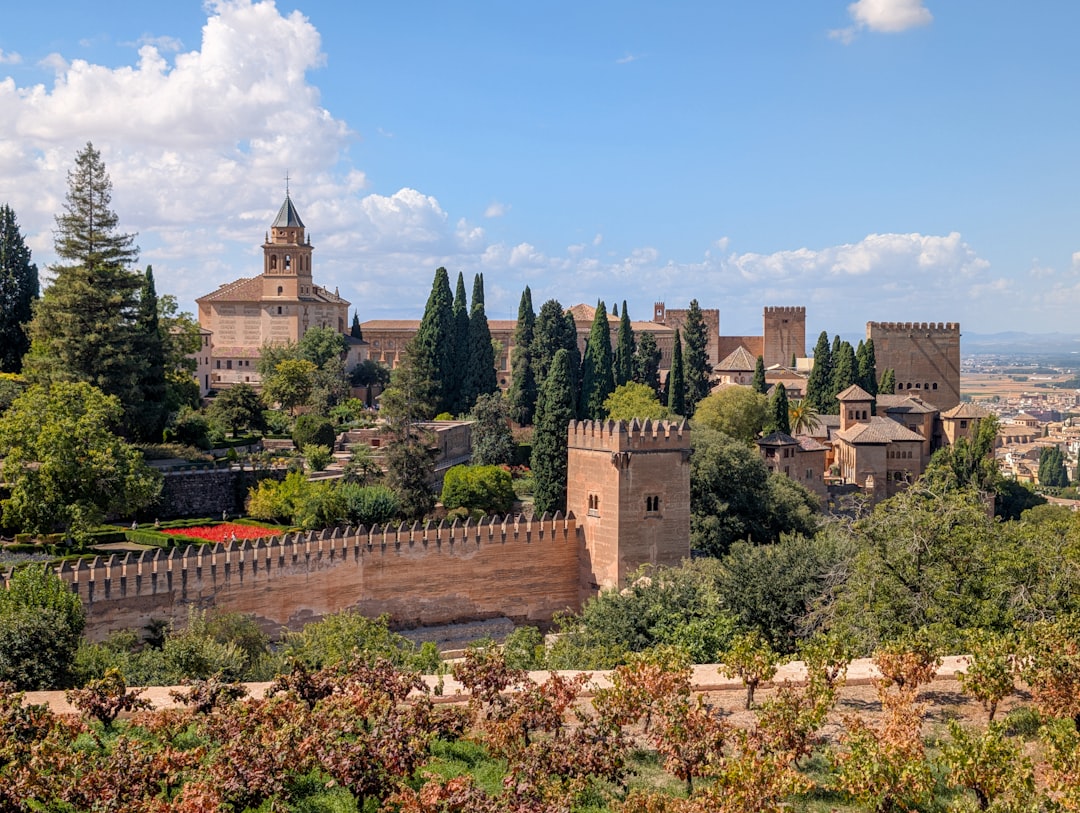
One of the most significant moments of the visit is reaching the Romantic Mirador, a viewpoint from which the entire layout of the Alhambra can be observed from above. From this perspective, the urban planning logic of the complex is understood: the Generalife is not separate from the Alhambra, but is an integral part of it, connected by an elevated passage built in later times. The view allows for the sequence of towers, courtyards, and defensive walls to be read with a clarity impossible from the inside.
The relationship between the two complexes is also chromatic: the reddish walls of the Alhambra, which owe their color to the local clay used in construction, contrast with the dense green of the Generalife's vegetation, creating a composition that has inspired painters and photographers for centuries.
Practical tips for the visit
The combined ticket for the Alhambra and the Generalife costs around 14-15 euros for adults, but prices may vary and tickets should be purchased well in advance on the official website of the Patronato de la Alhambra, as the available spots each day are limited. Tickets for early morning — usually from 8:30 AM — allow visitors to explore the gardens of the Generalife before temperatures rise and before the main influx of organized groups.
The time needed to visit only the Generalife is about 45-60 minutes, but if included in the entire Alhambra route, it is recommended to allocate at least half a day for the whole complex. In summer, bringing water is essential: despite the presence of fountains, the sun-exposed terraces can become very hot during the central hours. The gardens are also accessible in winter, when the lower attendance and the soft morning light provide particularly favorable photographic conditions.


