
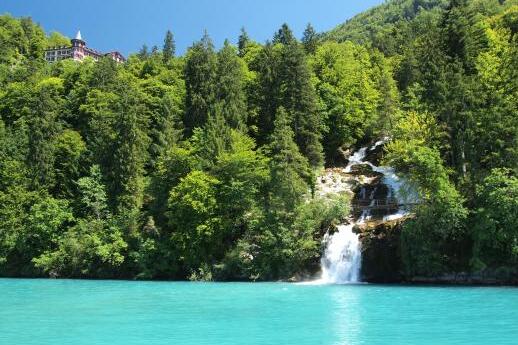

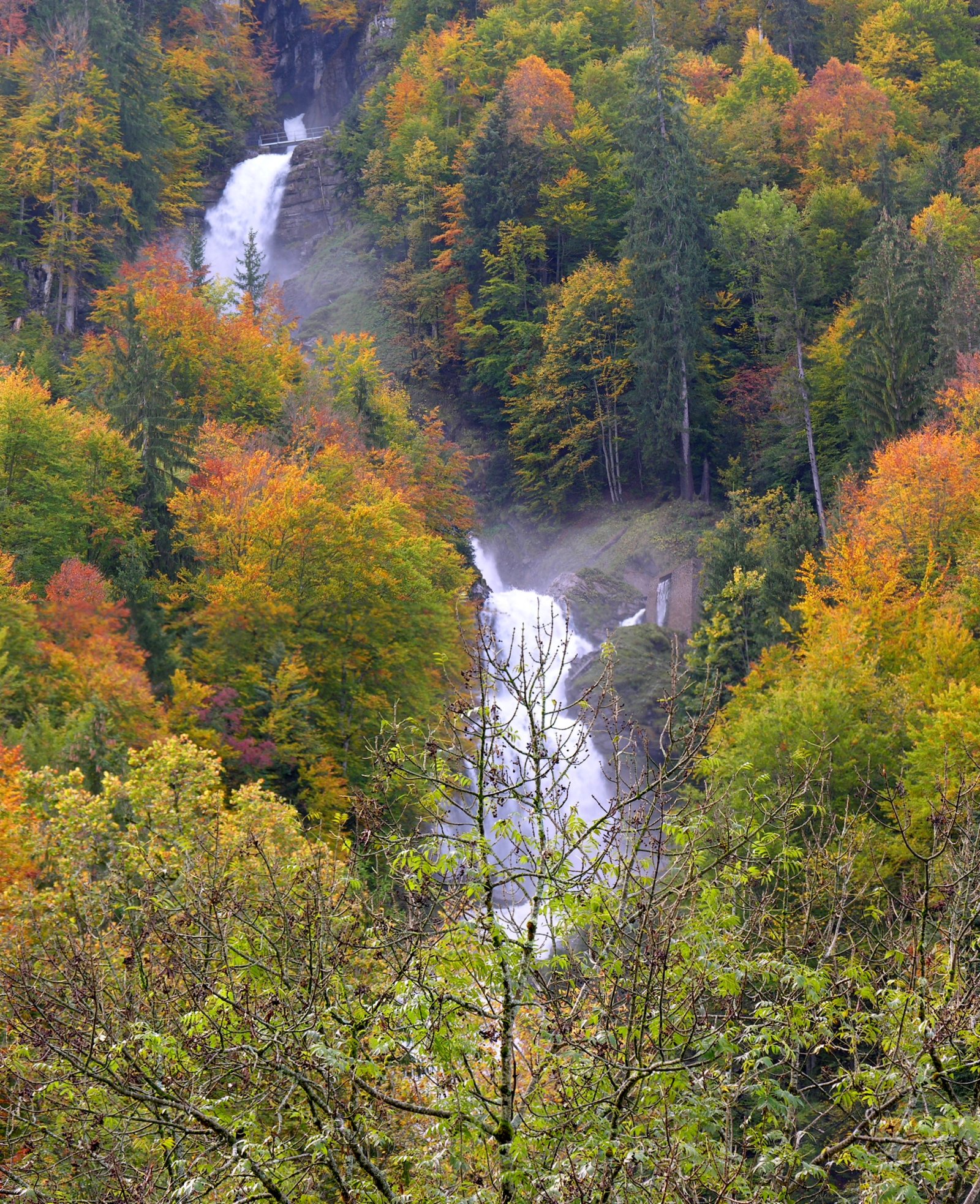
As you approach the magnificent Giessbach Waterfall, the sound of cascading water fills the air, inviting you into a world where nature's beauty meets rich history. Located near Brienz, Switzerland, this stunning waterfall drops over 500 meters through 14 distinct stages, each named after a Bernese hero, creating a breathtaking spectacle that has captivated visitors for centuries.
History and Origins
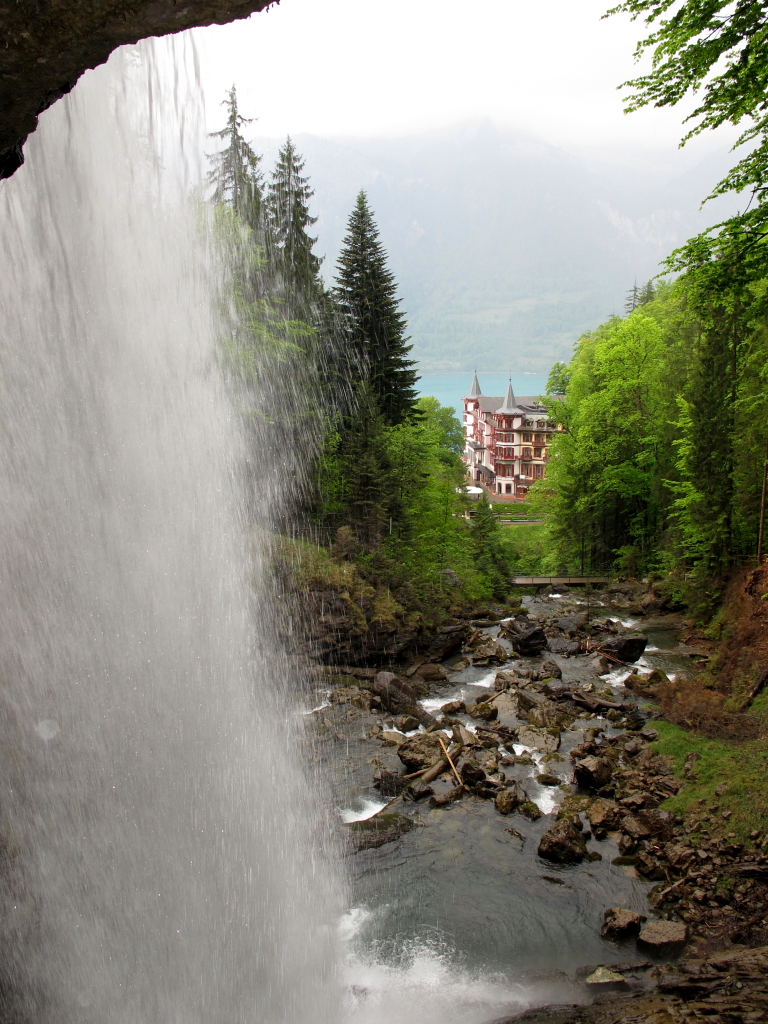
The history of Giessbach Waterfall dates back to ancient times, where legends speak of a mystical connection between the falls and local folklore. The waterfall itself has been a natural attraction long before the establishment of the nearby Grand Hotel Giessbach in 1873. This luxurious hotel was built in a style reminiscent of the Romantic movement, appealing to the affluent travelers of the time seeking solace in nature.
In the 19th century, the waterfall became a significant recreational site, leading to the construction of the Giessbachbahn, the oldest funicular in Europe, which opened in 1888. This engineering marvel not only facilitated access to the hotel but also made the scenic beauty of the falls more accessible to a wider audience, further embedding the waterfall into the cultural fabric of the region.
Art and Architecture
The Grand Hotel Giessbach itself is a masterpiece of architecture, showcasing a blend of Romantic and Victorian styles. Its wooden façade, adorned with intricate carvings, complements the natural surroundings, while the sweeping views of the Lake Brienz and the Alps add to its charm. Inside, visitors can find exquisite period furnishings and art that reflect the opulence of the era when it was built.
The hotel’s terrace offers an unparalleled vantage point for viewing the waterfall, making it a favorite spot for artists and photographers. The surrounding landscape has inspired numerous paintings and literary works, cementing its status as a muse for creatives throughout history.
Local Culture and Traditions
The area surrounding Giessbach is steeped in local culture, with customs that celebrate the natural beauty and history of the region. The Brienz community is known for its woodcarving traditions, with skilled artisans producing intricate wooden sculptures and crafts that reflect the alpine heritage.
Each summer, the village hosts the Brienz Woodcarving Festival, attracting craftsmen and visitors from around the world. Traditional Swiss music and dance accompany the festivities, showcasing the vibrant culture that thrives in this picturesque locale. The festival serves as a reminder of how intertwined the local community is with the stunning landscapes that surround them.
Gastronomy
No visit to Giessbach would be complete without indulging in the local gastronomy. The region is famous for its Älplermagronen, a hearty dish made with pasta, potatoes, cream, and cheese, often accompanied by applesauce. This comforting meal reflects the agricultural traditions of the area, utilizing local ingredients that have been staples for generations.
Pair your meal with a glass of Eau de Vie, a traditional Swiss fruit brandy, or sample some of the local cheeses, such as Emmental or Gruyère, which are renowned for their rich flavors and artisanal production. These culinary delights offer a taste of the region's heritage and make for a perfect end to a day spent exploring the falls.
Lesser-known Curiosities
While many visitors flock to the main viewing points of Giessbach Waterfall, a few hidden gems await discovery. For instance, take the time to explore the lesser-known hiking trails that wind through the lush forests surrounding the waterfall. These paths offer unique perspectives of the falls, as well as opportunities to spot local wildlife, such as chamois and various bird species.
Another intriguing aspect of the waterfall is the Giessbach Chapel, nestled near the base of the falls. Constructed in the late 19th century, this charming chapel is often overlooked by tourists but provides a serene spot for reflection amidst the roaring waters.
Practical Visitor Information
The best time to visit Giessbach Waterfall is during the warmer months, from late spring to early autumn, when the trails are accessible and the falls are at their most powerful due to melting snow. Early mornings or late afternoons are ideal for witnessing the falls in softer light, perfect for photography.
To make the most of your visit, consider taking the Giessbachbahn funicular for a unique ascent to the hotel and the surrounding hiking trails. Keep an eye out for the informative signs along the paths, which share stories about the local flora and fauna, as well as the historical significance of the area.
With its stunning natural beauty and rich cultural heritage, Giessbach Waterfall is more than just a sight; it’s an experience that immerses you in the heart of the Swiss Alps.
For a personalized itinerary that ensures you don’t miss any of the hidden treasures of Brienz, consider using the Secret World app.


