
← Back

Giuseppe Zimbalo, Giuseppe Cino and Mauro Manieri. These are the three great architects

Piazza del Duomo, 73100 Lecce LE, Italia ★★★★☆ 685 views
Simona Illy
Lecce
🏆 AI Trip Planner 2026

Get the free app

Discover the best of Lecce with Secret World — the AI trip planner with 1M+ destinations. Get personalized itineraries, hidden gems and local tips. Free on iOS & Android.

🧠 AI Itineraries 🎒 Trip Toolkit 🎮 KnowWhere Game 🎧 Audio Guides 📹 Videos
Download on the App Store Get it on Google Play
Scan to download Scan to download

Fountains, Squares and Bridges · Lecce

Giuseppe Zimbalo, Giuseppe Cino and Mauro Manieri. These are the three great architects - Lecce | Secret World Trip Planner

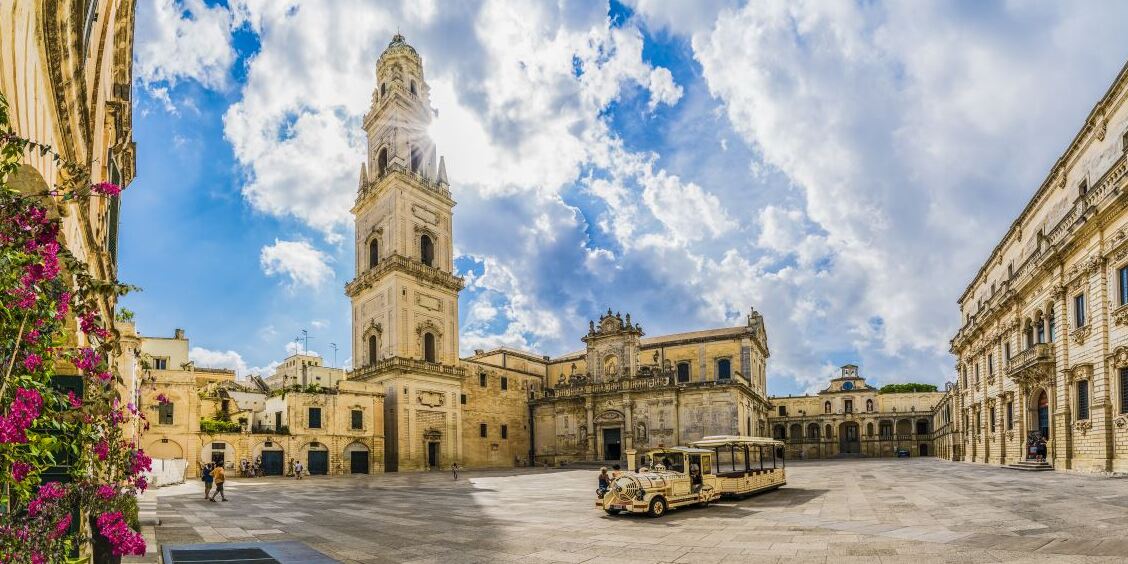
Giuseppe Zimbalo, Giuseppe Cino and Mauro Manieri. These are the three great architects of Lecce Baroque who forged with inspiration and genius the magical Piazza Duomo in Lecce (a curiosity: the square is closed on three sides and has only one entrance. The square opens at the end of Via Palmieri, announced by the entrance Propylaea with the statues of the Fathers of the Church on top, which seem almost to do the honours of home to visitors who enter the sacred square par excellence of the city of Lecce. A square that fascinates for the warm tones of the Lecce stone that covers the four buildings that stand there, the Bell Tower, the Cathedral, the Episcopal Palace and the Diocesan Museum. In the past, the square was called "Cortile del Vescovado" (Bishop's courtyard), frequented only by churchmen and surrounded by religious buildings that acted almost as walls, thus isolating themselves from the rest of Lecce; An architectural revolution inside this square will happen with the bishop Luigi Pappacoda in the second half of 1600. Lecce, already a provincial capital of the Kingdom of Naples, became the seat of important peripheral offices of the State and of the Royal Audience, as well as the residence of numerous officials, professionals and many aristocrats, so the Bishop felt the need to renew Lecce urbanistically and culturally so that it would be worthy of the political position it had conquered. In the light of these events, Bishop Pappacoda decided to use the Lecce Baroque to relaunch Lecce and give it a unique look that distinguished it from other cities. Before its reconstruction, the square had a dangerous bell tower and a small church always at the mercy of looters such as the Saracens. After the escaped danger of the plague in 1659 and with the advent of Lecce Baroque, Bishop Pappacoda was able to give new life to the square by rebuilding the bell tower and the cathedral shaped by the hands of Lecce architect Giuseppe Zimbalo, then followed other clients and other artists for the construction of other buildings within the courtyard.Only after the second half of 1700, the square was opened to the public a decision that was wanted by Bishop Sozi Carafa to delight the eyes of passers-by and visitors with the elegance that you breathe in the courtyard once you enter.
Giuseppe Zimbalo, Giuseppe Cino and Mauro Manieri. These are the three great architects - Lecce | Secret World Trip Planner
🗺 AI Trip Planner

Plan your visit to Lecce

Suggested itinerary near Giuseppe Zimbalo, Giuseppe Cino and Mauro Manieri. These are the three great architects

MAJ+
500.000+ travelers worldwide
  1. 🌅
    Morning
    Giuseppe Zimbalo, Giuseppe Cino and Mauro Manieri. These are the three great architects
    📍 Lecce
  2. ☀️
    Afternoon
    The Church of Santa Teresa the papier-mâché statue
    📍 0.1 km · Lecce
  3. 🌆
    Evening
    Fantasy Museum - Art and Special Effects
    📍 0.1 km · Lecce

Buy Unique Travel Experiences

Powered by Viator

See more on Viator.com

Explore nearby · Lecce

Frequently Asked Questions

Piazza Duomo is uniquely designed as a closed square on three sides with a single entrance through the Propylaea archway at the end of Via Palmieri, which is marked by statues of the Fathers of the Church. This distinctive layout was intentional, as the square was originally called 'Cortile del Vescovado' (Bishop's courtyard) and served as an isolated sacred space reserved for churchmen and surrounded by religious buildings acting as walls.
Giuseppe Zimbalo, Giuseppe Cino, and Mauro Manieri were the three great architects of Lecce Baroque who created the magnificent Piazza Duomo. Giuseppe Zimbalo notably designed the bell tower and cathedral under the patronage of Bishop Luigi Pappacoda in the second half of the 1600s, establishing Lecce's unique architectural identity.
Four main buildings stand around Piazza Duomo: the Bell Tower, the Cathedral, the Episcopal Palace, and the Diocesan Museum, all constructed in the distinctive warm-toned Lecce stone. These structures were rebuilt during the Lecce Baroque architectural revolution initiated by Bishop Pappacoda after the plague of 1659.
Bishop Luigi Pappacoda ordered the reconstruction of Piazza Duomo in the second half of the 1600s because Lecce had become a provincial capital of the Kingdom of Naples with important state offices and a growing population of aristocrats and officials. The Bishop wanted to transform the square using Lecce Baroque style to give the city a unique cultural and urbanistic identity worthy of its new political importance.
Before reconstruction, the square had a deteriorating bell tower and a small church that was constantly vulnerable to raids by Saracen pirates and looters. The square remained isolated as the Bishop's courtyard until the plague danger subsided in 1659, when Bishop Pappacoda commissioned the Baroque renovation that transformed it into the sacred heart of Lecce.
