
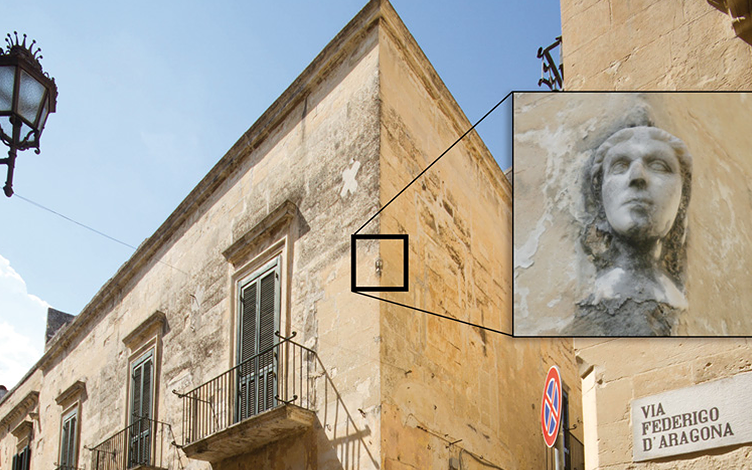

Nestled in the heart of Lecce, the poignant tale of The Legend of the Lover weaves a narrative of unrequited love and tragedy that has captivated locals and visitors alike. This sculpted female figure stands silently between Via Federico d'Aragona and Vico del Theuta, its stone visage telling a story that transcends time and space.
The roots of Lecce stretch back to ancient times, originally established by the Messapians, a pre-Roman civilization. The city flourished under Roman rule, becoming a significant center of trade and culture. Key historical events, such as the construction of the Roman amphitheater in the 2nd century AD, laid the foundation for Lecce's rich architectural tapestry. However, it is the local folklore, like that of the lover’s lament, that adds a layer of depth to the city’s historical narrative.
The Legend of the Lover is set against this vibrant backdrop. According to local lore, a young man fell deeply in love with a woman residing across the street. Their romance blossomed through stolen glances and whispered dreams until the girl’s parents, disapproving of the union, forced her into despair. In her sorrow, she chose to end her life, leaving the young man heartbroken. In an act of eternal devotion, he commissioned a sculptor to carve her likeness in stone, ensuring that her beauty would remain immortalized in the heart of Lecce.
The architectural style of the sculpture is emblematic of Lecce’s Baroque heritage, characterized by intricate detail and emotional resonance. The city itself is often referred to as the "Florence of the South" due to its abundance of Baroque buildings, including the stunning Basilica di Santa Croce and the Piazza del Duomo. The artistry here is not just in the grandiose structures but also in the small details, like the carved figure that signifies love's enduring power.
Local culture in Lecce is vibrant and deeply rooted in traditions that celebrate both its historical and emotional narratives. Festivals such as the Festa di Sant'Oronzo, held every August, honor the city’s patron saint with processions, music, and local delicacies. During this time, the streets come alive with colors, and the air is filled with the sounds of traditional pizzica, a folk dance that embodies the spirit of the South. The story of the lover resonates during these festivities, reminding everyone of the city's deep emotional connections.
Gastronomy in Lecce is a feast for the senses, with local specialties that reflect the region’s agricultural wealth. The pasticciotto, a cream-filled pastry, is a beloved treat, while orecchiette pasta, often served with turnip tops, showcases the simplicity and richness of Puglian cuisine. Pair your meal with a glass of Primitivo di Manduria, a full-bodied red wine that captures the essence of the sun-drenched vineyards surrounding the city.
Beyond the well-trodden paths, Lecce holds many lesser-known curiosities that can enhance your visit. For instance, the Church of the Holy Cross houses a unique blend of architectural styles and is adorned with carvings that tell stories of ancient myths and local legends. Additionally, if you look closely, you might discover small altars dedicated to the city’s patron saint, woven into the fabric of everyday life. The tale of The Legend of the Lover is not just a story of grief but a reminder of the powerful emotions that connect people across generations.
For the best experience, consider visiting Lecce in the spring or early fall when the weather is mild and the streets are less crowded. Take your time to wander through the city’s narrow alleys, allowing the enchanting atmosphere to envelop you. Don’t forget to look for the sculpture, an unassuming yet profound reminder of love’s complexities.
As you plan your visit, remember that the rich history, artistic beauty, and culinary delights of Lecce await you. Explore the city’s stories, both told and untold, and immerse yourself in its vibrant culture. To truly capture the essence of Lecce, consider using the Secret World app to create a personalized itinerary that brings your exploration to life.


