
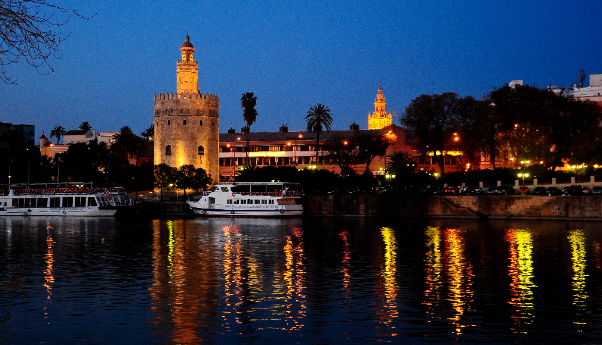

In the heart of Sevilla, the Golden Tower (Torre del Oro) stands as a sentinel of history, its golden-hued façade reflecting the city’s rich Moorish past and its evolution through centuries. This iconic structure, nestled along the banks of the Guadalquivir River, beckons travelers with its storied heritage and architectural allure.
The Golden Tower was constructed in the early 13th century during the reign of the Almohades, a powerful Moorish dynasty that dominated much of Andalusia. Historians believe it was built in 1220 as part of the city’s defensive fortifications. Its strategic position allowed for the monitoring of ships navigating the river, ensuring the safety of trade routes. The Almohades were known for their impressive architectural feats, and the Torre del Oro is a prime example of their ingenuity. By the late 13th century, following the Reconquista, it transformed from a defensive tower into a prison and later into a maritime museum, showcasing its multifaceted roles throughout history.
Architecturally, the Golden Tower is a striking example of Mudejar style, a distinctive blend of Moorish and Christian design elements prevalent in Andalusia. The tower stands approximately 36 meters high, featuring a cylindrical base made of brick and mortar, adorned with a unique plasterwork that showcases intricate geometric patterns typical of Moorish art. The tower’s original top was a battlement, but the cupola-shaped roof we see today was added in 1760, giving it a more decorative flair. The name “Golden Tower” is thought to originate from the golden reflection of its walls on the river, although some suggest it was once covered with a layer of golden tiles that enhanced its luster.
Local culture in Sevilla is vibrant and steeped in tradition, with the Golden Tower serving as a backdrop for various customs and festivals. One of the most notable events is Semana Santa (Holy Week), which showcases elaborate religious processions throughout the city. The Golden Tower, while not a central location for these events, is often included in the backdrop of photographs capturing the fervor of the celebrations. Additionally, the Feria de Abril, or the April Fair, is a lively festival celebrating Andalusian culture, where locals dress in traditional attire, dance the flamenco, and enjoy tapas and local wines. This blend of art and community spirit captures the essence of Sevilla and its residents.
Speaking of culinary delights, Sevilla is a gastronomic heaven, with the Golden Tower situated near some of the best local eateries. A quintessential dish to try is salmorejo, a cold tomato soup garnished with hard-boiled eggs and jamón (cured Spanish ham). Pair it with tortilla española, a savory Spanish omelette made with potatoes and onions, or indulge in espinacas con garbanzos, a traditional dish of spinach and chickpeas. To wash it down, sample a glass of tinto de verano, a refreshing summer drink made with red wine and lemon soda, perfect for cooling off on warm days.
Among the tower’s many stories, one lesser-known fact is its connection to the Spanish Armada. In 1588, the fleet set sail from Sevilla to invade England, and the tower served as a lookout during this tumultuous period. Additionally, during the 19th century, the Golden Tower was used as a lighthouse, guiding ships safely to port. Many visitors overlook the small museum located within the tower, where artifacts related to the maritime history of Sevilla are displayed, offering insights into the city’s seafaring legacy.
For those planning a visit, the Golden Tower is best explored during the cooler months of spring (March to May) or autumn (September to November), when temperatures are pleasant, and crowds are thinner. Arriving early in the morning or later in the evening can also provide a more intimate experience. Don’t forget to bring your camera—the views from the top are spectacular, offering a panoramic glimpse of both the Guadalquivir River and the stunning Sevilla skyline.
As you wander through the history-laden streets of Sevilla, make sure to include the Golden Tower in your itinerary. This magnificent structure not only tells a story of the past but also continues to be a symbol of the city’s enduring spirit. To make the most of your experience, consider using the Secret World app to create a personalized itinerary that reveals the hidden gems of this enchanting city.


