But not all day trips are created equal, and the Bangkok radius punishes poor planning in specific ways. The city's road network turns a 60-kilometre drive into a two-hour ordeal if you leave at the wrong time. Trains here run on schedules that reward research and punish assumptions. Boats — canal longtails, river ferries, the occasional chartered vessel — operate on logic that no app fully captures. I have taken the wrong train, arrived at a floating market two hours after the vendors packed up, and sat in motorway gridlock watching a cave visit evaporate in real time. This list is the corrected version of all those mistakes.
A good day trip from Bangkok does three things: it gets you somewhere meaningfully different within about two hours, it gives you at least four hours of actual experience on the ground, and it returns you to the city before exhaustion makes the whole exercise feel punitive. Every destination here clears that bar. Some clear it easily. A few require you to leave before dawn. All of them are worth it.
At a glance
- Ayutthaya : The Old Capital of Thailand — where empires end and mornings begin
- Maeklong: il mercato che ferma il treno — the railway market that earns its reputation
- Scopri le Rovine di Wat Nok: Un Viaggio nella Storia Thai — a ruin that the crowds have not found yet
- Tempio di Wat Samphran — the dragon temple that nobody put on the map
- The floating market of Damnoen Saduak — the real logistics of a famous spectacle
- Mercato Galleggiante di Damnoen Saduak: Un Viaggio tra Colori e Sapori — the canal approach that most visitors skip
- Tham Khao Luang Cave — a royal cave that justifies a longer drive
- Scoprire Chedi: Un Viaggio nella Cultura Thailandese — the cultural stop between Bangkok and further destinations
- Thailandia | Sai Thong waterfall — the long drive that earns its distance
- Phraya Nakhon Cave, Thailand — the boat ride that is half the point
Ayutthaya : The Old Capital of Thailand — where empires end and mornings begin

On arrival, hire a bicycle from one of the shops near the station — 50 to 80 baht for the day — and spend the morning at Wat Mahathat, Wat Phra Si Sanphet, and the Wihan Phra Mongkhon Bophit. In the afternoon, cross the river by the small ferry and visit Wat Phanan Choeng, which the crowds somehow consistently miss. The light on the ruins between 4 and 5 p.m. is the best it gets all day.
Insider tip
The 6:20 a.m. train from Bang Sue Grand Station is your friend. You will be on the ground in Ayutthaya before 8 a.m., ahead of every tour bus from Bangkok. The return trains run until early evening, but the 4:30 p.m. departure fills fast — buy your return ticket the moment you arrive.
Maeklong: il mercato che ferma il treno — the railway market that earns its reputation

Getting here by public transport is an exercise in patience but perfectly doable: take the BTS to Wong Wian Yai, then a minivan to Samut Songkhram, then the narrow-gauge Maeklong Railway to its terminal, which deposits you directly into the market. Total travel time from central Bangkok runs about 90 minutes to two hours depending on connections. Spend time in the market itself, walk the length of the track, and allow yourself the small pleasure of watching the whole retraction-and-reopening sequence at least twice. The surrounding town of Samut Songkhram is worth an hour of wandering.
Insider tip
The train schedule at Maeklong changes seasonally and is not always accurately reflected online. The four daily departures from the terminal typically run around 6:30 a.m., 9:00 a.m., 11:30 a.m., and 3:30 p.m. — confirm at the station on arrival. Arriving by the first or second train means you see the market at its fullest.
Scopri le Rovine di Wat Nok: Un Viaggio nella Storia Thai — a ruin that the crowds have not found yet

The distance from Bangkok puts it in the same general corridor as Ayutthaya, and a train-and-local-transport combination is feasible for travellers willing to navigate the connection. Plan to spend two to three hours at the site itself: walk the perimeter, examine the surviving Buddha images, and take time to understand the spatial logic of what was once a complete monastic complex. This is not a site that rewards rushing.
Insider tip
Because Wat Nok sees far fewer visitors than the Ayutthaya core sites, there is minimal on-site infrastructure — bring water, wear sun protection, and do not count on finding food nearby. Combining this with an Ayutthaya visit on the same day is possible but makes for a long one; choose one or the other if you are not an early riser.
Tempio di Wat Samphran — the dragon temple that nobody put on the map

The complex belongs to the Dhammakaya-adjacent tradition and has a particular atmosphere that differs from Bangkok's more visited temple circuit — less crowded, less commercially oriented, and architecturally unlike anything else in the region. Climb the interior staircase if it is accessible during your visit, walk the grounds, and allow time to sit in the main hall. The surrounding Sam Phran district is agricultural and quiet in a way that registers as a genuine contrast to the city you just left.
Insider tip
The temple is not always open to the full interior — access to the tower's upper levels depends on the day and on ongoing religious activities. Go on a weekday morning for the best chance of access and the smallest crowds. Parking is available on site and is free.
The floating market of Damnoen Saduak — the real logistics of a famous spectacle
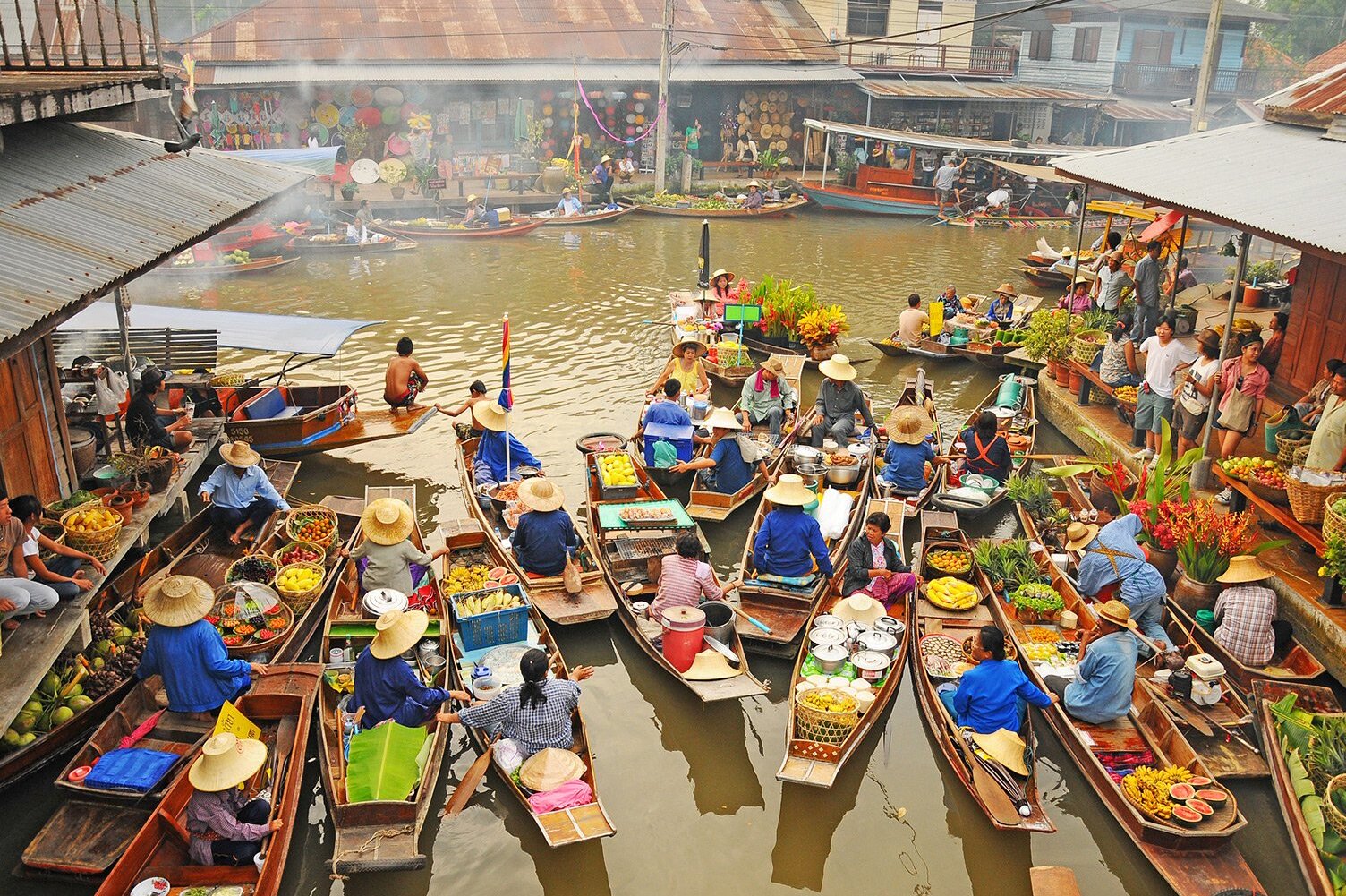
Rent a longtail boat from the main pier to navigate the inner canals — negotiate the price before you board and agree on a duration. The outer market area is walkable along the canal banks. By 11 a.m. the crowds peak and the best of the market activity begins to wind down; by noon, a significant portion of vendors have packed up. There are also small shops and a coconut sugar production facility nearby worth visiting.
Insider tip
Leave Bangkok no later than 5:30 a.m. by car to arrive before the tour buses. The market's peak activity is between 7 and 9 a.m. Driving rather than taking a minivan gives you the flexibility to leave when you choose rather than waiting for a group departure.
Mercato Galleggiante di Damnoen Saduak: Un Viaggio tra Colori e Sapori — the canal approach that most visitors skip
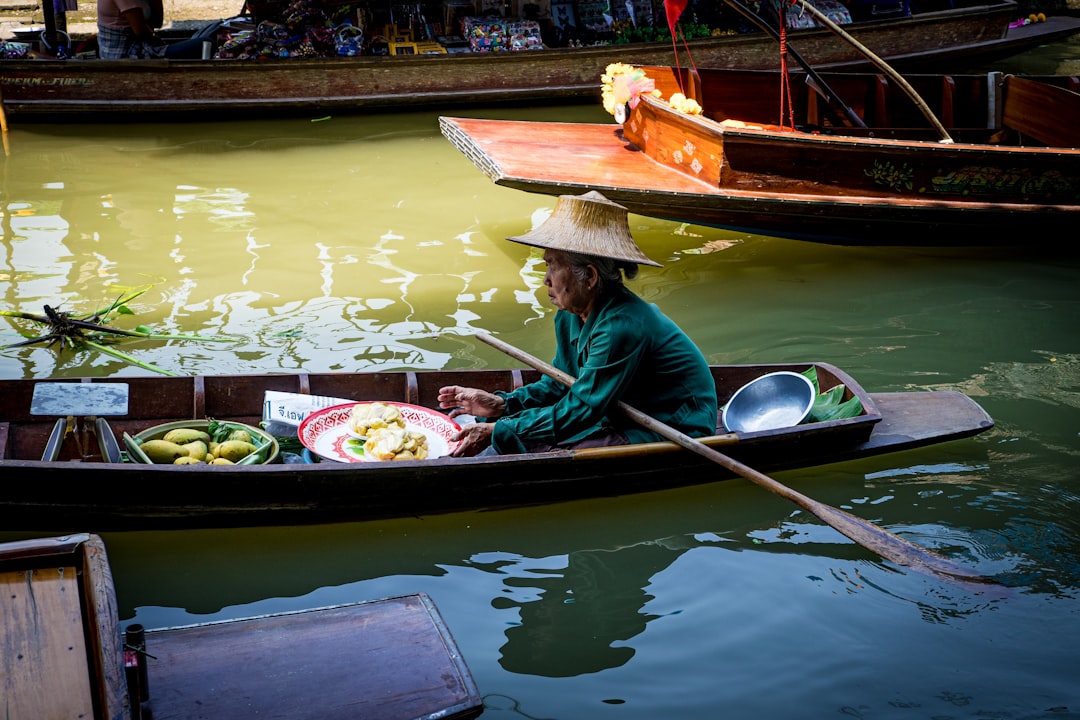
Arrive at the main market early, complete the central area, then negotiate with a longtail operator for a longer canal run into the quieter sections. Budget 90 minutes for this extension. The surrounding countryside — flat, green, cut through by irrigation channels — has its own appeal as a landscape entirely unlike Bangkok.
Insider tip
Longtail boat operators at the main pier will quote you a standard short-loop price. For the extended canal run, you need to negotiate separately and be specific about where you want to go. Having a rough map or a Thai-language description of the outer canals on your phone helps considerably during the negotiation.
Tham Khao Luang Cave — a royal cave that justifies a longer drive
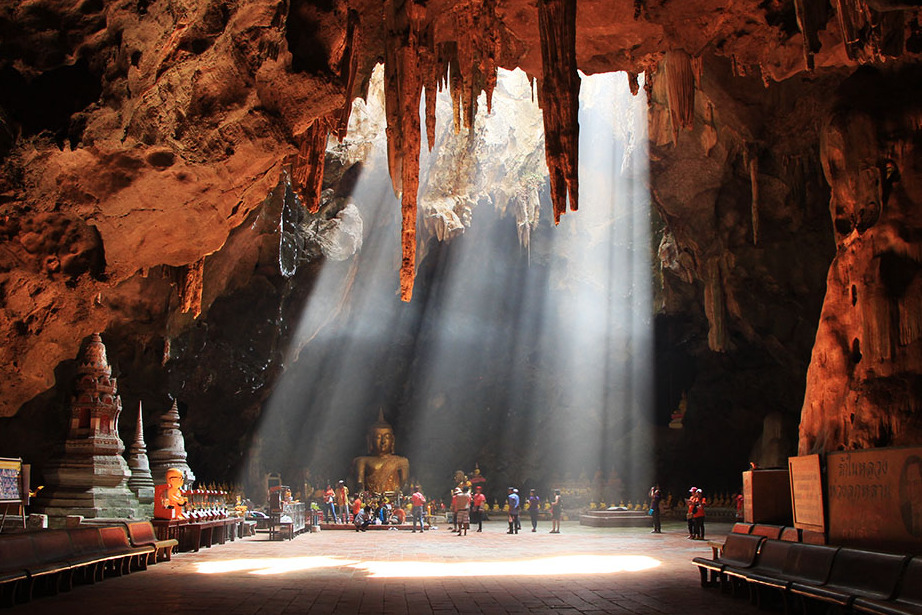
The best light enters the main chamber in the late morning, when shafts from the ceiling openings illuminate the principal Buddha in a way that is worth timing your visit around. Phetchaburi town below the hill has a genuine old-quarter character with additional temple sites and a market worth exploring before or after the cave.
Insider tip
The cave sits atop a hill and requires a walk up steps — not strenuous, but enough to matter in midday heat. Go before 10 a.m. or after 3 p.m. The town of Phetchaburi itself rewards an extra hour; the old quarter has wooden shophouses and a morning market that is completely untouched by tourism.
Scoprire Chedi: Un Viaggio nella Cultura Thailandese — the cultural stop between Bangkok and further destinations
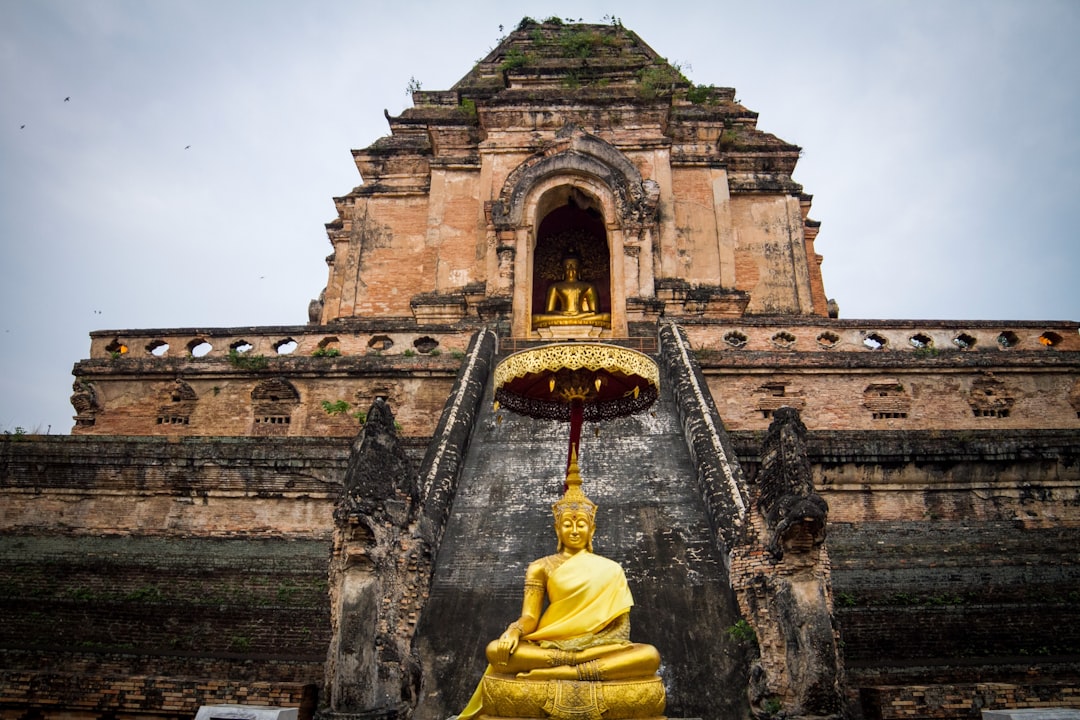
The drive from Bangkok is manageable in under two hours with an early start, and the site itself rewards a methodical visit: examine the different chedi forms present, consider the relationship between the structures and the surrounding landscape, and allow time to sit and absorb the place rather than simply photographing and moving on. This is a destination for travellers who are building a framework for understanding Thailand rather than collecting sites.
Insider tip
Because this destination is less trafficked than the headline sites, you may find limited English-language signage or interpretation. Download an offline Thai-English translation app before you leave Bangkok. The drive back to the city is significantly easier if you leave the site by 3 p.m. to avoid the evening inbound traffic surge.
Thailandia | Sai Thong waterfall — the long drive that earns its distance
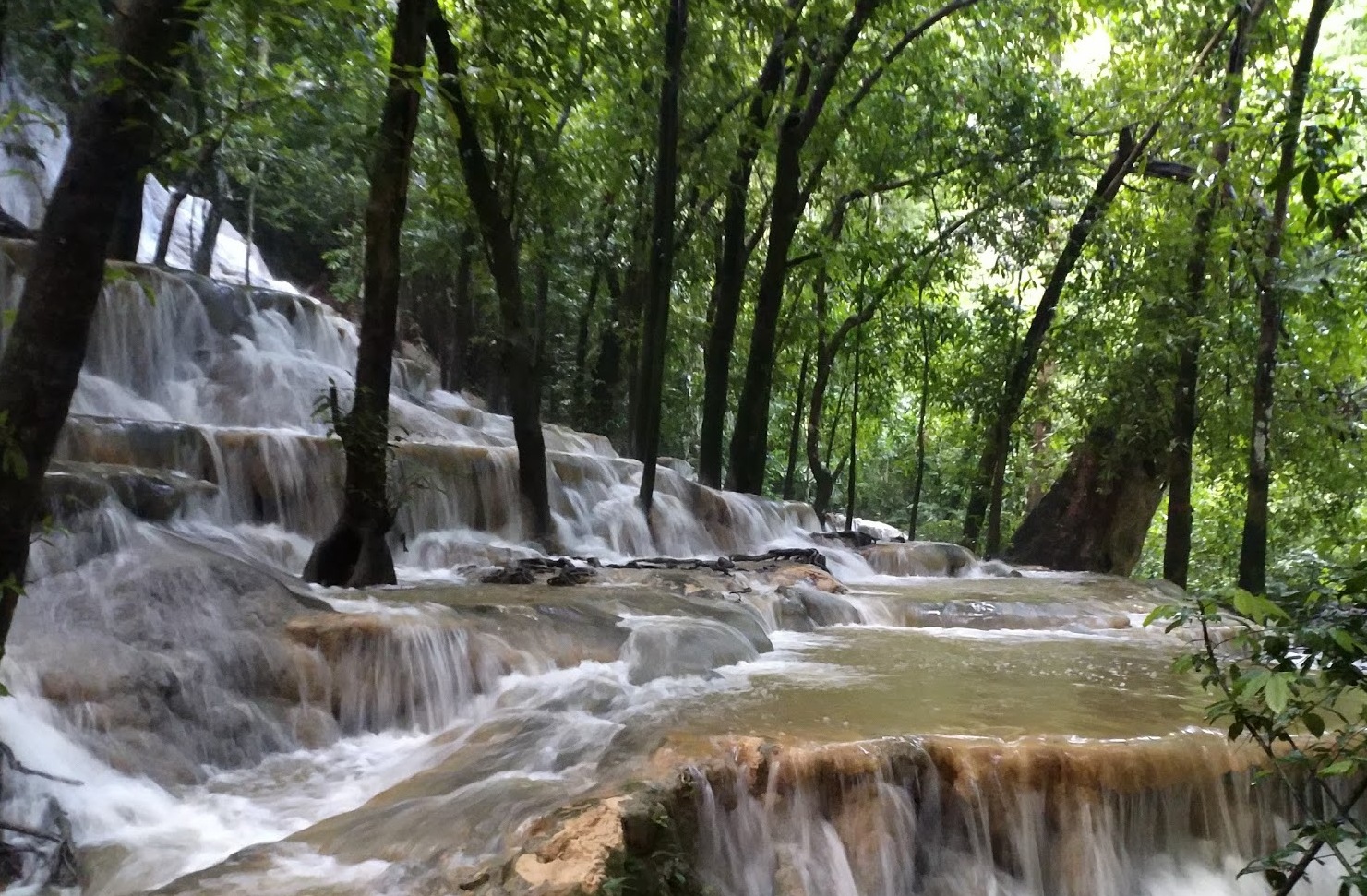
Driving here requires leaving Bangkok by 5:30 a.m. at the absolute latest to arrive with enough time for a meaningful visit before the return drive. The route passes through agricultural landscapes that shift character the further you get from the capital. At the waterfall itself: swim if the season allows, walk the surrounding trail, and spend time understanding the karst topography that makes this site geologically unusual. Do not rush the return — this is a drive that benefits from a stop in a roadside town.
Insider tip
The waterfall's flow and accessibility vary significantly by season — it is most impressive during and just after the rainy season (roughly July through October) and can be underwhelming in the dry months. Check current conditions before committing to the drive. Fuel up before leaving the Bangkok metropolitan area; petrol stations thin out on the approach roads.
Phraya Nakhon Cave, Thailand — the boat ride that is half the point
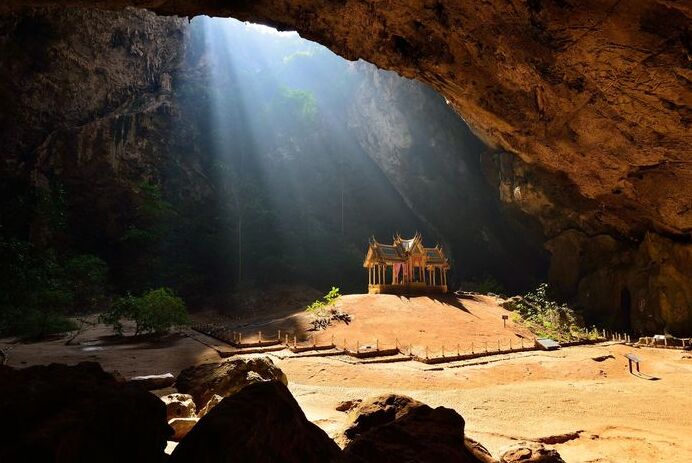
The cave sits approximately 500 metres from Laem Sala Beach. The boat from the beach takes about 15 minutes and deposits you at a pier below the trail. Plan the full visit — drive from Bangkok, boat to the beach, hike to the cave, time in the cave, return — as a very early start: leave Bangkok by 4:30 a.m. to reach the cave during the optimal light window in the late morning.
Insider tip
The natural light that illuminates the royal pavilion inside the cave is the entire reason to be there, and it is only present for a limited window around late morning. Arriving too early or too late means the chamber is lit only by artificial light, which is a fundamentally different experience. Check the current park entry fees and boat rental rates at the national park headquarters before committing to the visit.
Every destination on this list exists within a two-hour radius of one of the world's most self-contained cities — a city that is so complete in its own terms that it actively discourages you from leaving. Bangkok will fill every day you give it. The traffic, the food, the temples, the noise, the sheer density of things happening at street level — it is not a city that creates restlessness. You have to manufacture the restlessness yourself, and then act on it before the inertia sets back in.
What I have found, after doing these runs repeatedly and in different conditions, is that the day trips do not diminish Bangkok — they clarify it. You come back to the city with a better sense of what it is sitting in the middle of: a country with a long history, a complicated landscape, and a texture that the capital only partially represents. The ruins at Ayutthaya, the karst limestone at Sai Thong, the dragon tower at Wat Samphran — these are not footnotes to Bangkok. They are the context. Go find them.
What I have found, after doing these runs repeatedly and in different conditions, is that the day trips do not diminish Bangkok — they clarify it. You come back to the city with a better sense of what it is sitting in the middle of: a country with a long history, a complicated landscape, and a texture that the capital only partially represents. The ruins at Ayutthaya, the karst limestone at Sai Thong, the dragon tower at Wat Samphran — these are not footnotes to Bangkok. They are the context. Go find them.


