10 Best Day Trips from Krakow — by train, car, and boat
A working guide to getting out of the city, making the most of your hours, and coming back tired in the right way
L
Words by
Lena Hofmann
Updated
14 October 2026
Read time
13 minutes
Includes
10 places · interactive map
Krakow is one of those cities that rewards staying put. The Old Town is dense with things worth your time, the Kazimierz quarter will eat your evenings, and the castle hill at dusk is genuinely hard to leave. I know this, and I still think you should leave — at least for a day. Here is why. Krakow sits at a geographic crossroads that most visitors underestimate. Within two hours in any direction you have alpine lakes, painted villages that look like folk art come to life, Slovak castle ruins on a scale that embarrasses most of Europe, and a pilgrimage town that draws four million people a year and yet somehow remains underexplored by secular tourists. The city is a hub, not just a destination.
A good day trip, in my experience, earns its place by satisfying three conditions. First, the journey itself should not feel like punishment — which means honest travel times, not the optimistic ones printed on tourism boards. Second, there should be enough on arrival to fill four to six hours without padding. Third, you should be able to get back before your legs give out completely. Some of the trips below push that third condition; I will tell you which ones. I have done all of these routes multiple times, in different seasons, by train, by rented car, and once, memorably, partly by horse-drawn cart. The advice here is practical. If a parking lot fills by nine in the morning, I will say so. If a train connection requires a change that the official app does not flag clearly, I will flag it. Use this as a working document, not a mood board.
Zalipie,the painted village: where the flowers never stop
Drive time from Krakow is roughly 75 minutes heading northeast, and the road is straightforward — take the E40 toward Tarnów, then follow local signs. Do not expect a sat-nav to know what it is doing once you are in the village itself; the painted houses are scattered across several hamlets, not concentrated on one street. That is part of the point. Zalipie earned its reputation through a tradition of floral painting that covers not just house facades but wells, fences, dog kennels, and the interior walls of barns. The tradition is associated primarily with women of the village, passed down across generations, and it is ongoing — these are not museum reconstructions. On arrival, walk the main loop past the Felicja Curyłowa cottage museum, which preserves the home of the painter most responsible for keeping the tradition alive. Cross to the community center to see rotating exhibitions. Stand quietly in the courtyard of the local church. The fourth thing worth doing is simply walking without a map and letting the painted surfaces accumulate around you.
The car is genuinely the only sensible option here. There is no direct public transport from Krakow, and a taxi round trip would cost more than a rental day.
Insider tip
Come on a weekday. Weekend visitors arrive in tour buses by mid-morning and the narrow lanes become impassable. If you arrive before 9am on a Tuesday or Wednesday, you will have the painted wells entirely to yourself for at least an hour.
2Mountain town· 85.1 km
Polonia | Zakopane: the mountain town that earns its reputation
Zakopane sits about 100 kilometers south of Krakow, and the drive takes between 90 minutes and two and a half hours depending on traffic through the Nowy Targ corridor — which is notorious. The PKP train from Krakow Główny runs regularly and takes around two hours, making it a viable alternative, though the final stretch slows considerably. I have done both and prefer the train in summer, the car in shoulder season when you want flexibility. The town itself sits at the foot of the Tatra range and has been Poland's mountain resort capital since the late 19th century, when artists, writers, and architects arrived and developed what became known as the Zakopane Style — a distinctive wooden architecture drawing on highland folk traditions. Walk the Krupówki promenade for context, visit the Tatra Museum on Krupówki Street for the regional history you will want before heading into the hills, take the funicular up Gubałówka for an orientation view of the range, and spend the remaining hours in the old wooden villas of the Chałubińskiego district. Zakopane is not a quiet village — it is a proper resort town with all the noise that implies — but it earns its place on this list through sheer geographic drama.
Insider tip
Parking in central Zakopane in July and August is not a minor inconvenience — it is a serious problem. Lots fill before 8:30am. Use the park-and-ride at the edge of town and take the shuttle. If you are coming by train, you avoid this entirely.
This entry is distinct from Zakopane the town, and the distinction matters. The Tatra National Park, established in 1955, covers roughly 21,000 hectares straddling the Polish-Slovak border and contains a trail network that ranges from gentle valley walks to serious alpine ascents requiring equipment. From Zakopane, the main access points are the Dolina Kościeliska valley to the west and the Dolina Chochołowska further along — both reachable by local bus or horse-drawn cart from town. For a day trip from Krakow, be realistic: you are not summiting anything serious. What you can do is walk the lower Kościeliska valley (flat, well-maintained, about 10 kilometers round trip to the main cave entrance), take a shorter loop through Dolina Strążyska to the Siklawa waterfall, or hire a local guide for a half-day orienteering walk that keeps you on marked paths. The fourth activity worth planning is simply sitting at one of the valley meadows in the late afternoon light, when most day visitors have already turned back.
Combine this entry with the Zakopane town entry if you have a full day and a car. By train, you are adding 40 minutes of local transit each way.
Insider tip
Trail gates at the most popular valley entrances now have timed-entry systems in peak season. Check the Tatra National Park website before you go — showing up at noon in August without a reservation for Kościeliska means waiting or turning back.
At nearly 97 kilometers from Krakow and sitting at 1,395 meters above sea level, Morskie Oko is the furthest and most physically demanding entry on this list — and also one of the most rewarding if you go prepared. Drive to Zakopane, then continue to the Palenica Białczańska parking area (the road beyond is closed to private vehicles). From there it is an 8-kilometer walk each way on a well-surfaced path with a 450-meter elevation gain — or you can take a horse-drawn cart for part of the ascent, which is slower than you expect but easier on the knees. The lake itself is the largest in the Polish Tatras and sits in a glacial cirque beneath the Rysy peak. Specific things to do: walk the full perimeter of the lake (about 3 kilometers), climb the additional 20 minutes to the upper Czarny Staw lake for a view back down, eat something at the mountain shelter (the PTTK schronisko has been operating in various forms since the 19th century), and simply sit on the eastern shore and watch the light change on the water. Allow a full day. This is not a half-day trip.
Insider tip
The Palenica parking lot fills by 6:30am in July and August. I am not exaggerating. Either arrive before sunrise or take a shuttle bus from Zakopane's bus station, which runs from early morning and costs very little.
Cross the Slovak border heading southwest from Krakow and you reach Oravský Podzámok in roughly two hours by car — the border crossing at Chyžné is the most direct. The village sits on the Orava Reservoir, an artificial lake created in the 1950s, and is dominated by Orava Castle, one of the most dramatically sited fortresses in Central Europe, built into a limestone rock above the river. The village itself is small — genuinely small, not charming-small — and most of your time will be spent either in or around the castle. Visit the castle interior (the museum covers regional history, medieval weaponry, and the Orava region's ethnographic traditions), walk the outer ramparts for views over the reservoir, take the path down to the water's edge and look back up at the rock, and if time allows, drive the short distance to the flooded village of Slanica on the reservoir's island, accessible by boat in season. This is a car-only trip from Krakow; no practical public transport crosses this border at useful hours.
Insider tip
Slovak entry requires your passport or EU ID card — do not assume your Krakow hotel keycard counts as identification. Also, the castle is closed on Mondays. Check before you go.
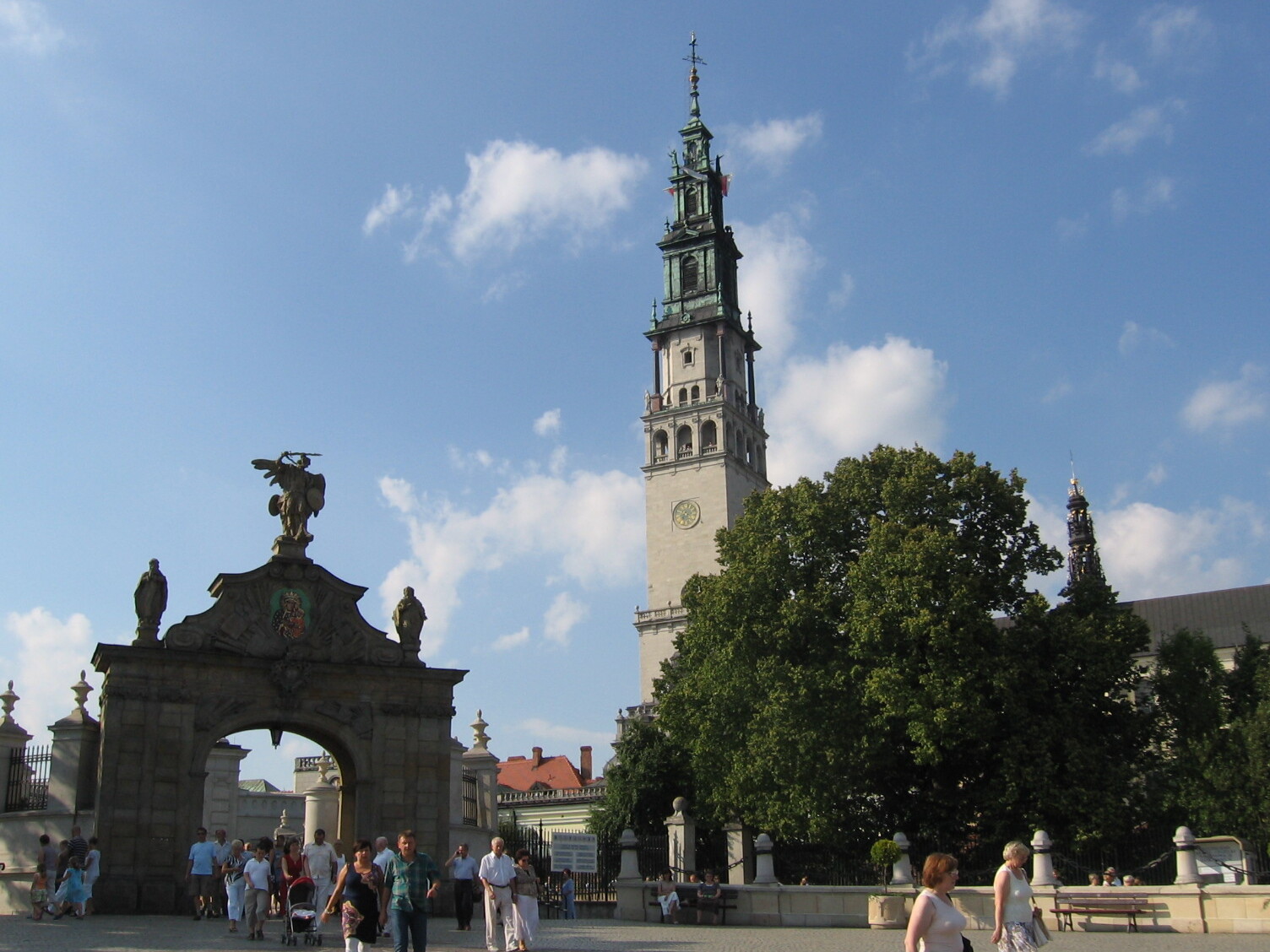
Częstochowa is about 102 kilometers northwest of Krakow and the train from Krakow Główny takes just over an hour and a half on intercity services — this is one of the cleanest train journeys on this list, with regular departures and no awkward changes. The city itself is not the draw; the draw is the Jasna Góra monastery complex on the hill above, and at its center the Black Madonna — an icon of the Virgin Mary that has been the subject of veneration, legend, and pilgrimage for centuries. The legends surrounding the image are layered: the most widespread attributes the painting to Saint Luke, working on a tabletop from the house of the Holy Family. Whether or not you are Catholic, or religious at all, the accumulated weight of belief around this object is genuinely interesting to sit with. On arrival: attend one of the scheduled unveilings of the icon in the chapel (times are posted at the entrance), walk the full fortified ramparts of the monastery, visit the treasury museum which holds ex-votos and donated objects spanning several centuries, and spend time in the bastion courtyard watching the range of pilgrims who arrive.
Insider tip
The icon is covered by a silver screen for most of the day and unveiled at specific hours. If you arrive without checking the schedule, you may wait 90 minutes or miss it entirely. The schedule is available on the Jasna Góra website and changes seasonally.
7Religious site· 102.4 km
Polonia: Il Santuario di Jasna Gora (Monte luminoso) — the monastery as a living institution
This entry is the institutional complement to the previous one. Where the Black Madonna entry focuses on the icon and its legends, Jasna Góra as a sanctuary is worth understanding as a functioning pilgrimage center that draws over four million visitors annually — making it one of the most visited religious sites in Europe. The Pauline monastery was established in the 14th century and has served as a symbol of Polish national identity through multiple occupations and partitions, a role that gives it a civic weight beyond its religious function. For the secular visitor, the most rewarding approach is architectural and historical: the 17th-century fortifications built to resist Swedish siege are substantial and largely intact, the Knights' Hall contains a series of votive paintings recording claimed miracles, and the library holds illuminated manuscripts worth seeking out if you ask the attendant. The fourth thing to do is climb the 106-meter tower for a view over the city and the pilgrimage routes converging on the hill. The train from Krakow makes this a natural pairing with the previous entry — same destination, different lens.
Insider tip
Large organized pilgrimages arrive in waves, particularly on Marian feast days and in August. If you visit on those dates, the atmosphere is extraordinary but the queues for the chapel are long. A Tuesday in May is a different experience entirely.
8Historical site· 125.0 km
The historic town of Levoča: a medieval interior that Slovakia keeps quiet about
Levoča is 125 kilometers from Krakow, across the Slovak border in the Spiš region, and getting there by public transport requires a train to Poprad followed by a bus — total journey time around two and a half to three hours. It is worth it. The town's medieval core is preserved with an integrity that is rare even in Central Europe: the main square, Námestie Majstra Pavla, is lined with burgher houses from the 14th through 17th centuries, and the Church of St. James at its center contains what is considered the tallest Gothic wooden altar in the world, carved by Master Paul of Levoča in the early 16th century. Specific things to do: spend at least 45 minutes inside the church with the altar (a guide is worthwhile here — the iconographic program is intricate), walk the complete circuit of the town walls, visit the old town hall which now houses a regional museum with Spiš history, and climb the tower for a view over the surrounding plain. Levoča is quiet in a way that Krakow's Old Town has not been for decades.
Insider tip
The Poprad-to-Levoča bus runs infrequently. Check the Slovak national transport app (cp.sk) before you leave Krakow and build your return bus time into your planning — missing the last bus means a taxi to Poprad that will significantly exceed your train fare.
9Historical site· 198.6 km
Lubelska and The original synagogue: a baroque interior that survived
At nearly 200 kilometers from Krakow, Lublin is the most distant entry on this list and the one that most honestly requires a full day — arrive early, leave late. The train from Krakow takes between two and two and a half hours depending on the service, with some requiring a change at Rzeszów or running via a less direct route; check PKP Intercity carefully. Lublin itself has a substantial Old Town and a castle, but this entry focuses specifically on the synagogue on Lubartowska Street — the original structure was built in stone in 1536, the current building dates from the second half of the 18th century in Late Baroque style, and its interior retains decorative elements that survived the 20th century in fragmentary but legible form. Visit the synagogue and its small museum, walk the Grodzka Gate area which marks the historic boundary between the Christian and Jewish quarters, visit the Lublin Castle for the regional collection, and allow time for the Majdanek memorial site on the city's southeastern edge — a former Nazi concentration camp that remains one of the best-preserved and most sobering sites of its kind in Europe. Four things, each requiring genuine attention.
Insider tip
The synagogue has limited opening hours and is sometimes closed for private events. Email ahead or check their current schedule before building your day around it. The Grodzka Gate cultural center nearby keeps more reliable hours and provides essential context.
10Castle· 132.5 km
The Spiš Castle in eastern Slovakia: a ruin on a scale that requires distance to understand
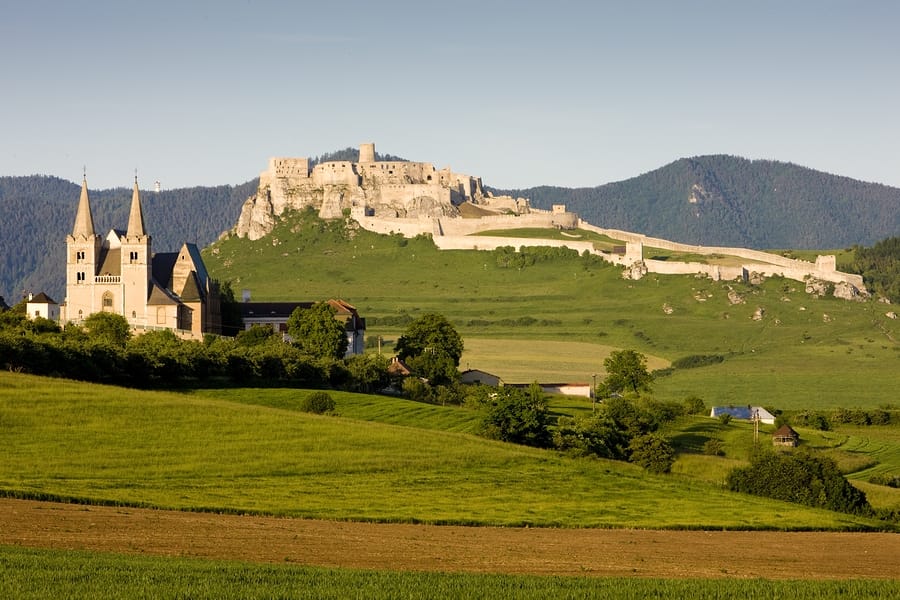
Spiš Castle is 132 kilometers from Krakow and sits on a travertine hill above the Hornád River valley in eastern Slovakia — one of the largest castle complexes in Central Europe by area, a UNESCO World Heritage Site, and a ruin that has been partially stabilized and opened to visitors. The approach matters here: whether you come by car (the most practical option, roughly two hours via the E50) or by train to Spišské Podhradie followed by a 30-minute walk uphill, the moment the full extent of the walls comes into view is one of the more quietly arresting things this region offers. Built from the 12th century onward in Romanesque and later Gothic styles, it passed through Hungarian, Polish, and Habsburg hands before a fire in 1780 left it in its current state. Things to do: walk the full outer circuit of the walls at ground level before entering (this gives you the scale), visit the upper castle museum for the medieval history of the Spiš region, climb the round tower for a panoramic view that takes in Levoča in the distance, and if you have a car, drive the 3 kilometers to the adjacent village of Spišské Podhradie for lunch before the return. The boat connection in this section's title applies to the Orava Reservoir trip and the Vistula river excursions operated seasonally from Krakow toward Tyniec — check local operators for current schedules, as these vary year to year.
Insider tip
Spiš Castle and Levoča are 12 kilometers apart. If you are driving from Krakow, doing both in one day is entirely feasible — Levoča in the morning, Spiš Castle in the afternoon. This is the most efficient use of a cross-border day trip from Krakow.
I have been writing about Central European travel for long enough to have watched certain places tip from overlooked to overcrowded. Some of the destinations on this list are already on that trajectory — Morskie Oko on a Saturday in August is a different experience from Morskie Oko at dawn on a Wednesday in September. Timing is not a minor consideration; it is the variable that determines whether a day trip feels like discovery or like queuing. The underlying point of this list is that Krakow's geography is genuinely generous. You can go north to Lublin and encounter a Jewish heritage site of real depth. You can go south into the Tatras and find yourself in an alpine environment that requires no car, no guide, and no planning beyond a good pair of shoes. You can cross into Slovakia in two hours and stand in front of a castle that most Western European visitors have never heard of. Come back to Krakow tired. That is the goal.
🏆 Pocket guide
Take this guide with you.
Save it offline, get walking directions, and discover thousands more places like the ones you just read.
What is the best time of year for day trips from Krakow?
May, June, and September are the most practical months. July and August are peak season in the Tatras — Morskie Oko and Zakopane in particular become very crowded and parking is a genuine problem. Late September offers cooler temperatures, thinner crowds, and better light for photography. Winter is viable for Zakopane if you want snow conditions, but many other destinations on this list (Oravský Podzámok, Spiš Castle) have reduced hours or partial closures between November and March.
Is a Eurail or Interrail pass useful for these trips?
Partially. A Eurail or Interrail pass covers PKP Intercity trains in Poland, making Częstochowa and Lublin straightforward. It also covers Slovak rail (ZSSK) for the Poprad connection to Levoča. However, pass holders often still need to book seat reservations on intercity services, which carry a small fee. For destinations like Zalipie or Oravský Podzámok, no pass helps — you need a car. Check the Eurail website for current reservation requirements before you travel, as these change.
Is driving in Poland and Slovakia straightforward for visitors from Western Europe?
Generally yes. Polish roads have improved significantly and the main routes from Krakow — toward Zakopane, Tarnów, or the Slovak border — are well-maintained. Slovakia uses a highway vignette system: you must purchase a sticker or digital permit before using motorways, available at border crossings and online. The Tatra mountain roads are narrow in places and can be congested in summer. Speed limits are strictly enforced by camera in both countries. Carry your driving license, vehicle registration, and proof of insurance.
How far in advance should I book trains for these routes?
For Lublin, which involves the longest journey, booking two to three days ahead on PKP Intercity will secure better seat prices and guarantee a spot on the faster services. For Częstochowa, trains are frequent enough that same-day booking is usually fine outside of major pilgrimage dates. The Poprad connection for Levoča should be checked in advance through cp.sk for the onward bus, as schedules are infrequent. In general, the PKP Intercity app or website is more reliable than third-party booking platforms for Polish domestic routes.
Can I do Zakopane and Morskie Oko in the same day?
Technically yes, but I would not recommend it unless you have a car and start very early — before 6am. Morskie Oko requires the 8-kilometer walk each way from Palenica Białczańska, which takes most people around four to five hours total. Add the drive from Krakow to Zakopane, then onward to Palenica, and you are looking at a very long day with very little time in Zakopane itself. Better to choose one or the other, or to spend two nights in Zakopane and do Morskie Oko as a dedicated excursion on the second day.
🏆 Read this offline
Save it to your phone.
Bookmark this guide, plan your trip offline, and discover thousands of places like these.
BookmarkPlan offline60 languages
iOS / Android
Huawei users
Secret WorldHidden places, real stories — plan your trip