The curious thing about Bali is that the places which feel genuinely undiscovered are rarely secret in any technical sense. They appear in guidebooks. They have their own hashtags. What makes them feel hidden is something more subtle: a quality of attention. Most visitors arrive with an itinerary built from the same five photographs, and so they move through the island wearing a kind of perceptual blinker, filtering out anything that doesn't match the image they came to confirm. The result is that an ancient temple complex carved into living rock, or a banana-leaf parcel of spiced fish grilled over charcoal, or a royal garden sitting quietly in a Balinese village, can exist in plain sight and still register as invisible to the person standing right in front of it.
What follows is not a list of places nobody has heard of. It is a list of places that deserve a different quality of hearing. Some are architectural, some are edible, some are simply corners of the island where the noise drops away and you are left with something that feels, against all odds, like a genuine encounter. That is rarer than any secret. That is worth the flight.
At a glance
- Bali: The Pura Taman Saraswati, a beautiful water temple: the goddess nobody hurries to meet
- Bali | Gunung Kawi Temple complex: eleven shrines and almost nobody looking at them
- Bali | Tirta Empul Temple: the spring that predates the tourists by a millennium
- Taman Ayun Temple, a landmark in the village of Mengwi: the royal garden the tour buses pass through too quickly
- Sate or "satay" is marinated, skewered and grilled meat: the fire that predates the restaurant
- Nasi Goreng is Indonesia's fried rice: the dish that knows more than it lets on
- Bali and the chicken rice: Nasi Ayam and Nasi Campur: the plate that contains an entire philosophy
- Bali | Babi guling: the spit-roast that requires a plan
- Pepes is an Indonesian Sundanese cooking method: the banana leaf as both wrapper and recipe
- Tegallalang Rice Terraces: the photograph and the thing itself
- Indonesia | Ubud: the town that is easier to love slowly
- Come pianificare un viaggio a Bali con l'AI nel 2026: the algorithm and the island that resists it
- Secret World vs Wanderlog: quale app scegliere per Bali 2026: the map that knows where you are but not why you went
- Vacanze Bali low cost 2026: guida pratica per spendere poco: the economy of attention
- Vacanze Bali low cost 2026: guida pratica per spendere poco: what fifty euros a day actually buys
Part one — The essentials
Bali: The Pura Taman Saraswati, a beautiful water temple: the goddess nobody hurries to meet

The temple was commissioned in the mid-twentieth century and designed by the influential Balinese artist I Gusti Nyoman Lempad, whose sculptural sensibility is visible in every decorative detail. It is a working place of worship, not a museum, and that distinction matters. Arrive early enough and you may find offerings being laid with the kind of focused care that reminds you that this is not a backdrop.
Insider tip
Evening performances of Kecak or Legong dance are sometimes staged in the lotus courtyard — ask locally about the current schedule, as it changes seasonally. The acoustics, surrounded by water and stone, are unlike anything you will find in a purpose-built venue.
Bali | Gunung Kawi Temple complex: eleven shrines and almost nobody looking at them
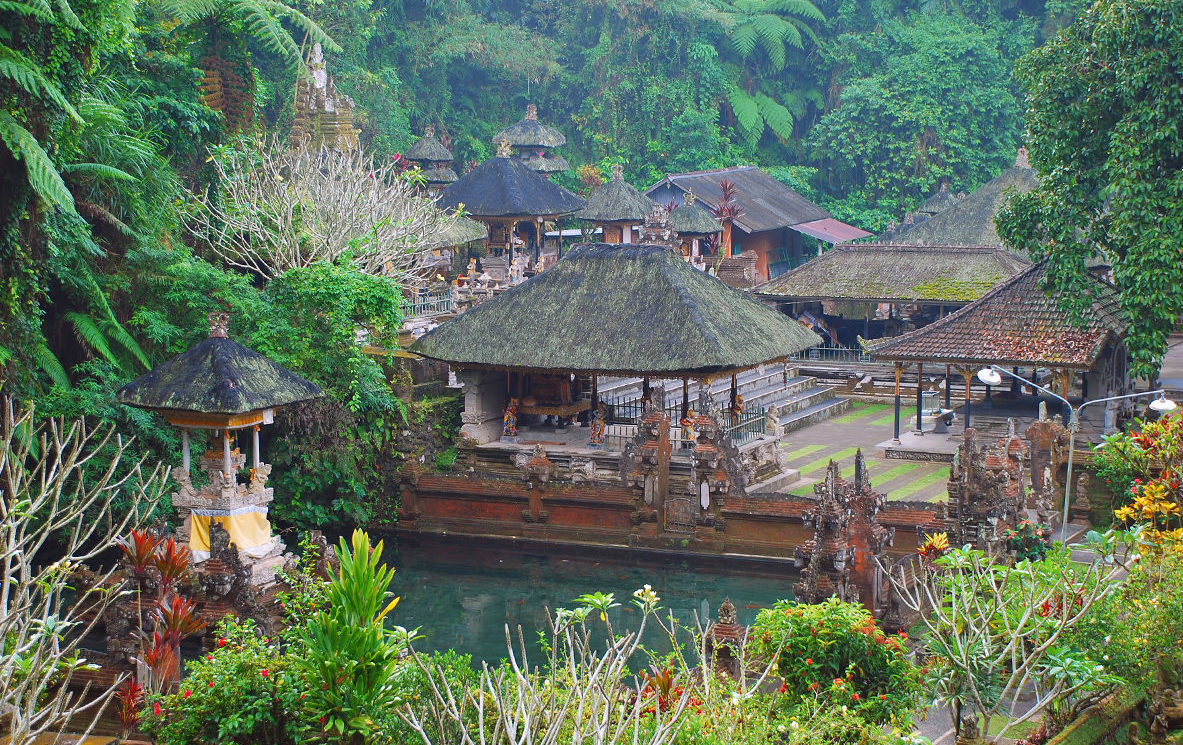
The scale of the carving is difficult to absorb at first. These are not small decorative elements but full architectural forms — arched niches two stories tall — hewn from the living stone. The surrounding landscape of terraced rice fields and river valley adds a dimension that no photograph fully captures: the sound of water, the smell of wet earth, the sense that the place was designed to be experienced as an environment rather than an object.
Insider tip
The complex is split across both banks of the river, and many visitors see only the main cluster on the west side. Cross the small bridge to find the more isolated eastern shrines, which are often entirely empty even when the main site has a queue.
Bali | Tirta Empul Temple: the spring that predates the tourists by a millennium

The ritual bathing — melukat — is not a performance for visitors. People come from across Bali to move through the sequence of fountainheads in the pools, each one associated with a specific purification purpose, as part of a living spiritual practice. The temple complex surrounding the pools contains shrines and pavilions of considerable antiquity, and the spring itself, which bubbles up from the ground with a clarity that seems improbable, is the point around which everything else organises itself. Standing at the edge of that water, watching the ritual unfold, is one of those experiences that resists being turned into content.
Insider tip
If you wish to enter the inner temple areas, a sarong and sash are required and can be borrowed at the entrance. Arrive before 8 a.m. to see the site at its most devotional and least crowded — the light on the water at that hour is also considerably better for those who cannot resist a photograph.
Taman Ayun Temple, a landmark in the village of Mengwi: the royal garden the tour buses pass through too quickly

The temple dates to the seventeenth century and served as the state temple of the Mengwi dynasty, one of Bali's most powerful pre-colonial kingdoms. It was expanded and restored in the nineteenth century, and its current form reflects a sophisticated understanding of spatial hierarchy: the outer grounds are open and park-like, the inner courtyards increasingly restricted and sacred. Most visitors on the standard Ubud-to-Tanah Lot circuit stop here for twenty minutes. The temple rewards considerably more.
Insider tip
The outer moat path, which circles the entire complex, takes about fifteen minutes to walk and offers perspectives on the meru towers that the main entrance courtyard does not. Almost nobody does this walk, and it is the better view.
Part two — A little deeper
Sate or "satay" is marinated, skewered and grilled meat: the fire that predates the restaurant

Balinese sate lilit, for instance, wraps minced meat — often fish or pork — around a lemongrass stalk rather than a bamboo skewer, incorporating a spice paste that can include galangal, turmeric, kaffir lime leaves, and candlenut. The result is a preparation that is aromatic in a way that the more familiar skewered versions are not. Finding the version made by someone who has been doing it the same way for thirty years, at a warung with no English menu and plastic chairs, is one of the more reliable pleasures Bali offers.
Insider tip
Ask specifically for sate lilit rather than the generic term, and if you are near a market in the morning, look for vendors who are still grilling over coconut-shell charcoal — the smoke contributes a flavour that gas cannot replicate.
Nasi Goreng is Indonesia's fried rice: the dish that knows more than it lets on

The key variables are the kecap manis — sweet soy sauce — which provides the characteristic dark colour and caramel depth, and the shrimp paste, which adds a fermented intensity that polite versions tend to understate. Pre-steamed rice, stir-fried at high heat with whatever the cook has to hand, is the honest form of this dish, and it is best encountered in contexts where nobody is performing it for you.
Insider tip
Night markets and the small warungs that open after 9 p.m. near local residential streets tend to produce the most honest versions. Order it with extra sambal on the side and specify whether you want it pedas — spicy — or not.
Bali and the chicken rice: Nasi Ayam and Nasi Campur: the plate that contains an entire philosophy
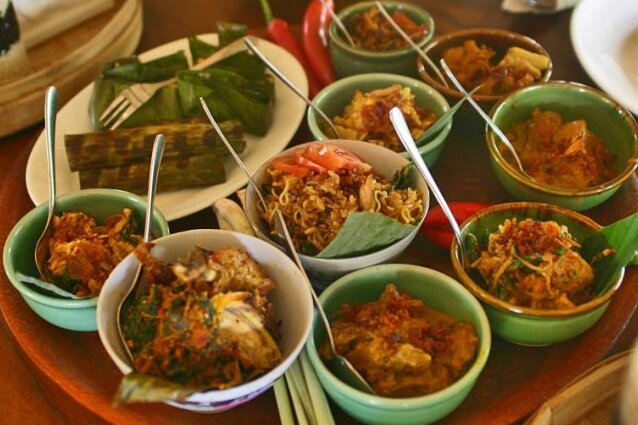
The logic of the dish is abundance through variety rather than abundance through quantity, and it reflects a culinary culture in which the meal is understood as an assembly of complementary flavours rather than a single dominant protein. The best versions are found in warungs that prepare everything fresh in the morning and stop serving when it runs out — which is usually by noon.
Insider tip
Look for warungs where the food is displayed in covered glass cases near the entrance — this is the traditional self-service format, and the presence of many small dishes is a reliable indicator of a kitchen that takes the variety seriously.
Bali | Babi guling: the spit-roast that requires a plan

The word guling means 'to roll', referring to the slow rotation of the whole pig over a wood fire for several hours. The result, when done correctly, is a combination of textures — crispy skin, soft flesh, dense spiced stuffing — that is difficult to achieve by any other method. The dish is available daily at specialist warungs, but the best versions still sell out before lunchtime.
Insider tip
Several warungs in Ubud and Gianyar are known specifically for babi guling and open as early as 7 a.m. Arriving before 10 a.m. gives you access to the full range of cuts and preparations; arriving after noon often means you are eating whatever is left.
Part three — Off the obvious path
Pepes is an Indonesian Sundanese cooking method: the banana leaf as both wrapper and recipe
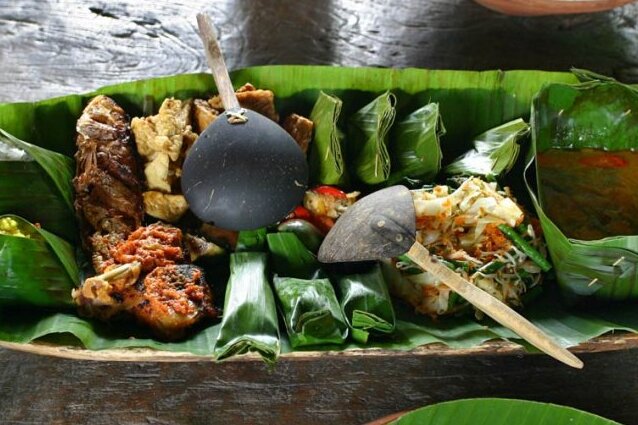
Originally a Sundanese method from West Java, pepes has become thoroughly integrated into Balinese cooking, and the island's version tends toward the aromatic rather than the fiery — kaffir lime, turmeric, and lemongrass feature prominently. The result is a preparation that is simultaneously modest in presentation and sophisticated in flavour, which is perhaps why it tends to be overlooked in favour of more visually dramatic dishes. Unwrapping a pepes at the table, releasing the steam and the smell together, is one of the more quietly satisfying moments in Balinese eating.
Insider tip
Pepes ikan — fish pepes — is the version most commonly found in Bali, and the quality varies considerably. Ask whether it is grilled or steamed; the grilled version develops a caramelised edge where the leaf meets the fire that the steamed version does not.
Tegallalang Rice Terraces: the photograph and the thing itself

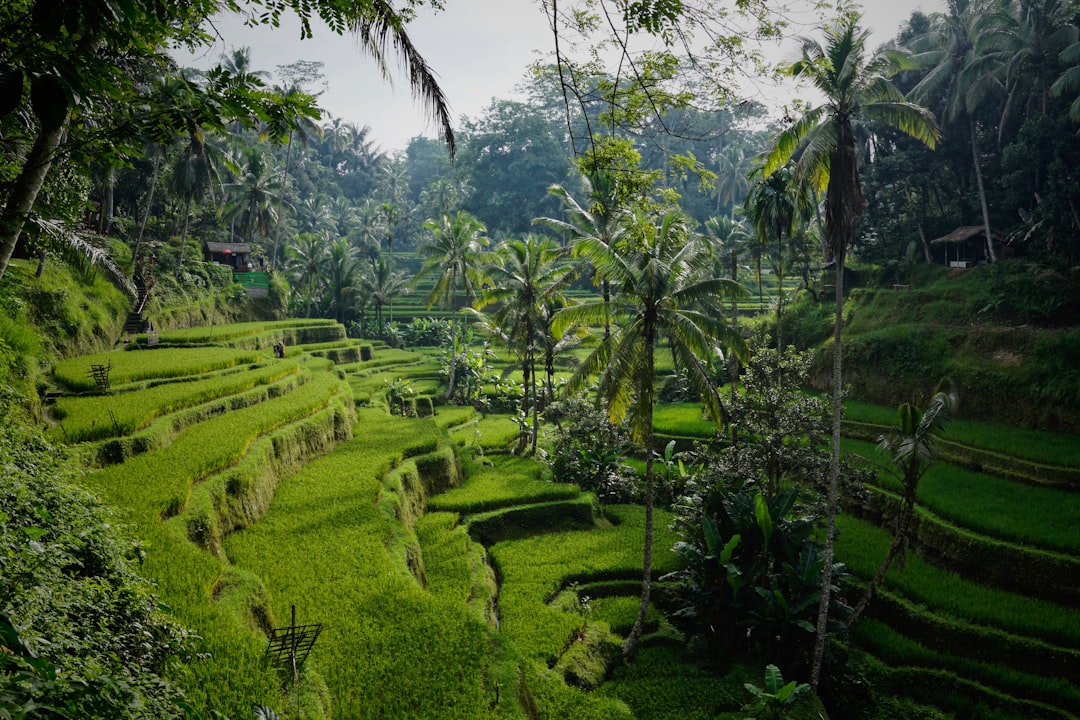
The terraces operate on the subak system, a traditional Balinese cooperative irrigation method that manages water distribution across the hillside through a network of channels and schedules governed by a temple-based social structure. This system, which has been in continuous use for centuries and was recognised by UNESCO, is the reason the terraces look the way they do — not because someone designed them to be beautiful, but because generations of farmers solved a practical problem and the solution happened to be beautiful. That distinction is worth holding onto when you are standing there with your phone.
Insider tip
The northern end of the terrace complex, accessible by walking past the main viewing platforms and continuing along the ridge path, is significantly less visited and offers a perspective that includes the full sweep of the valley without the foreground of swing infrastructure and souvenir stalls.
Indonesia | Ubud: the town that is easier to love slowly

The villages that surround Ubud — Penestanan, Sayan, Kedewatan — have their own artistic and cultural identities that predate the town's current celebrity. The tradition of Balinese painting that developed in the Ubud area in the twentieth century, partly through the influence of Western artists who settled there, produced a body of work that is still visible in small galleries and family studios if you take the time to find them. The rice fields that adjoin the town's western edge are walkable, and walking them at dusk, when the light goes gold and the frogs begin, is the experience that people mean when they say Ubud changed them.
Insider tip
The Campuhan Ridge Walk, a path that runs along a narrow ridge between two river valleys just west of the town centre, is best done at 6 a.m. before the heat and the other walkers arrive. The view of the surrounding jungle from the ridge at that hour has a quality that the afternoon version entirely lacks.
Come pianificare un viaggio a Bali con l'AI nel 2026: the algorithm and the island that resists it

The tension between planned and discovered is not new to travel writing, but it is sharpening. Bali is a destination that genuinely rewards the traveller who arrives with a framework loose enough to be interrupted. The island's geography — a relatively small area containing an enormous variety of landscapes, microclimates, and cultural zones — means that the difference between a good day and a great one is often a matter of which road you took from the junction. No planning tool, however sophisticated, can fully account for that.
Insider tip
Use AI itinerary tools to handle the logistics — transport timings, accommodation proximity, temple opening hours — and then deliberately leave two or three half-days in the schedule with no plan. Those gaps tend to produce the stories you actually tell when you get home.
Part four — Around and beyond
Secret World vs Wanderlog: quale app scegliere per Bali 2026: the map that knows where you are but not why you went

The question of which application serves Bali best is less interesting than the question of what any application cannot tell you — which is, broadly speaking, everything that makes a place worth visiting. The texture of a market, the smell of incense at a roadside shrine, the particular quality of light on a rice field at a specific hour of a specific season: these remain stubbornly outside the database. The best use of any travel app is as a foundation, not a ceiling.
Insider tip
Download offline maps before you leave your accommodation each day — mobile data in rural Bali can be unreliable, and the moments when you most need navigation are usually the moments when you have no signal. Google Maps and Maps.me both have reliable offline options for the island.
Vacanze Bali low cost 2026: guida pratica per spendere poco: the economy of attention
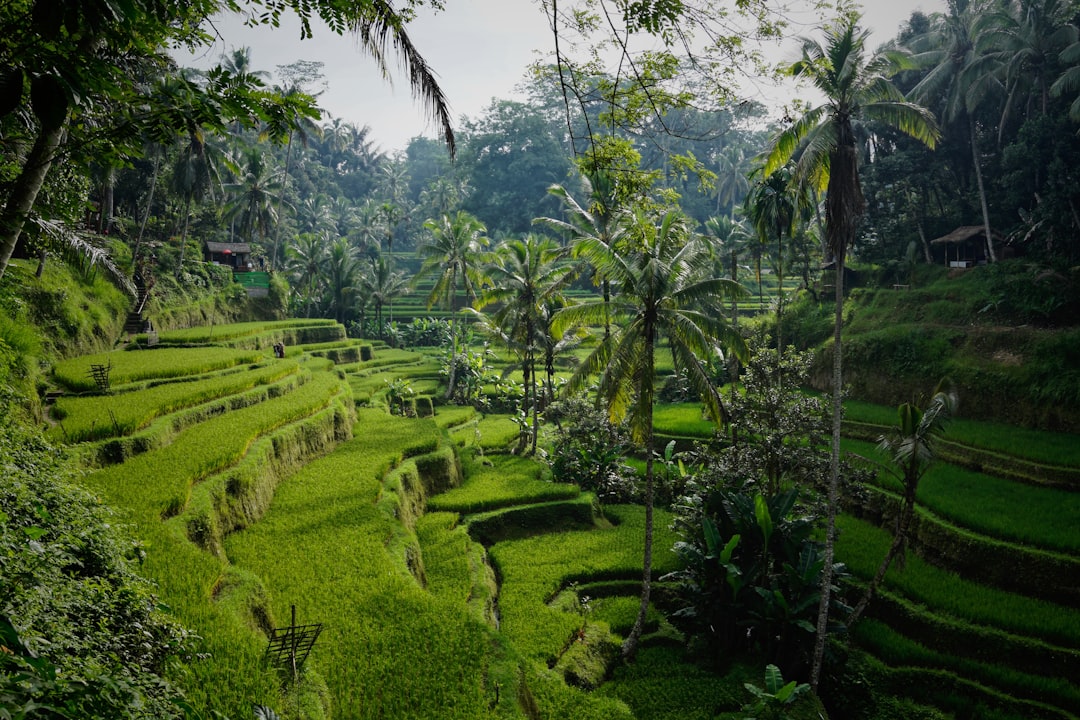
The more interesting observation is that the expensive version of Bali and the authentic version are not the same version, and the gap between them is not primarily a matter of money but of attention. The traveller who is willing to eat where locals eat, travel by scooter rather than private driver, and stay in a family-run guesthouse rather than a villa with a private pool will spend considerably less and, in most cases, see considerably more. The island does not require a large budget. It requires a degree of flexibility that money sometimes makes harder, not easier, to achieve.
Insider tip
Negotiate scooter rental directly with local rental shops rather than through hotel concierges or app-based services — the price difference can be substantial, and the shop owner will often provide genuinely useful local knowledge as part of the transaction.
Vacanze Bali low cost 2026: guida pratica per spendere poco: what fifty euros a day actually buys
What the fifty-euros-a-day framework actually reveals is that the primary cost of Bali is not the island itself but the infrastructure that has grown up around the expectation of a certain kind of visitor. Opting out of that infrastructure, partially or entirely, is both financially and experientially rewarding — and it is more possible in Bali than in almost any other destination of comparable international profile.
Insider tip
The warung system — small, family-run eateries that are the backbone of local eating — is the single most reliable source of both good food and budget savings. Look for the ones with handwritten menus, plastic chairs, and a television showing local programming. These are the ones that feed the neighbourhood, not the tourists.
There is a version of Bali that is entirely legible from a distance — the one assembled from photographs, wellness blogs, and travel-agency brochures. It is not false, exactly. The rice terraces are real. The water temples are real. The food is as good as anyone says it is. But legibility is not the same as understanding, and the island consistently rewards the traveller who is willing to be confused for a moment, to stand in front of something without immediately knowing what to call it or how to frame it.
The places in this list are not secrets. Several of them are famous. What they share is a quality of depth that resists the quick pass — the thing that remains after the photograph is taken and the crowd moves on. Bali has been written about so extensively that the writing has almost become a layer of the landscape itself. The task, for anyone who goes there now, is to find the places where that layer is thin enough to see through.
The places in this list are not secrets. Several of them are famous. What they share is a quality of depth that resists the quick pass — the thing that remains after the photograph is taken and the crowd moves on. Bali has been written about so extensively that the writing has almost become a layer of the landscape itself. The task, for anyone who goes there now, is to find the places where that layer is thin enough to see through.


