
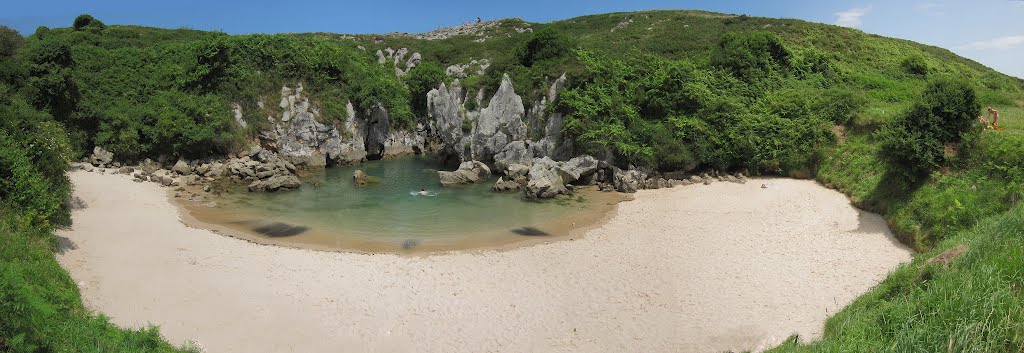

Imagine a beach so hidden that it appears like a secret whispered by the earth itself. This is Gulpiyuri Beach, a mystical natural wonder located near the town of Llanes in the autonomous community of Asturias, northern Spain. Tucked away from the roaring Cantabrian Sea, this secluded beach is a mere 100 meters inland, yet its unique charm has captured the imaginations of visitors and locals alike.
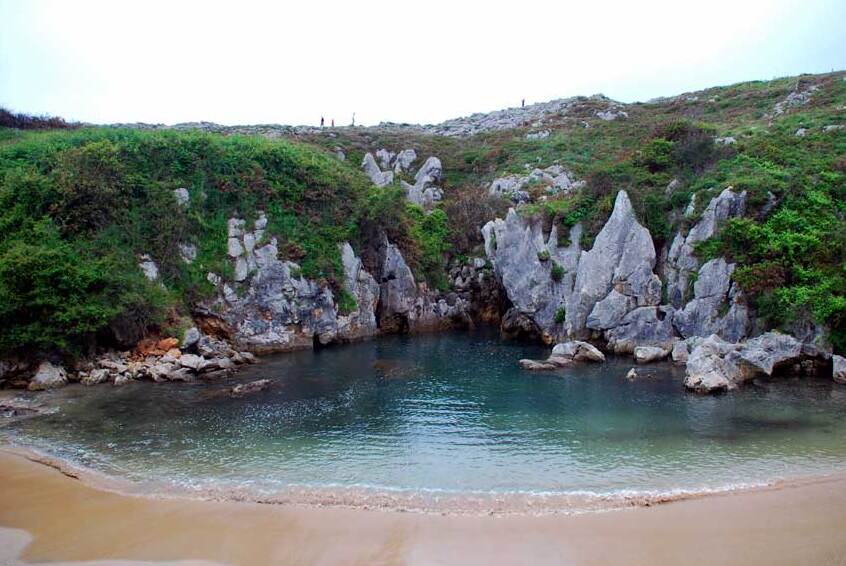
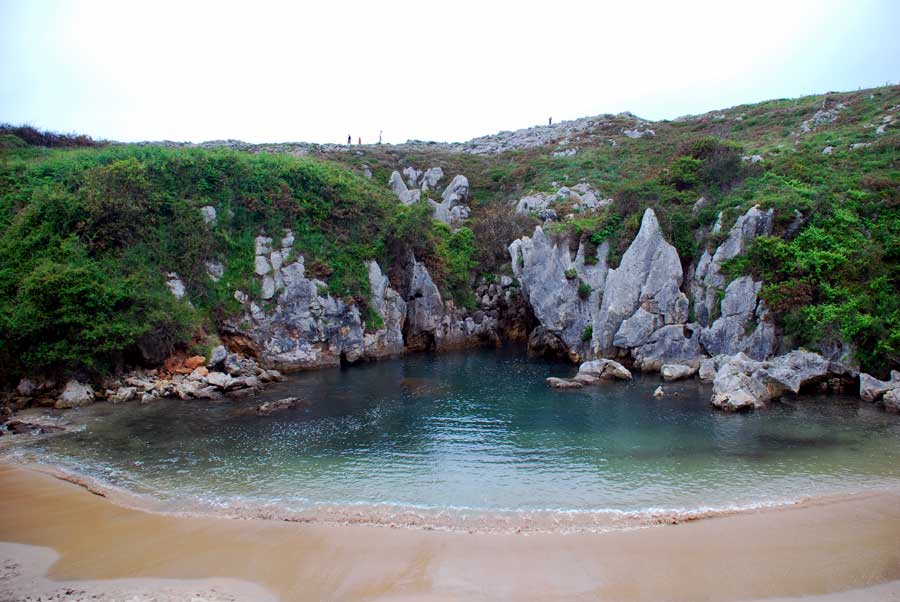
Gulpiyuri's origins date back thousands of years, sculpted by the relentless erosive power of the sea. The beach is the result of a fascinating geological process where the ocean carved a series of subterranean tunnels through the limestone cliffs, creating a spectacular flooded sinkhole. This natural phenomenon allows seawater to flow inland during high tide, forming a small, serene beach that seems to appear out of nowhere. This geological marvel is a testament to nature's artistry, and its formation is closely tied to the region's karst landscape, which includes numerous caves and underground rivers.
The area around Gulpiyuri is steeped in history, with human settlements dating back to prehistoric times. Although the beach itself was not a site of major historical events, the surrounding region of Asturias holds a rich tapestry of history, from the Asturian Kingdom's resistance against Moorish expansion in the early Middle Ages to its role in the Spanish Civil War. This historical depth adds a layer of intrigue to the already captivating natural scenery.
While art and architecture are not the primary draws of Gulpiyuri Beach, the nearby town of Llanes offers a glimpse into the region's cultural heritage. Llanes is home to a charming collection of traditional Asturian architecture, characterized by stone houses with wooden balconies and red-tiled roofs. Notable landmarks include the medieval Llanes Castle and the Basilica of Santa María del Conceyu, showcasing Gothic and Baroque influences. Art lovers can explore local galleries that feature works by regional artists inspired by Asturias' rugged landscapes and maritime traditions.
Asturias is renowned for its vibrant local culture and traditions. The region is known for its lively festivals, such as the Fiesta de Nuestra Señora del Carmen, a seafaring celebration in honor of the patroness of sailors, featuring processions and traditional Asturian music. Visitors to Gulpiyuri can immerse themselves in these cultural festivities, experiencing the warmth and hospitality of the Asturian people.
No visit to Asturias would be complete without indulging in its gastronomy. The region is famed for its hearty and flavorful cuisine, with dishes that reflect its coastal and mountainous geography. Visitors should savor fabada asturiana, a rich bean stew made with chorizo, morcilla, and pork shoulder. Seafood lovers will delight in merluza a la sidra, hake cooked in cider, a nod to the region's famed apple cider production. Pair these dishes with a glass of Asturian cider, poured in the traditional high pour, which enhances the drink's aeration and flavor.
Among the lesser-known curiosities of Gulpiyuri is its status as one of the world's smallest beaches. Measuring just about 40 meters in length, this tiny crescent of sand offers a unique sense of intimacy and seclusion. It's a place where the usual beach activities, like swimming or sunbathing, are transformed into a singular experience due to its scale and setting. The beach's name, Gulpiyuri, is derived from the local Asturian language, meaning "water circle" or "water whirlpool," a fitting description for its circular shape and the tidal phenomena that occur here.
Practical visitor information is crucial for those planning a trip to this hidden gem. The best time to visit Gulpiyuri is during the summer months, from June to September, when the weather is warm and the tides allow for optimal beach conditions. However, the beach can be accessed year-round and visiting during the off-peak seasons offers a more tranquil experience. To reach Gulpiyuri, visitors can follow a scenic walking path from the nearby village of Naves, which also provides parking facilities.
As you approach the beach, keep an eye out for the wildflowers and diverse coastal flora that thrive in this untouched environment. It's a place where the natural world reigns supreme, and as such, visitors are encouraged to tread lightly, respecting the delicate ecosystem that makes Gulpiyuri a true natural wonder.


