


The Archus of Hadrian, also known as Archus Felice or Archus of Capua, marks the symbolic boundary between the city of Santa Maria Capua Vetere and present-day Capua, located at the end of Corso Aldo Moro, in the vicinity of the Amphitheater. Its history and exact dating are the subject of debate among historians.

According to a plaque found around 1700, but considered doubtful by some, and various hypotheses, the arch is believed to have been erected around 130 AD in honor of Emperor Hadrian. Hadrian is said to have had a special fondness for Capua and to have been grateful for the improvements made to the city during his reign, including the beautification of the Amphitheater and the expansion of the colony. This gratitude would have prompted the Capuans to dedicate the imposing arch to him.
However, some scholars suggest that Hadrian's Arch may have been built in the 6th century AD, under the empire of Trajan, in conjunction with the extension of the Appian Way. A marble plaque placed in the monument in 1860, commemorating the Battle of Volturno, testifies to the arch's historical importance.
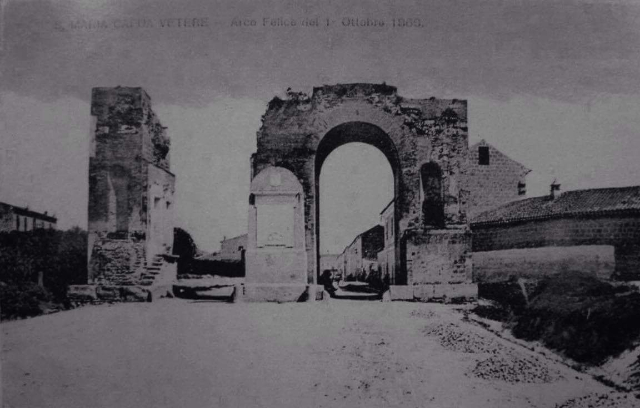
The arch is located in a position slightly inclined to the axis of the original road, a shift caused by changes in road routes over the centuries. Stairs were built along its arches to allow pedestrians to safely cross a busy road. These details highlight the practical and symbolic function of Hadrian's Arch, which continues to be a historical and cultural landmark in the region.


