
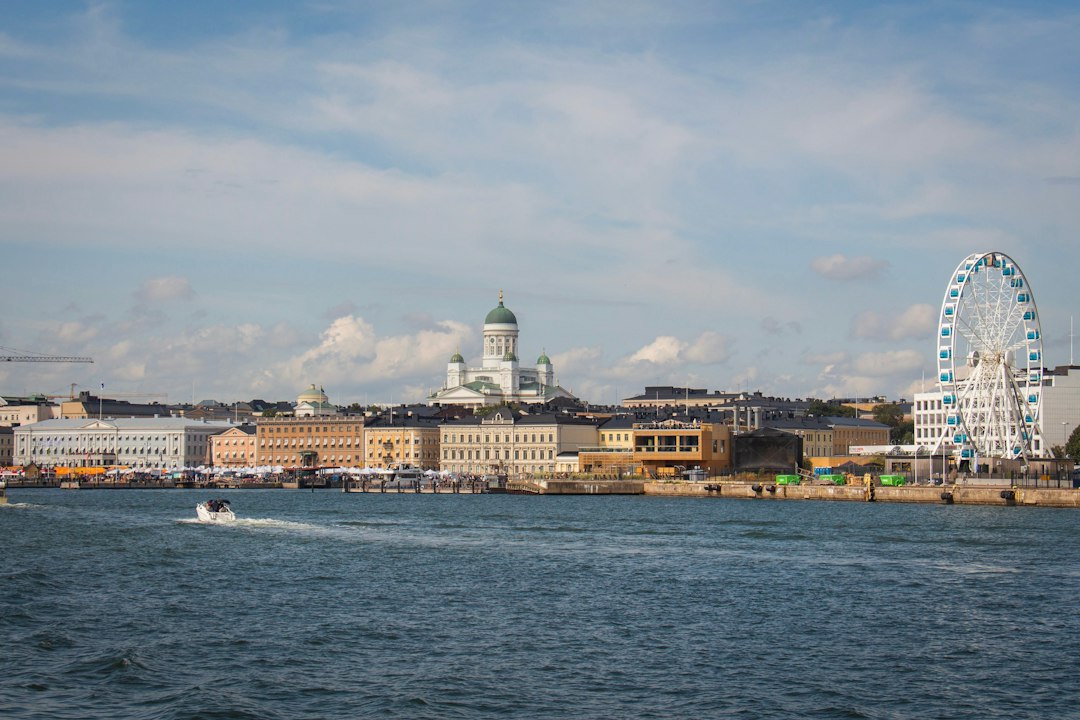

The smell arrives before everything else. As soon as you push open the heavy door of the Hakaniemen kauppahalli, a warm cloud of smoke, spices, and rye bread envelops the visitor. We are in the working-class neighborhood of Hakaniemi, in Helsinki, and this red-brick building built in 1914 is still one of the places where Finns do their real shopping, not the kind designed for tourists.

The Hakaniemi covered market is located on two floors, and it is precisely this verticality that makes it different from other markets in the city. On the ground floor, food stalls dominate: reindeer sausages hanging in neat rows, local cheeses, herring marinated in amber-colored jars, dark and dense rye bread. On the upper floor, however, the market changes face and transforms into a labyrinth of Finnish fabrics, colorful wools, handcrafted items, and small shops that seem stuck decades ago.
A building that tells the story of its neighborhood
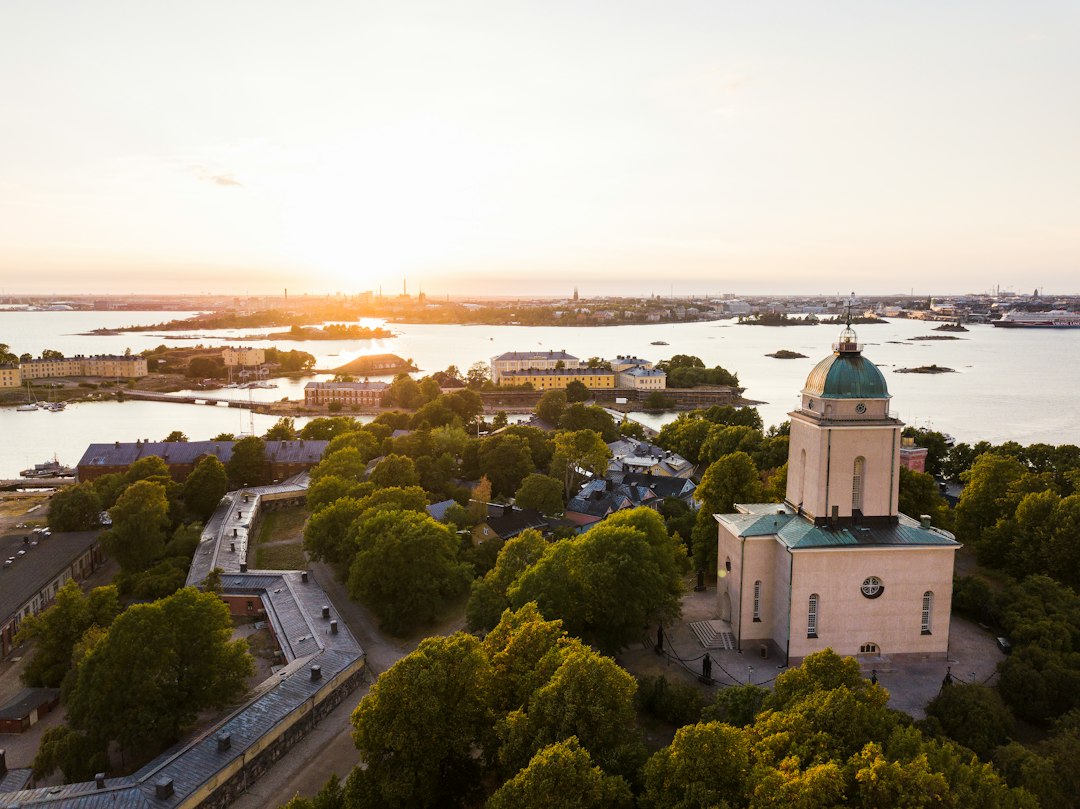
The Hakaniemi Market Hall was inaugurated in 1914 to serve the working-class neighborhood of Hakaniemi, historically linked to the working class of Helsinki and the Finnish labor movement. The red brick building, with its arched windows and solid, functional structure, reflects the utilitarian architecture of the time, designed to last and to work, not to impress. Looking at the facade from the outside, one can see how the building has remained largely faithful to its original form, despite the decades and some restoration work.
The market has always been a landmark for those living within a few blocks. It is not uncommon to see elderly residents stopping to chat with vendors they have known for years, or families buying bread for the week. This human continuity is perhaps the most difficult detail to photograph but the easiest to feel.
What can be found among the stalls: flavors of the North
Reindeer sausages — poronkäristys in the pan-fried version, or smoked whole — are probably the most sought-after product by non-Finnish visitors. The meat stalls display cuts that are uncommon for those coming from Southern Europe, including game and freshwater fish. Next to them, jars of cloudberry jam, the yellow-orange fruit that grows in the bogs of Lapland, have a tart and complex flavor that resembles nothing easily found elsewhere.
Finnish rye bread, dark and dense, is sold in round shapes with a central hole — a traditional shape that was once used to thread the bread onto a stick and let it dry. Some stalls offer small tastings, and it is worth accepting them: the difference between industrial rye bread and artisanal bread is stark, almost surprising. Prices on the ground floor are affordable and in line with those of a local supermarket, not inflated for tourism.
The upper floor: fabrics, wools, and craftsmanship
Going up to the first floor of the Hakaniemen kauppahalli means entering a completely different environment. Here the lighting is softer, the colors change: rust red, midnight blue, cream white of the wools and traditional Finnish fabrics. Some shops sell yarns and fabrics by the meter, frequented mainly by regular customers who come to buy materials for knitting or sewing.
There are also small shops of vintage and second-hand items, where it is possible to find Finnish ceramics from the Sixties and Seventies at reasonable prices. Not everything is of top quality, but those who have patience and a keen eye can make good purchases. The atmosphere is that of a market that has never worried about looking modern, and this is exactly its strength.
How to visit the Hakaniemen kauppahalli
The market is easily accessible by the Helsinki metro: the Hakaniemi stop on the M1/M2 line is just a few steps from the main entrance. Alternatively, several tram lines pass nearby. The market is open from Monday to Saturday, with hours varying between the floors and individual vendors, but generally, the morning — between 8:00 and 11:00 — is the best time to find the food stalls fully stocked and the most authentic atmosphere.
Saturday morning is particularly lively, but also more crowded. Those who prefer to move at a leisurely pace can choose a weekday. A complete visit, with a stop for coffee and some tastings, takes about an hour and a half. It is not necessary to buy anything to enjoy the place: just walk slowly, look at the faces of the vendors, and let the smell of smoked bread do the rest.


