
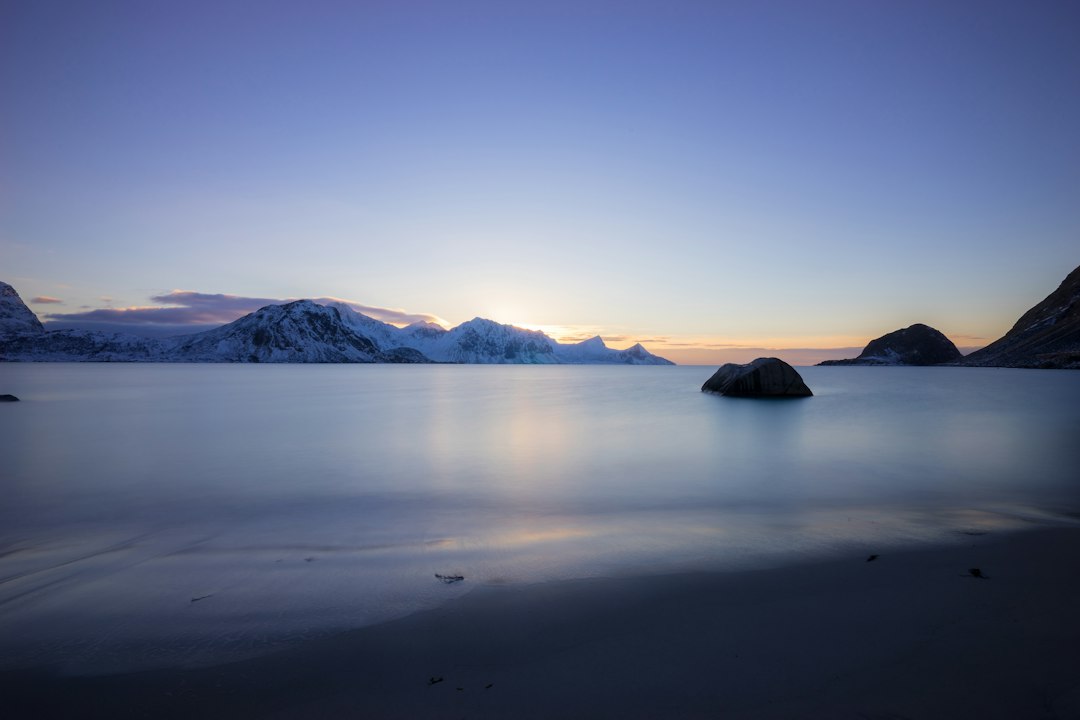

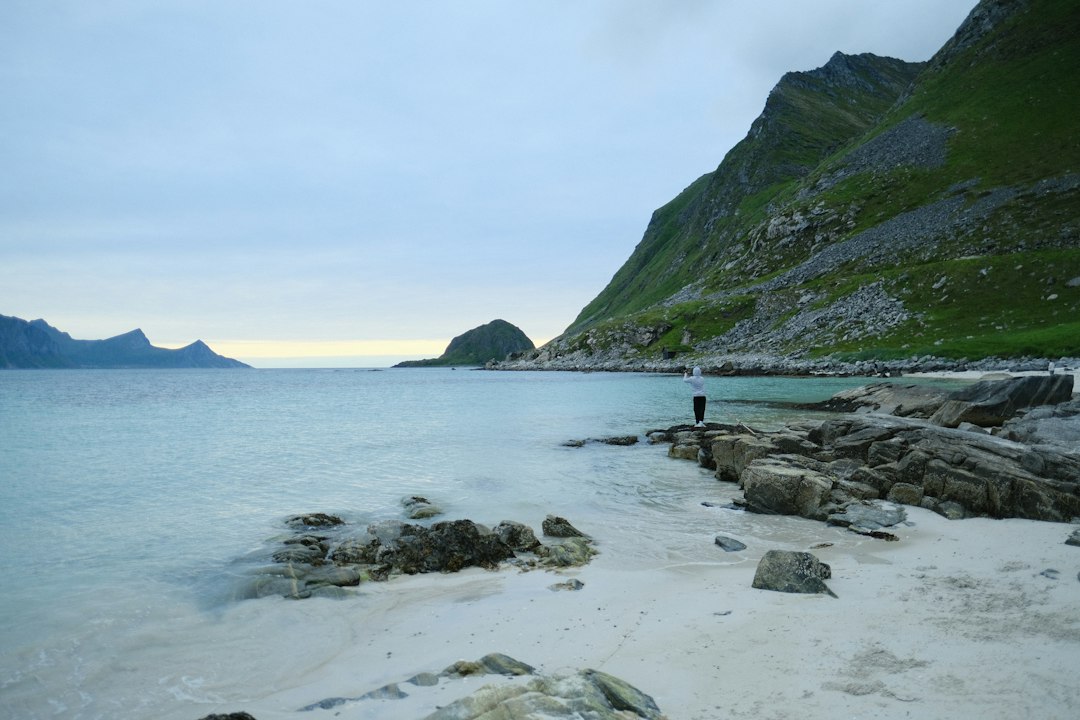
The sand is white. Not cream-colored, not beige, not gray as one might expect at this latitude — white, fine, almost blinding under the summer midnight sun. Haukland Beach is located on the island of Vestvågøy, in the Lofoten archipelago, in Norway, and the first impression it gives is one of a geographical misunderstanding: a Caribbean beach mistakenly transported beyond the Arctic Circle, at about 68 degrees north latitude.
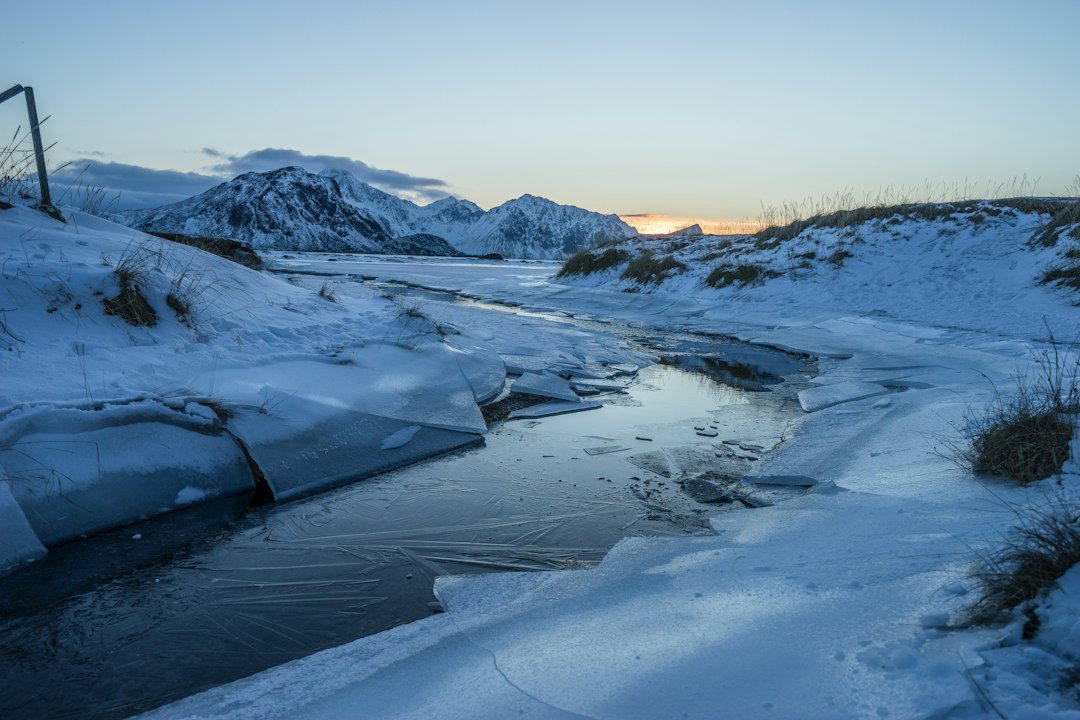
The ocean water lapping at this shore is a color that changes continuously: turquoise in full daylight, emerald green when the clouds filter the sun, almost metallic black on late August evenings when the wind rises from the west. The Gulf Stream keeps the water temperatures relatively mild for this latitude, making swimming possible in the summer months, generally between June and August, when the water reaches temperatures around 8-12 degrees Celsius — cold, but manageable for those who are determined.
The sand and the surrounding landscape
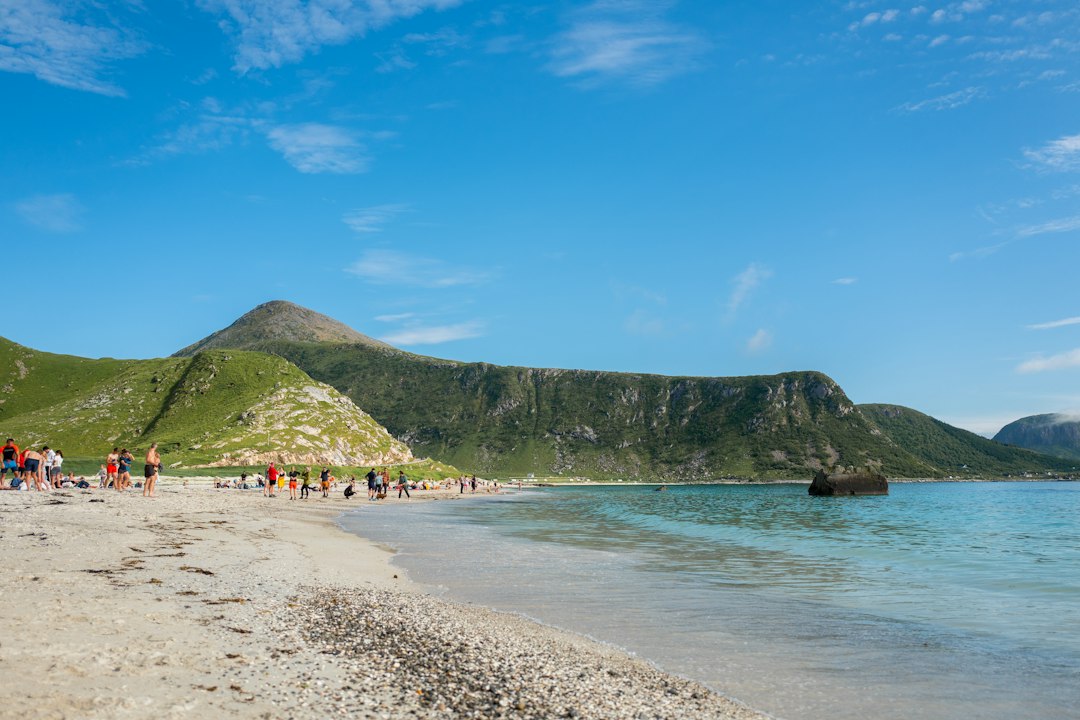
What makes Haukland visually unique is the contrast between the beach and the mountainous context that surrounds it. Behind the shore rise the typical sharp peaks of the Lofoten, granite rocks that drop almost vertically into the sea, covered in intense green grass during the warm season. The beach is about 500 meters long and opens into a sheltered bay, which partially protects it from the strongest winds that characterize the archipelago.
Walking on the sand, one notices its unusual texture: it is fine and compact near the water, where the waves compact it at each tide, but it becomes softer and deeper as one moves away from the shore. There are no tropical shells or corals, but dark seaweed brought by the current and, in the pools left by the low tide, small marine organisms that tell the true Arctic nature of this place. The seabed is visible up to several meters deep thanks to the exceptional transparency of the water.
The Northern Lights Reflected in the Water
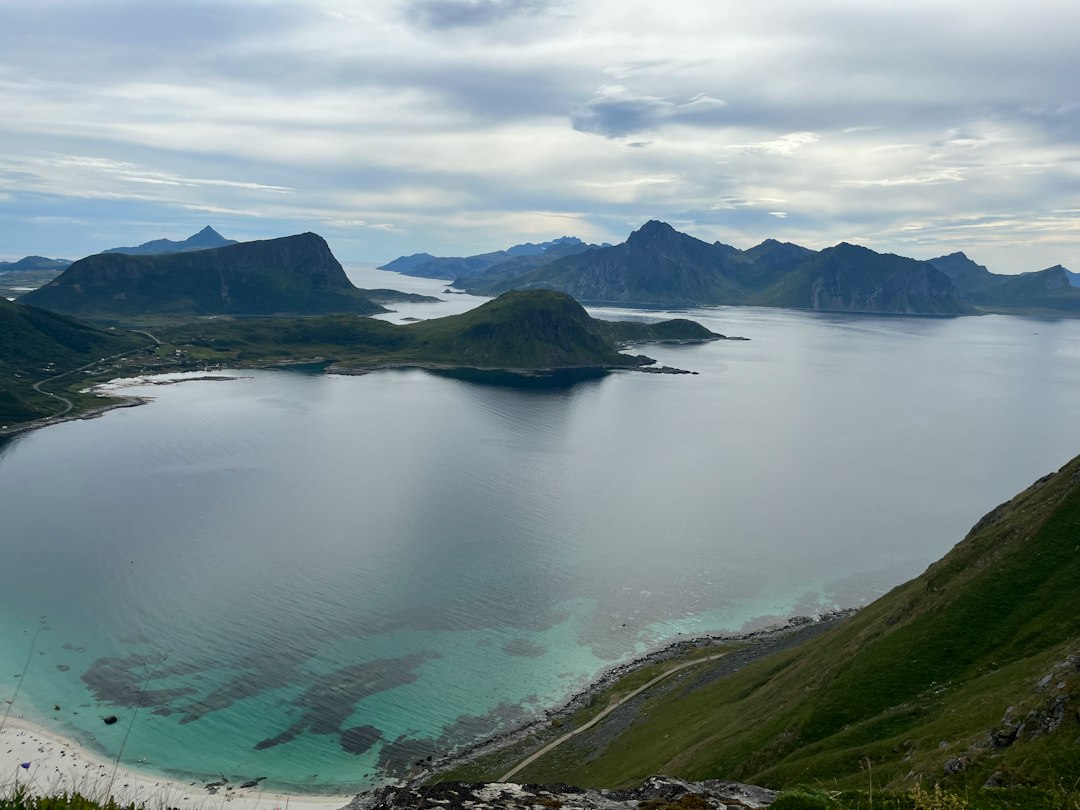
In winter, from October to about April, Haukland Beach becomes a prime observation point for the Northern Lights. The location of the bay, facing northwest, and the absence of significant light pollution in the area make the sky particularly dark. When the aurora is intense, its green and sometimes red lights reflect on the surface of the water and on the wet sand, creating a visual effect that many photographers specifically seek in this place. The temperature in winter regularly drops below zero, often between -5 and -15 degrees Celsius, and the wind can be very strong: those who come in this season must be equipped with appropriate technical clothing.
The contrast between the snow that can settle on the white sand and the dark water of the sea in winter produces chromatically powerful landscapes. It is not uncommon to find the beach completely deserted in this season, with the only sound being that of the wind and the waves — a very different experience from the relative summer bustle.
How to get there and practical information
Haukland Beach can be reached by car via the Norwegian national road E10, which crosses the entire Lofoten archipelago. From the village of Leknes, which is the main settlement of Vestvågøy and has a small airport with connections to Bodø, the beach is about 18 kilometers to the northwest. The drive takes about 20-25 minutes. There is no regular bus service to the beach, so private transport or a rental car is practically essential.
There is a small paid parking area on site, with rates in recent years hovering around 50-100 Norwegian kroner for several hours of parking — rates may vary and it is advisable to check the signage on site. There are seasonal public restrooms available. The best time to visit without crowds is early in the morning, before 9:00 AM, or late in the evening during summer, when the midnight sun illuminates the beach with a low and almost horizontal orange light that transforms every detail of the sand and water. In July and August, the beach can be crowded, especially on weekends, as the Lofoten Islands have become a very popular tourist destination in recent years.
What to really expect
Haukland is not a equipped beach in the Mediterranean sense of the term: there are no umbrellas, beach bars, or bathing establishments. There is sand, there is water, there are mountains and the sky. Bringing water and food is advisable, because services in the immediate vicinity are limited. The air temperature in summer rarely exceeds 18-20 degrees Celsius, so even a sunny day requires an extra layer of clothing once you move away from the water. Those who come here seeking the warmth of the south will be disappointed; those who come seeking a rare Arctic landscape will find exactly what they were looking for.


