
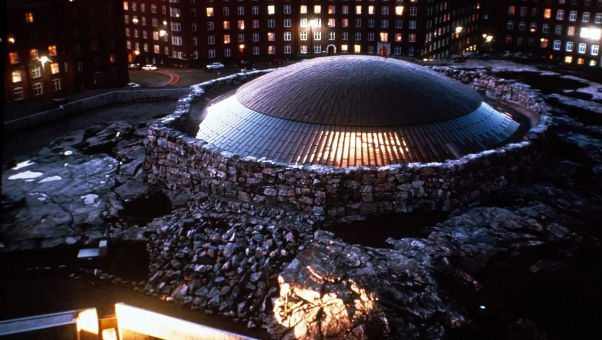

In the heart of Helsinki's Töölö district, a place of profound spiritual and architectural wonder awaits. The Temppeliaukio Church, often referred to as the Rock Church, stands as a testament to the harmonious blend of nature and human ingenuity. Carved directly into solid bedrock, this extraordinary structure has been captivating visitors since its opening in 1969, offering a serene escape amidst the urban landscape.
The history of Temppeliaukio Church is as intriguing as its design. The idea for a church in this location dates back to the early 20th century, but it wasn't until the 1960s that the vision began to take shape. Finnish architects Timo and Tuomo Suomalainen won a design competition in 1961 with their innovative concept of integrating the church into the natural rock formations. Construction began in 1968, and the church opened its doors to the public in September 1969. This bold architectural choice was not only a reflection of modernist ideals but also a nod to Finland's deep respect for nature, making it a significant piece in the country's architectural history.
Architecturally, Temppeliaukio Church is a marvel. Its circular form, crowned with a copper dome, creates a striking contrast against the rugged granite walls. The interior is bathed in natural light, which filters through a series of windows set between the dome and the walls, casting an ethereal glow across the space. The rough-hewn rock walls provide outstanding acoustics, making the church a popular venue for concerts. This unique acoustic quality is further enhanced by the copper-lined dome, which serves as both a visual and auditory focal point. The minimalist design, with its emphasis on natural materials and forms, embodies the principles of Finnish modernism and has earned the church a place in the canon of iconic 20th-century architecture.
Beyond its architectural allure, Temppeliaukio Church is deeply ingrained in local culture. It serves as a venue not only for religious services but also for a variety of cultural events, including concerts and art exhibitions. The church's integration into the rock symbolizes a deeper connection with nature, a value that resonates strongly with Finnish cultural identity. Festivals and gatherings often take place here, reflecting the community's appreciation for both music and spirituality.
While the church itself does not have a direct connection to Finnish gastronomy, its location in Helsinki offers ample opportunities to explore local culinary delights. A visit might be complemented by indulging in traditional Finnish foods such as karjalanpiirakka (Karelian pies), a savory pastry filled with rice pudding, or lohikeitto, a creamy salmon soup flavored with dill. For a sweet treat, try pullapitko, a braided cardamom bread that pairs perfectly with a cup of strong Finnish coffee.
Hidden within the church are lesser-known details that often escape the casual visitor. The organ, designed by Hans Heinrich, features 43 stops and is an impressive instrument both visually and sonically. Additionally, the church's altar is a simple slab of granite, emphasizing the natural beauty of the stone and the architects' commitment to a minimalist aesthetic. One of the most surprising aspects is the church's robust sustainability efforts; the heating system cleverly utilizes the natural thermal energy of the surrounding rock, showcasing an early example of eco-friendly design.
For those planning to visit, the best time to experience Temppeliaukio Church is during the spring and summer months, when Helsinki blossoms with life and the days are long and filled with light. Arriving early in the day can provide a more intimate experience, as the church tends to attract crowds later. Make sure to take a moment to sit quietly and absorb the tranquility of the space—it's a rare opportunity to feel truly connected to both the earth and the heavens.
Whether you're an architecture enthusiast, a lover of music, or a seeker of serenity, Temppeliaukio Church offers a unique glimpse into the Finnish spirit. Its seamless integration of natural and man-made elements invites reflection and awe, ensuring that every visit is a memorable encounter with one of Helsinki's most cherished landmarks.


