



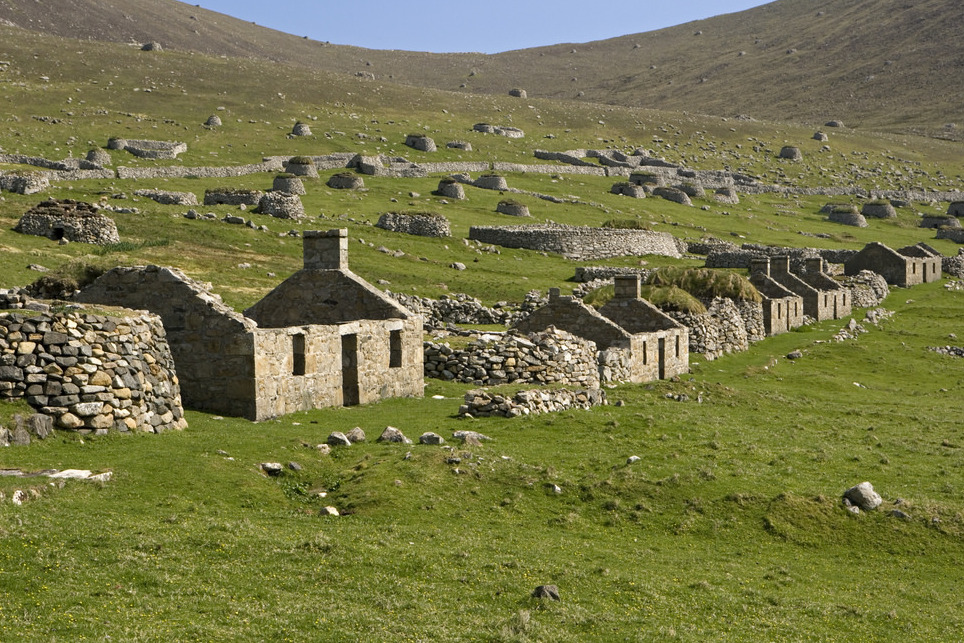
Perched on the rugged cliffs of the St Kilda archipelago, Hirta stands as a haunting testament to a way of life that has all but vanished. Once a thriving community, this remote island in the Outer Hebrides of Scotland was home to a small population who eked out a living from the land and sea. The village flourished until the harsh realities of life in such a remote locale became too much to bear, leading to its abandonment in the late 1930s.
Hirta’s history can be traced back thousands of years. Archaeological evidence suggests that the island was inhabited as early as the Neolithic period. The most significant chapter in its history began in the 18th century when the population grew, primarily due to the introduction of sheep farming. By the early 20th century, Hirta had developed into a thriving village, boasting around 180 residents. However, the isolation, severe weather conditions, and economic hardships led to its decline. In 1930, the last inhabitants left the island, leaving behind their stone homes, which have since become a fascinating ghostly reminder of their existence.
The architectural style of Hirta is emblematic of the Scottish island vernacular, characterized by simple stone structures. The stone cottages, many of which are still remarkably intact, exhibit thick walls designed to withstand the harsh winds and rain typical of the region. Some structures feature traditional thatched roofs, while others display the use of slate. The most notable is the Mission House, built in the 19th century, which served as a community center and church. Its robust construction stands in stark contrast to the wild landscape, embodying the resilience of those who once called Hirta home.
While Hirta may seem devoid of culture today, the echoes of its past still resonate. The inhabitants practiced a unique blend of Gaelic traditions, which included storytelling, music, and communal gatherings. Festivals celebrating the summer solstice and harvest were integral to community life, where locals would come together to mark the changing seasons with feasting and merriment. Although the village is now silent, the spirit of these traditions lives on in the hearts of those who share their stories.
The gastronomic history of Hirta is as rich as its cultural tapestry. The islanders relied heavily on the bounty of the sea, with fish and seaweed forming the backbone of their diet. Dishes such as cullen skink (a traditional Scottish fish soup) would have been commonplace, alongside foraged sea greens. The unique geographical position of Hirta also gave rise to a variety of local herbs and plants, which were used for both culinary and medicinal purposes. Today, while the kitchens of Hirta remain cold, the flavors of the past linger in the memories of those who once savored them.
Among the lesser-known curiosities of Hirta is its status as a UNESCO World Heritage Site, recognized not only for its natural beauty but also for its cultural significance. It is one of the few places in the world that showcases the intersection of human settlement and wildlife conservation. Visitors might be surprised to learn that Hirta is home to a vast array of seabirds, including the Northern Gannet and Puffins, which nest on the cliffs and are an integral part of the island's ecosystem. The island's remote location has also helped preserve its unique flora and fauna, making it a site of interest for both nature lovers and historians alike.
If you’re planning a visit to Hirta, timing is crucial. The best time to explore this hauntingly beautiful ghost town is between May and September, when ferry services operate from Leverburgh on the Isle of Harris. Be prepared for unpredictable weather; even in summer, conditions can change rapidly. A sturdy pair of walking boots is essential for navigating the rugged terrain, and don’t forget to bring your camera—every corner of Hirta offers a glimpse into its storied past, from the crumbling stone walls to the breathtaking coastal cliffs.
As you wander through the remnants of this once-vibrant community, take a moment to reflect on the lives that were lived here and the stories that remain untold. Each stone and each shadow holds a piece of history waiting to be uncovered.
For a personalized journey through the enchanting landscapes and rich history of Hirta, consider using the Secret World app to plan your itinerary.
