
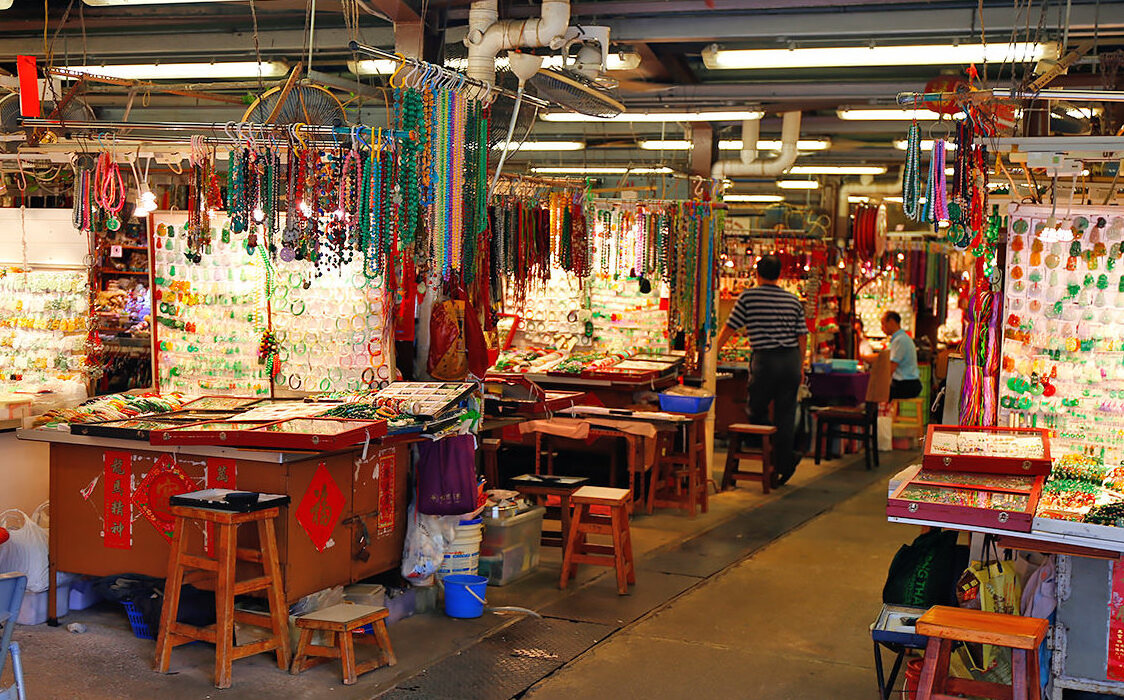

Hidden amidst the bustling streets of Hong Kong, the Jade Market is a gem waiting to be discovered. This vibrant marketplace, located at the junction of Kansu and Battery Streets, is a treasure trove of jade artifacts that reflect the rich cultural heritage of East Asia. As you step into this enclave, the sight of intricately carved jade pieces glistening under the fluorescent lights will captivate your senses.
History and Origins
Jade has been revered in Chinese culture for thousands of years, dating back to the Neolithic era when it was first used for tools and ornaments. By the time of the Shang Dynasty (1600-1046 BC), jade had become a symbol of status and power, often associated with royalty and the divine. The Jade Market as we know it today began to take shape in the mid-20th century, emerging as a focal point for jade traders following the influx of Chinese immigrants to Hong Kong after the Chinese Civil War (1945-1949). It quickly grew into the world's largest trading center for jade, establishing the city as a vital hub for this precious stone.
Art and Architecture
The architectural style of the Jade Market is simple yet functional, with stalls and booths lined up in neat rows, allowing vendors to showcase their jade creations. The market is a cacophony of colors, with shades of green, white, lavender, and yellow vying for attention. Among the notable artworks, you will find exquisite jade carvings depicting dragons, phoenixes, and even intricate landscapes. Each piece tells a story, often rooted in Chinese mythology, and serves not only as a decorative item but also as a talisman believed to bring good fortune.
Local Culture and Traditions
In Hong Kong, jade holds significant cultural importance. It is not merely a stone; it symbolizes purity, nobility, and the connection between heaven and earth. Vendors often share stories about the cultural significance of their pieces, emphasizing the belief that jade can protect its wearer and enhance their health. While there are no specific festivals dedicated solely to jade, the stone plays a crucial role in traditional Chinese weddings, where brides often wear jade accessories for luck.
Gastronomy
As you explore the Jade Market, don’t miss the opportunity to indulge in local gastronomy. Nearby, you can find stalls offering dim sum, a quintessential Hong Kong culinary experience. Sample har gow (shrimp dumplings) and siu mai (pork dumplings) alongside a steaming cup of tea, which is an integral part of dining culture in the city. For something sweet, try mango pudding or egg tarts, both beloved local delicacies that will offer a delightful contrast to the rich jade hues around you.
Lesser-known Curiosities
While the Jade Market is well-trodden by tourists, there are hidden gems within its bustling atmosphere. Many visitors overlook the fact that the market is not just about jade; it also features skilled artisans who can often be seen working on-site, shaping and polishing jade into beautiful forms. Additionally, the market is a great place to learn about the different types of jade, including nephrite and jadeite, and to understand the grading system that determines a piece's value. Look closely, and you might even find unique items like jade-inlaid jewelry boxes or intricately designed chopsticks.
Practical Visitor Information
The best time to visit the Jade Market is during the weekdays, as weekends can get crowded with tourists and locals alike. Early mornings are particularly magical, with vendors setting up their wares and the air filled with the sounds of negotiation. Bring cash, as many vendors prefer it over card payments, and don't hesitate to haggle; it's a part of the experience. When browsing, look for the jade’s clarity and color — top-quality jadeite is semi-transparent and a vibrant green, while pieces with cloudy patches typically have less value.
As you wander through this bustling market, take your time to appreciate the craftsmanship and stories behind each jade piece, and don’t forget to immerse yourself in the local flavors nearby.
For a personalized experience tailored to your interests, consider using the Secret World app to plan your visit.


