
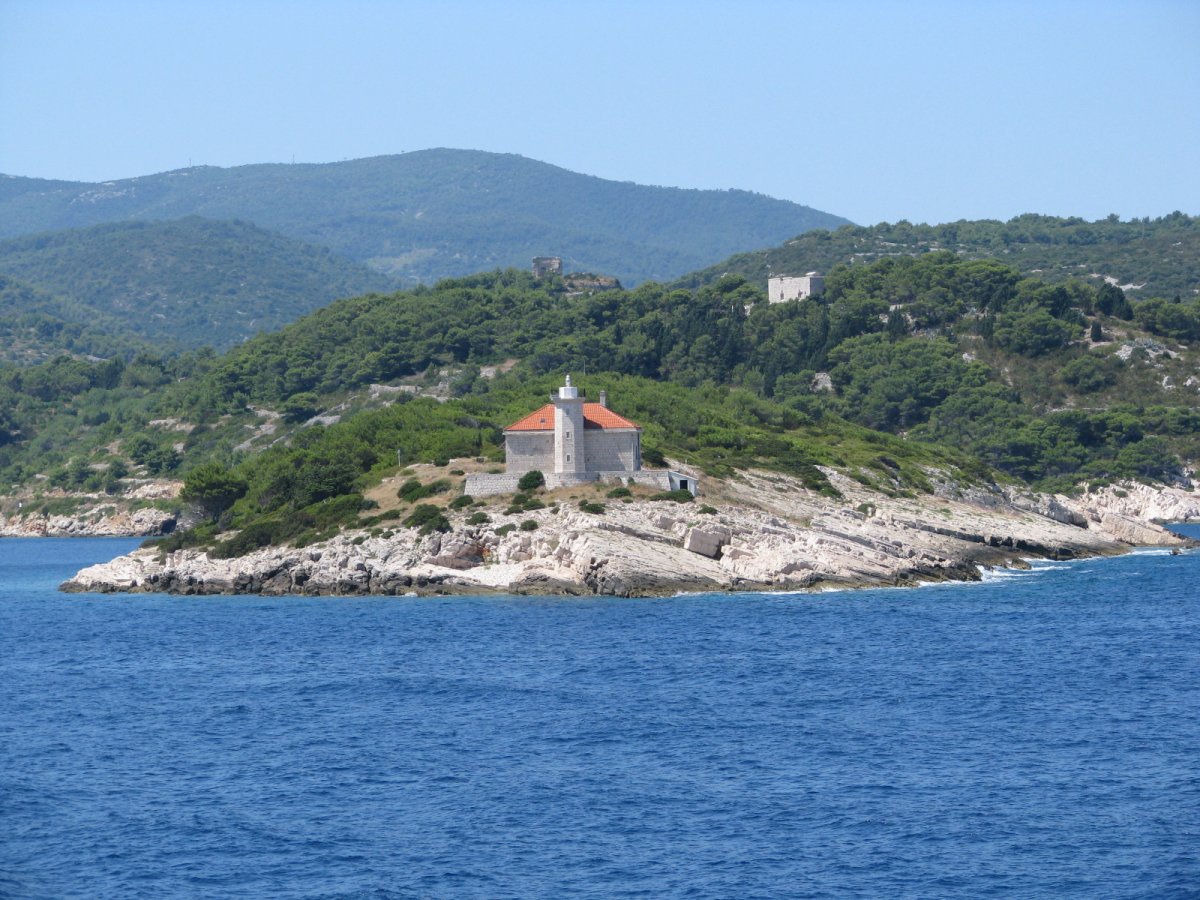

The scent of pine envelops you even before you see the sea. The path from Komiža leading up to the Host lighthouse crosses a dense, silent pine forest, far from the noise of ferries and bars along the waterfront. When the white tower finally appears among the branches, with the deep blue of the Adriatic in the background, you understand why this corner of the island of Vis remains one of the best-kept secrets of Dalmatia.
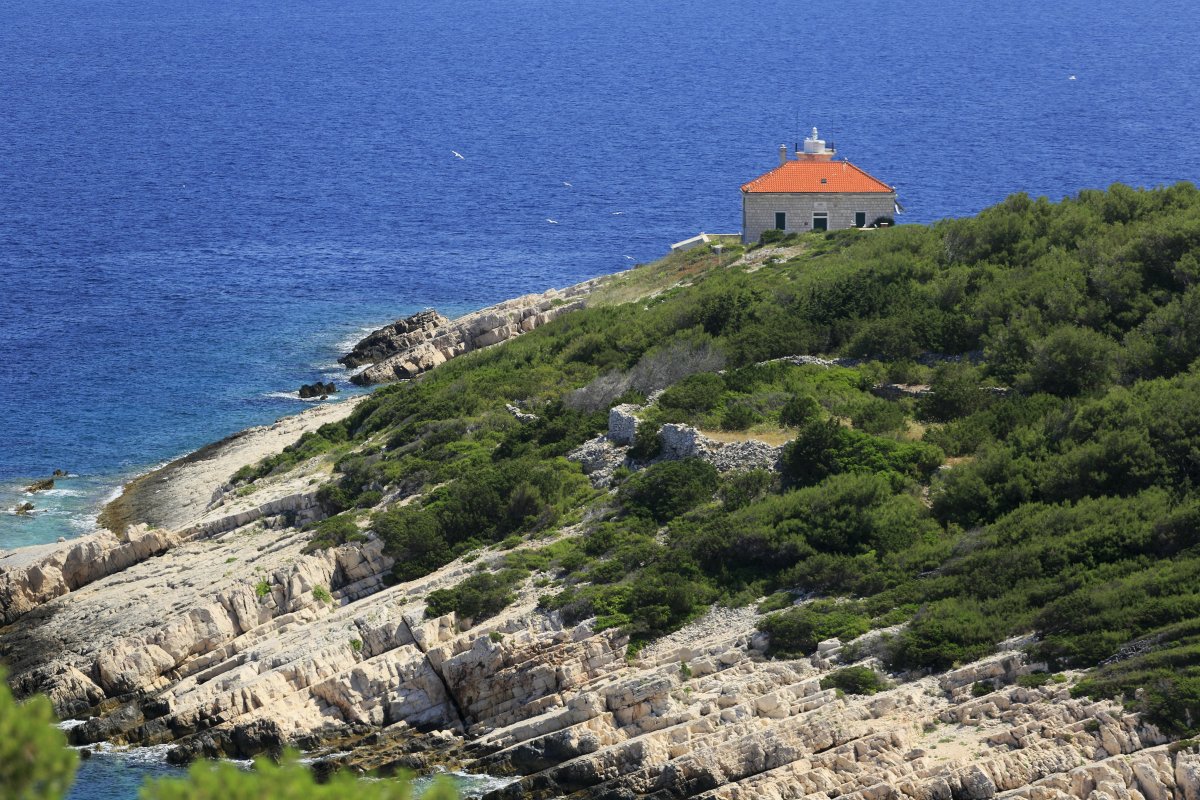
Vis is already an island off the beaten path: for decades a Yugoslav military base, it remained closed to foreign tourists until 1989, which has preserved a slowness and integrity that are hard to find elsewhere in the Croatian Adriatic. The Host lighthouse benefits from this layered isolation: far from the capital, accessible only on foot, frequented almost exclusively by those who seek it out intentionally.
The path and arrival at the lighthouse
The walking route from Komiža to the Host lighthouse takes about 30-45 minutes on a moderate ascent. The trail is not well marked, so it is advisable to ask for directions from the villagers before setting off or to download an offline GPS track. The ground is partly unpaved, partly on limestone rock: lightweight hiking shoes are recommended, especially if arriving in the summer months when the terrain is dry and slippery.
Upon reaching the tower, the landscape that opens up is typical of the island: coves of transparent water at the foot of the cliff, Mediterranean scrub, silence interrupted only by the wind and seagulls. The structure of the lighthouse is that of classic Austro-Hungarian architecture that dotted the Dalmatian coasts in the 19th century — a white cylindrical tower, an attached keeper's house, all built to last and to withstand isolation.
Sleeping in the lighthouse keeper's cottage
The element that makes the Host lighthouse truly unique is the possibility of renting the keeper's house for one or more nights. The Agency for the Management of Croatian Lighthouses — Plovput, the state body that administers maritime signaling in Croatia — manages the rental of various accommodations in the lighthouses of the Adriatic, and Host is among the available options. Prices vary depending on the season and the length of stay, but they generally fall within an accessible range compared to the standards of tourist accommodations on the island.
Spending the night here means waking up to nothing but the sound of the sea, cooking with what you bring from Komiža, and watching the lighthouse beam rotate in the dark. There is no stable internet connection, no bar, no one around. For those seeking an authentic experience of isolation — non-performative, non-Instagrammed — it is hard to find better in the Adriatic.
The coves under the lighthouse
Descending from the tower towards the sea, you reach some of the quietest coves on the island. The water is crystal clear, the seabed rocky, and the foot traffic minimal even in July and August when the rest of Vis fills up with sailing boats. There are no services — no umbrellas, no kiosks, no showers — which discourages less motivated visitors and preserves the quality of the place.
Bringing enough water and food is essential. Those who come just for the day should plan for at least 2-3 hours for the trek, time at the lighthouse, and the descent to the coves, plus the return to Komiža. Leaving early in the morning — around 8:00 — allows you to enjoy the best light for swimming and to avoid the hottest heat on the afternoon climb.
How to get to Komiža and organize the visit
Vis is reached by ferry from Split: the crossing takes about 2 hours and 20 minutes with the slow ferry, or less with seasonal catamarans. The main port is Vis town, from which Komiža is about 10 kilometers to the west — reachable by local bus, taxi, or by renting a scooter or car. Komiža is the natural starting point for the lighthouse: it is a fishing village with a few restaurants, a morning market, and the possibility to stock up on water and food before the trek.
To book the keeper's house, it is necessary to contact Plovput directly in advance, especially if traveling in high season between June and August. Availability is limited and demand has grown in recent years as Croatian lighthouses have gained attention among travelers seeking alternatives to traditional accommodations. Booking at least a few weeks in advance is the most prudent choice.


