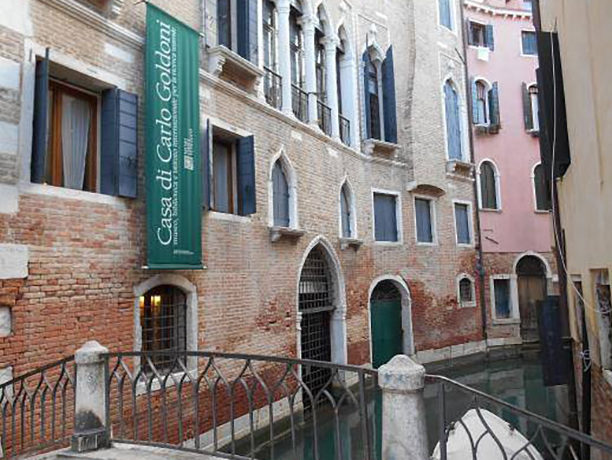


In the heart of Venice, where the whispers of history mingle with the gentle lapping of water, stands the House of Carlo Goldoni. This remarkable museum not only honors one of Italy's most celebrated playwrights but also offers a glimpse into the vibrant world of Venetian theatre that Goldoni so brilliantly captured.
### History and Origins
Carlo Goldoni was born on February 25, 1707, in Ca' Centani, a residence that has witnessed centuries of Venetian life. The building, a quintessential example of 15th-century Venetian civil architecture, was home to the Rizzi family, whose insignia—a hedgehog—can still be seen on the well in the courtyard. Goldoni's paternal grandfather moved into the house in the late 17th century, providing a nurturing environment for the future playwright until the family relocated in 1719.
In 1931, the building was donated to the City of Venice and transformed into the Museo Casa di Carlo Goldoni, preserving the legacy of a man who revolutionized Italian theatre. Goldoni's innovative approach combined commedia dell'arte with a new style of realism, which paved the way for modern theatre. His works, such as "La Locandiera" and "Il Servitore di Due Padroni," continue to be celebrated today.
### Art and Architecture
The architectural charm of Ca' Centani is undeniable. Visitors are greeted by a porticoed entrance that leads to a tranquil courtyard, featuring an elegant open staircase. The Gothic style of the building is particularly striking, with its four-light window on the main floor—a piece that commands attention with its intricate design.
Inside the museum, guests can explore numerous exhibitions showcasing Goldoni's manuscripts, personal letters, and artifacts related to his theatrical productions. The museum's layout spans two floors, immersing visitors in the world of Venetian theatre while highlighting Goldoni's profound influence on the arts.
### Local Culture and Traditions
Venice is a city steeped in culture, with a history rich in festivals and local customs. One notable event is the Carnevale di Venezia, a festival that dates back to the 13th century. The celebration is characterized by elaborate masks and costumes, reflecting the spirit of commedia dell'arte, which Goldoni masterfully employed in his plays. The masks allow locals and visitors alike to indulge in anonymity and revelry, echoing the themes of deception and identity that permeate Goldoni's works.
Another tradition tied to the city's vibrant past is the Festa della Sensa, celebrated in May. This festival commemorates Venice's historical marriage to the sea, a symbolic event that underscores the city's relationship with water, trade, and culture.
### Gastronomy
No visit to Venice would be complete without indulging in its culinary delights. The local cuisine is a reflection of its history and geography, featuring fresh seafood, risottos, and traditional pastries. A must-try dish is sarde in saor, a sweet-and-sour sardine dish that captures the essence of Venetian flavors. Pair it with a glass of Prosecco, a sparkling wine that hails from the nearby region of Conegliano-Valdobbiadene.
For those with a sweet tooth, the bussolà—a traditional Venetian biscuit—offers a delightful taste of the region's baking heritage. Enjoying these local treats while exploring the streets around the House of Carlo Goldoni provides an immersive experience that ties together the city's rich history and vibrant culture.
### Lesser-Known Curiosities
While many tourists flock to the iconic Piazza San Marco, the House of Carlo Goldoni often remains a hidden gem. One surprising detail is that Goldoni's works were initially met with resistance from the established theatre community, as he sought to move away from the improvisational style of commedia dell'arte towards a more structured form of storytelling.
Another intriguing aspect is the theatre's influence on modern caricature and comedy. Goldoni's characters and scenarios have inspired countless adaptations, including films and television shows, making his legacy relevant even in contemporary media.
### Practical Visitor Information
The best time to visit the House of Carlo Goldoni is during the off-peak months of late fall or early spring when the crowds are thinner, allowing for a more intimate experience. The museum is open year-round, but it's advisable to check the official website for specific hours and potential guided tours.
When exploring the museum, look for the original manuscripts and documents that reveal Goldoni's creative process. Engaging with these artifacts offers a unique perspective on the mind of a playwright who captured the essence of Venetian life.
In conclusion, a visit to the House of Carlo Goldoni is not merely a journey through the life of a playwright but an exploration of the very soul of Venice. For a personalized itinerary that captures the essence of this enchanting city, consider using the Secret World app to plan your adventure.