
← Back

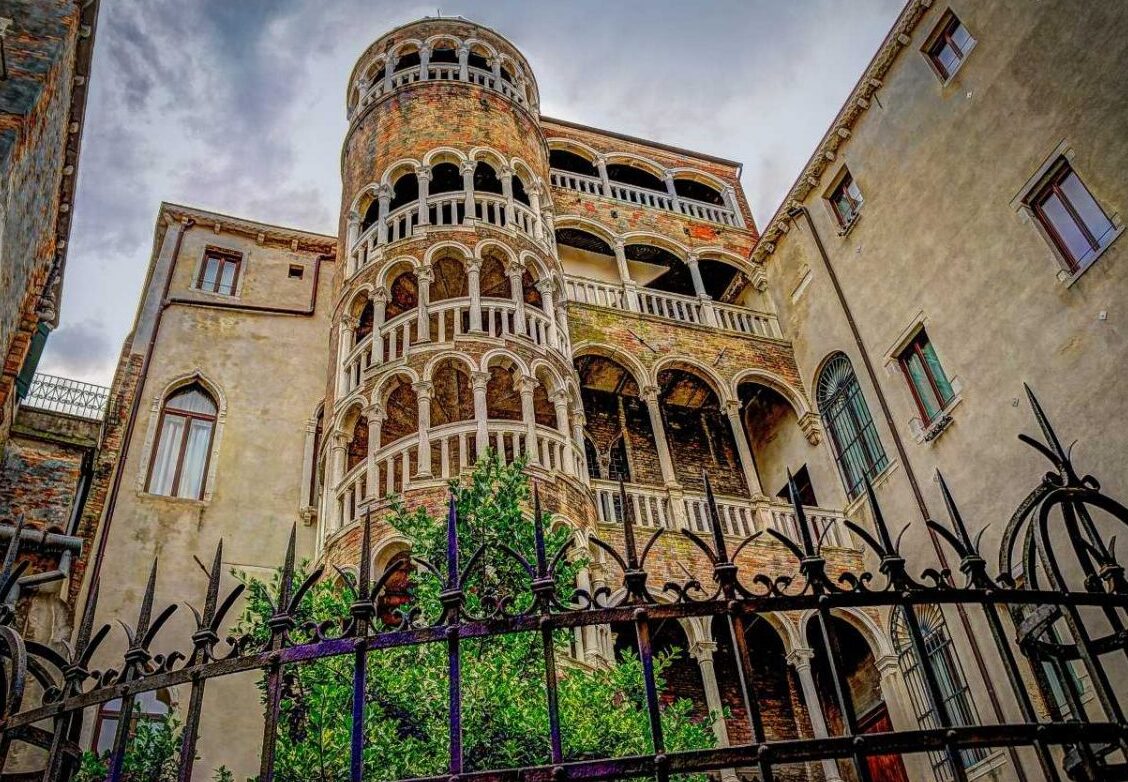
The stairs of Palazzo Contarini del Bovolo

Scala Contarini del Bovolo, 4303, 30124 Venezia VE, Italia ★★★★☆ 248 views
Melania Satta
Venezia
🏆 AI Trip Planner 2026

Get the free app

Discover the best of Venezia with Secret World — the AI trip planner with 1M+ destinations. Get personalized itineraries, hidden gems and local tips. Free on iOS & Android.

🧠 AI Itineraries 🎒 Trip Toolkit 🎮 KnowWhere Game 🎧 Audio Guides 📹 Videos
Download on the App Store Get it on Google Play
Scan to download Scan to download

About The stairs of Palazzo Contarini del Bovolo

The stairs of Palazzo Contarini del Bovolo - Venezia | Secret World Trip Planner

In its long existence, Palazzo Contarini del Bovolo, whose history spans five centuries of Venetian history, has had several owners. Many have been the tenants who have lived, not always in luxury, in the rooms of this "casa fontego" of evident late-Gothic taste. The importance of the palace, which does not overlook the Grand Canal, is due to the privileged position it occupies in the urban fabric: in fact, it is equidistant from Rialto, the economic heart, and from San Marco, the political heart of Venice. In-depth stylistic studies agree in attributing the design of the Scala del Bovolo to a local craftsman, the Venetian Giovanni Candi, and the transformation works that involved the internal courtyard with the opening of loggias can also be dated to the same years. This set of interventions bears witness to the slow spread in the Lagoon of a more marked Renaissance taste, "grafted" in the city through artists and craftsmen from Tuscany who had arrived in Venice. The sequence of overlapping loggias is the connecting element between the tower and the adjacent palazzo, which has four floors - in addition to the ground floor - and is the result of the fusion of two buildings: a trapezoidal block built around a central courtyard (the oldest nucleus), to which a rectangular building was added. Towards the end of the fifteenth century the palace was enriched with a "bizarre and graceful" spiral staircase (in Venetian "bovolo", hence the name) commissioned by Pietro Contarini, a scion of the powerful Contarini family of the San Paternian branch which in the fourteenth century could boast the high honour of having given a doge, Andrea Contarini, to the Serenissima Republic. The original construction of the building dates back to the xiv century.
The stairs of Palazzo Contarini del Bovolo - Venezia | Secret World Trip Planner
🗺 AI Trip Planner

Plan your visit to Venezia

Suggested itinerary near The stairs of Palazzo Contarini del Bovolo

MAJ+
500.000+ travelers worldwide
  1. 🌅
    Morning
    The stairs of Palazzo Contarini del Bovolo
    📍 Venezia
  2. ☀️
    Afternoon
    Olivetti Shop
    📍 0.2 km · Venezia
  3. 🌆
    Evening
    St. Mark's Basilica: A Treasure of Venice
    📍 0.4 km · Venezia

Buy Unique Travel Experiences

Powered by Viator

See more on Viator.com

Explore nearby · Venezia

Frequently Asked Questions

The Scala del Bovolo was designed by Giovanni Candi, a local Venetian craftsman, and was commissioned by Pietro Contarini towards the end of the fifteenth century. The spiral staircase (called 'bovolo' in Venetian) became the palace's most iconic architectural feature and represents the early spread of Renaissance taste in Venice.
The palace's significance lies in its privileged location in Venice's urban fabric, as it sits equidistant from both Rialto, the economic heart of Venice, and San Marco, the political heart of the republic. This central positioning made it a strategically important residence throughout its five-century history.
The palace features a late-Gothic architectural taste and dates back to the fourteenth century, with significant Renaissance transformations occurring in the fifteenth century. The building represents a fusion of two structures: an older trapezoidal block built around a central courtyard and a rectangular addition, creating a four-floor palazzo with distinctive overlapping loggias.
Pietro Contarini was a member of the powerful Contarini family's San Paternian branch, which had the prestigious honor of producing Andrea Contarini, a Doge of the Venetian Republic, in the fourteenth century. He commissioned the ornate spiral staircase to enrich the palace with a 'bizarre and graceful' architectural feature that reflected the emerging Renaissance style.
The overlapping loggias serve as the connecting element between the tower and the adjacent palazzo, demonstrating the influence of Tuscan Renaissance artists and craftsmen who brought a more marked Renaissance taste to Venice during this period. These architectural features showcase the gradual stylistic evolution and cultural exchange occurring in the Lagoon during the fifteenth century.
