
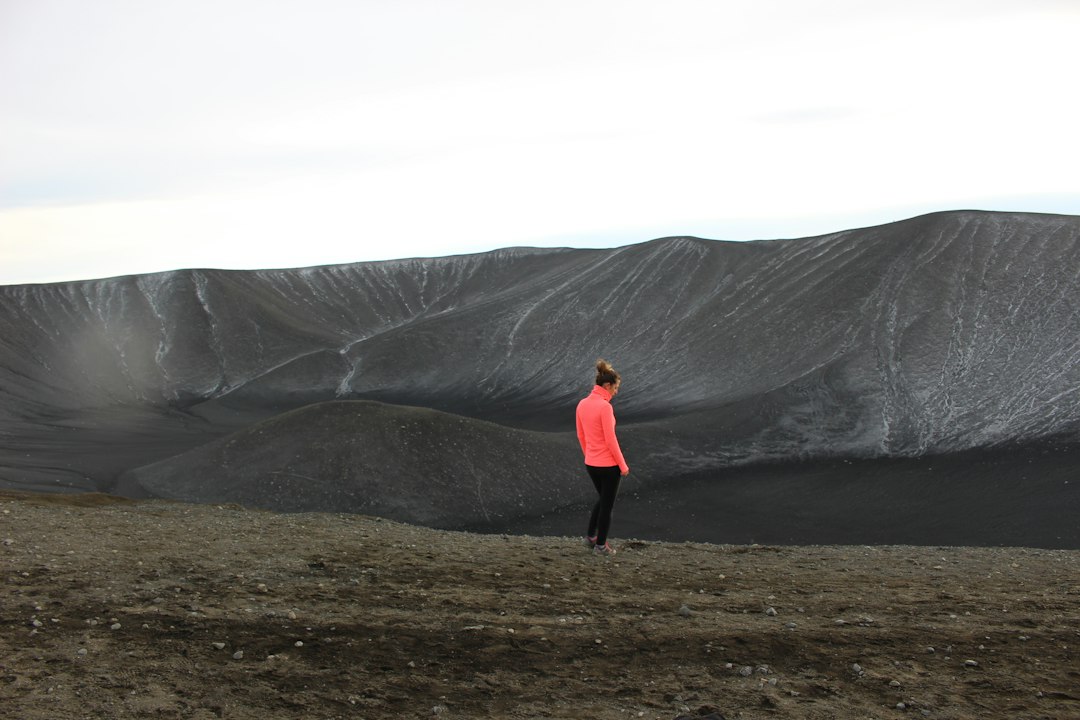

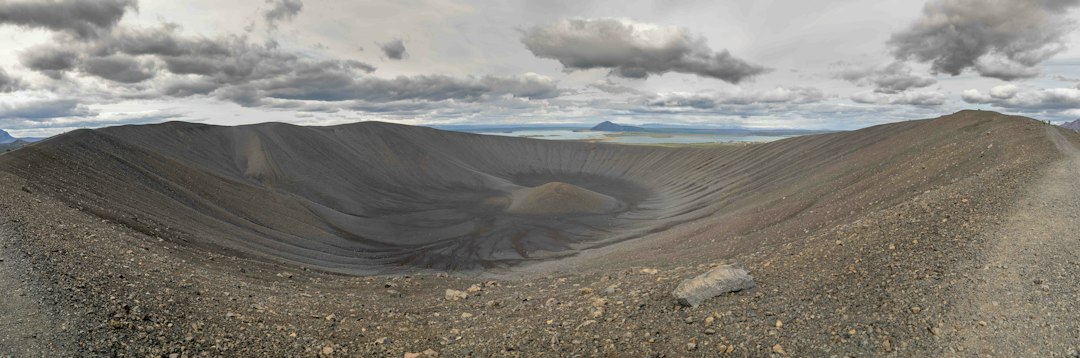
The crater opens before you like a huge wound in the earth, perfectly circular, almost geometric in its symmetry. Hverfjall does not resemble any other volcano you have ever seen: there is no solidified lava, there are no irregular rocky flows. There is only a ring of tephra — compacted volcanic ash and pyroclastic fragments — that rises with an almost artificial precision on the plateau of the Mývatn region in northeastern Iceland.
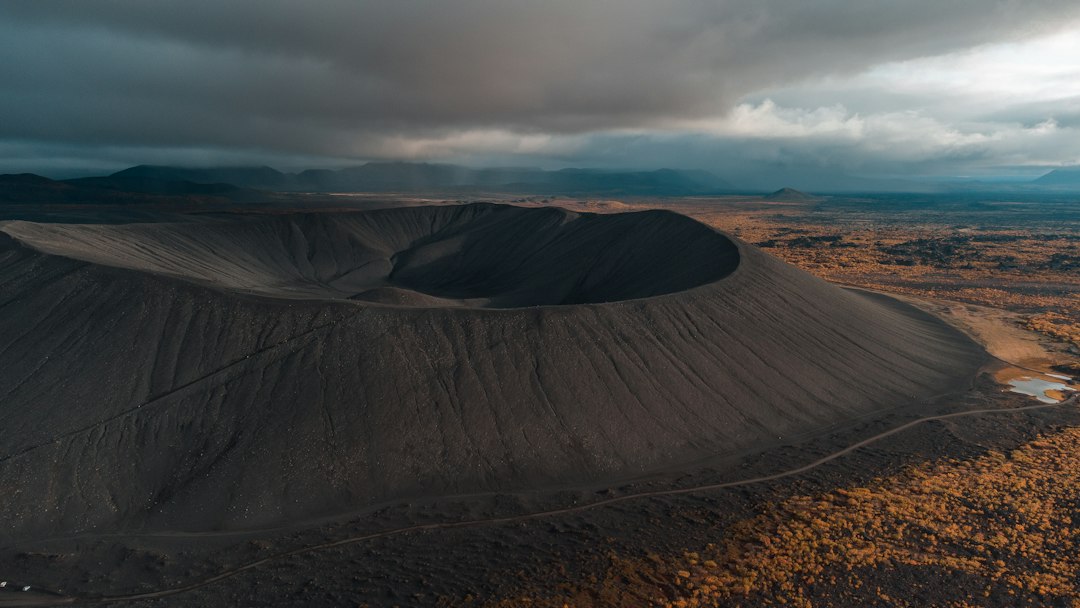
This crater was formed about 2,500 years ago in a single explosive phreatomagmatic eruption, likely triggered by the violent contact between magma and groundwater. The result is an almost perfect ring with a diameter of about 1 kilometer and walls that reach 140 meters in height. It is not the size that strikes you, but the shape: Hverfjall looks like it was drawn with a compass, an improbable circle in an already surreal landscape.
Walking on the Edge of the World
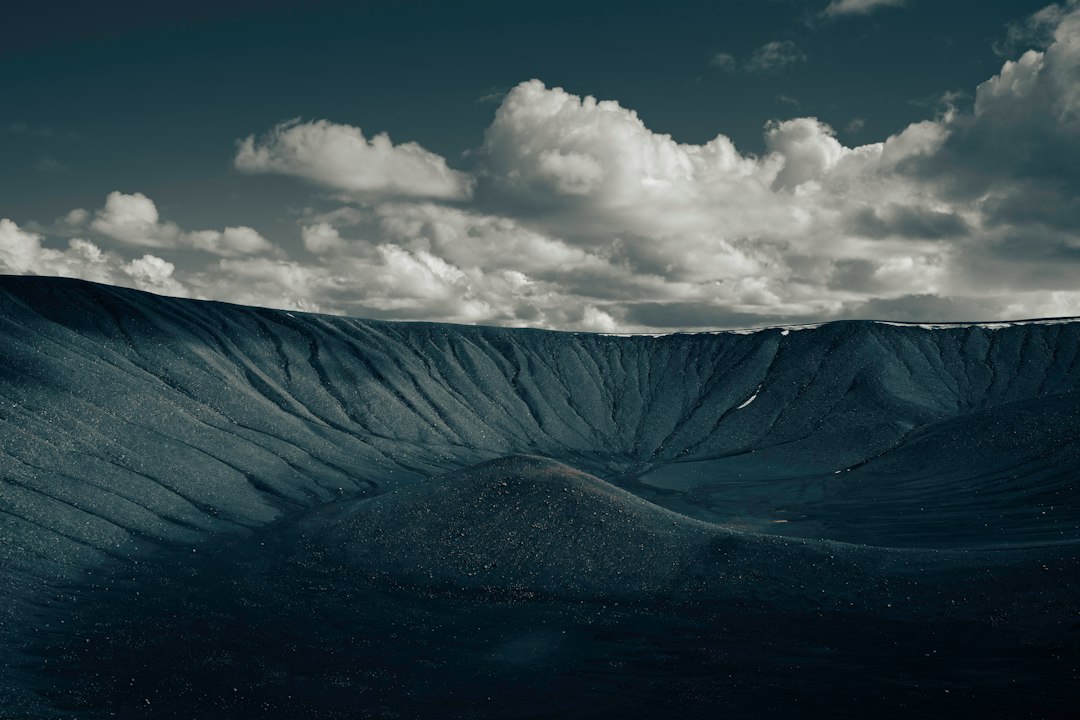
The path that runs along the edge of the crater measures about 3.5 kilometers and typically takes an hour and a half of leisurely walking. It is not technically difficult — the elevation change is modest and the route is well marked — but the tephra surface is loose and yielding underfoot, which makes each step slightly unstable. This sensation of walking on something alive, not entirely solid, adds a tactile dimension to the experience that no photograph can convey.
From the edge, the view encompasses the entire geothermal landscape of Mývatn: the lake with its lava islands, the fumaroles of Námaskarð exhaling sulfurous steam in the distance, the black lava fields of Dimmuborgir, and, on clear days, the unmistakable silhouette of the Krafla volcano on the horizon. It is a panorama that tells millions of years of geological history in a single glance.
A place far from the crowds
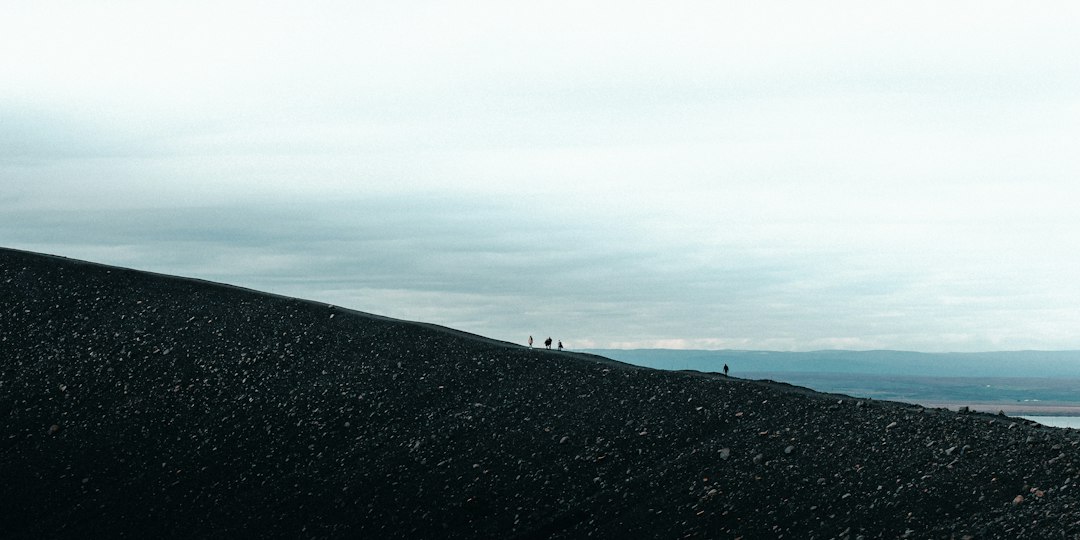
Hverfjall is located a few kilometers from the center of Reykjahlíð, the small town that serves as a base for visitors to the Mývatn region, yet it receives a fraction of the tourists that flock to Geysir or Þingvellir each year. The reason is simple: it requires a minimum of physical effort and does not offer the immediate and passive spectacle of a geyser erupting every few minutes. Hverfjall asks for walking, for a little sweating, to earn the view.
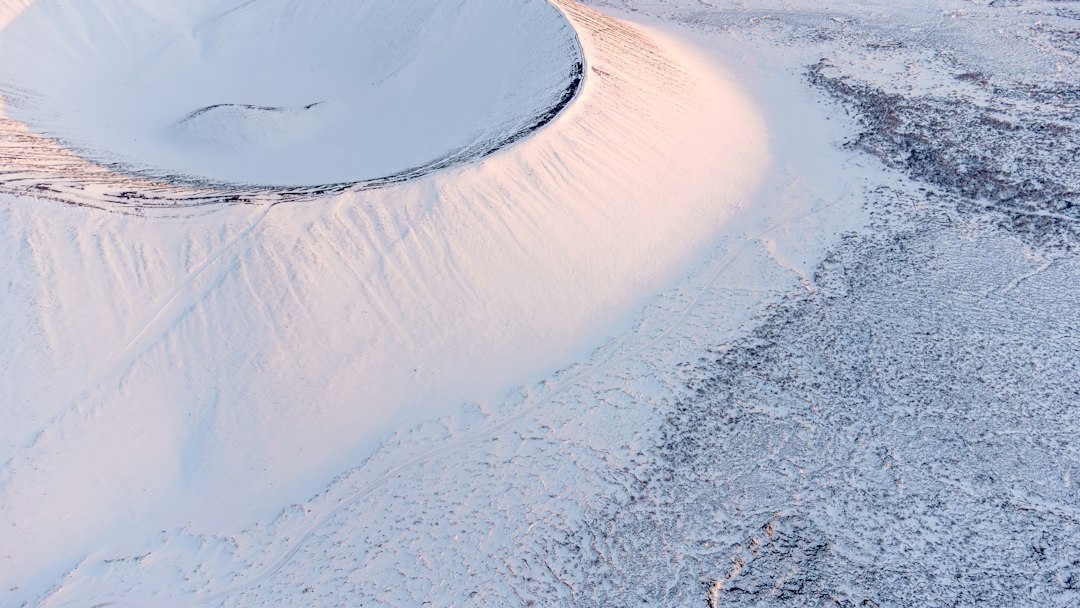
This relative quiet makes it one of the most authentic places in tourist Iceland. It is possible to find oneself on the edge of the crater with very few other people around, especially in the morning hours or late afternoon. In summer, when the Icelandic sun never fully sets, the slanting light of the evening hours transforms the surface of tephra into something almost lunar, with long shadows accentuating every irregularity of the terrain.
How to get there and what to know before leaving
Hverfjall can be reached by car via road 848, a dirt road that branches off from Route 1 near Mývatn. The parking lot is located at the base of the crater, from which the main trail leads to the rim in about 20-30 minutes of moderate ascent. There is no entrance fee: access is free, but it is mandatory to stay on marked trails to avoid damaging the fragile tephra walls.
The most useful advice is just one: avoid the central hours of the day during high season (July and August), when tour buses drop off large groups at the parking lot. Leaving at dawn — which is very easy in summer, when light arrives as early as three in the morning — means having the crater practically to yourself. Wear shoes with good soles and prepare for the wind: it almost always blows at the rim of the crater, even on days that seem calm from below. Layered clothing is essential in any season.
Why Hverfjall deserves a place in the itinerary
In a country used to stunning with roaring waterfalls, northern lights, and spectacular geysers, Hverfjall offers something different: silence and geological scale. Standing on the edge of a crater formed in a single day of volcanic violence, 2,500 years ago, and looking down at the flat and desolate bottom of the caldera, produces a feeling that is hard to describe. It is not fear, it is not exactly wonder — it is something that resembles the respect one feels in front of forces much greater than ourselves.
Hverfjall is not the most photographed place in Iceland, nor the most famous. However, it is one of those places that remain etched not for what they show, but for what they make you feel under your feet and in your chest as you walk on the edge of something that the earth created in a single, devastating breath.


