


The smell of sulfur arrives even before getting out of the car. It is pungent, almost metallic, and prepares the mind for what is about to be seen: a landscape that seems extracted from another planet, or perhaps from the inside of the Earth itself. Námafjall Hverir is located on the slopes of Mount Námafjall, a volcanic elevation that rises to about 482 meters above sea level, in the northeastern region of Iceland, a few kilometers from Lake Mývatn and the village of Reykjahlíð. Here, the Earth's crust is so thin that the heat from the mantle rises directly to the surface, transforming the soil into something alive, bubbling, in constant motion.

What unfolds before the eyes is an active geothermal field of rare intensity: mud pools that bubble slowly like thick soups, fumaroles that hiss high-temperature steam, and stretches of land colored in shades of bright orange, sulfur yellow, and ash gray. There are no trees, there are no flowers, there is almost nothing biologically familiar. It is a desert, but not of sand: it is a desert of minerals and heat, where ordinary life has given way to something primordial.
A landscape that defies all comparison

Walking along the paths marked by ropes and stakes — a necessary measure to protect both visitors and the fragile ground — one has the feeling of crossing a border zone between the known world and something radically other. The fumaroles emit continuous steam, and at certain points the ground is so hot that it is visibly unstable: one must never stray from the marked paths, as the surface crust can suddenly give way above pockets of boiling mud that reach temperatures above 100°C.
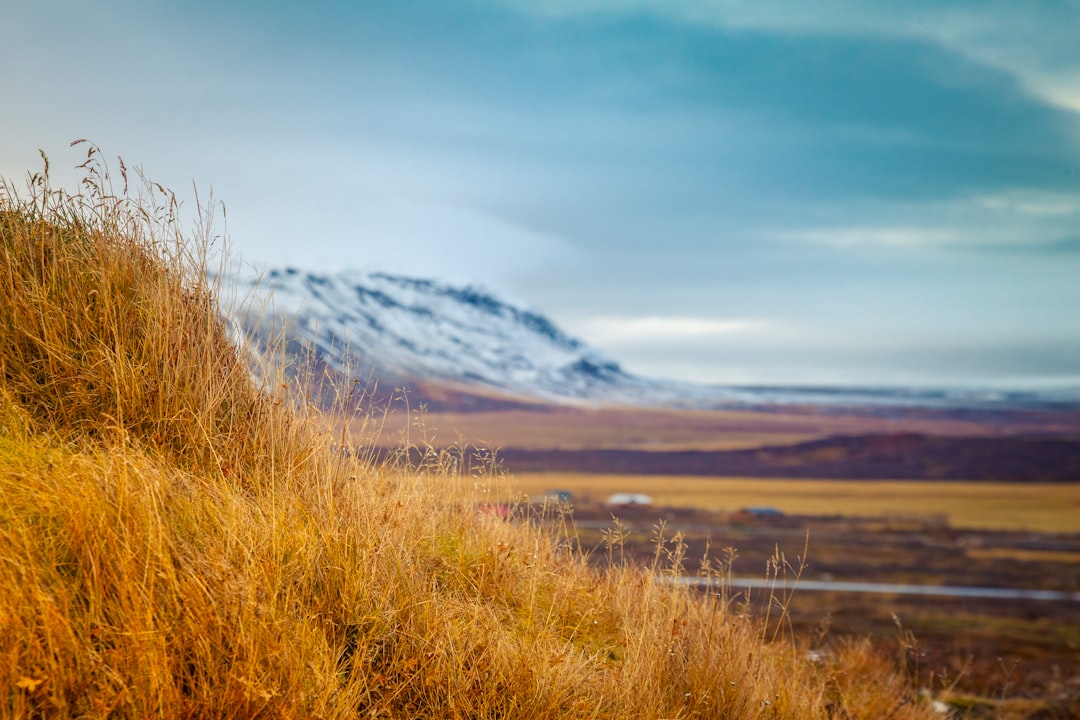
The colors are the first thing that physically strikes you. The intense yellow around the mouths of the fumaroles is caused by deposits of crystallized sulfur, while the orange and reddish hues come from the presence of iron oxides in the soil. In the distance, Lake Mývatn reflects the northern sky, creating an almost surreal visual contrast: on one side the geothermal chaos, on the other the silent calm of the water. This visual combination is unique throughout the region.

The silence and the night under the Arctic sky
Anyone visiting Hverir in the evening hours, especially in summer when the sunlight never fully sets, experiences a sensory experience that is hard to describe. The constant hissing of the fumaroles becomes the only recognizable sound in an otherwise silent landscape. There are no birds in flight, no insects, no wind among the leaves. There is only that breath of the earth, regular and ancient.

In autumn and winter, when the nights lengthen, Hverir becomes one of the most spectacular places to observe the northern lights. The steam from the fumaroles rises towards a sky that can turn green, purple, or white, and the contrast between the warmth of the ground and the cold of the air creates a thin mist that envelops the entire area in an almost dreamlike atmosphere. Nighttime temperatures in this area can drop well below zero between October and March, but the geothermal heat of the ground remains perceptible even in the depths of winter.
How to get there and practical advice
Hverir is easily reached by taking the Icelandic national road number 1, the Ring Road, heading east from Reykjahlíð. The site is about 5 kilometers from the center of the village and is accessible by car year-round, except in extreme weather conditions. There is a large free parking area directly on site. It is not necessary to purchase entrance tickets: the area is open access.
The best time to visit is in the early morning hours, when organized tours have not yet arrived and you can enjoy the landscape in relative solitude. It is advisable to dedicate at least an hour to the visit to calmly walk the trails and observe the different types of geothermal activity. Wearing sturdy, closed shoes is essential: the ground is uneven and in some places slippery due to mineral deposits. Absolutely avoid touching the water or mud in the pools, even if they appear still on the surface.
A mineral desert like no other
Hverir is not a place to visit to relax or find comfort. It is a place that questions, that makes you uncomfortable in the right way, that reminds you how the Earth is still a geological machine in full activity. The desolation of the landscape is not sadness: it is a form of extreme beauty, the kind found only where the ordinary conditions of life do not apply.
Returning to the parking lot after walking among the fumaroles means re-entering the familiar world with something different inside. The smell of sulfur lingers on clothes for hours, like a physical reminder of an experience that is hard to forget. In Iceland, there are many natural wonders, but few manage to convey with such clarity the feeling of being on a planet still in formation.


