
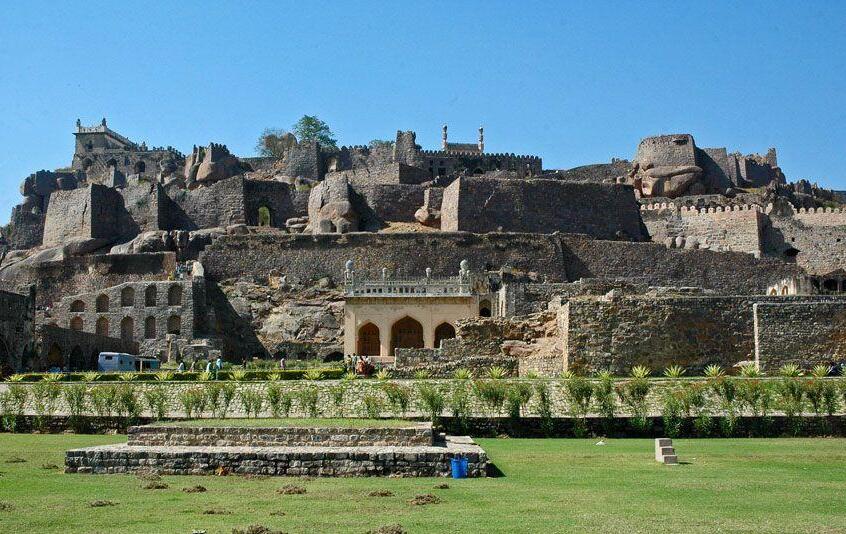

The majestic Golconda Fort stands as a testament to the rich history and architectural grandeur of Hyderabad. Nestled in the western part of the city, approximately 9 km from the serene Hussain Sagar Lake, this fort is not just a historical monument, but a captivating narrative of power, resilience, and artistry. It attracts countless visitors from both India and abroad, making it the second most famous attraction in Hyderabad after the iconic Charminar.
History and Origins
The origins of Golconda Fort can be traced back to the 12th century, when it was initially a mud fort built by the Kakatiya dynasty. However, it grew significantly in stature during the reign of the Qutb Shahi dynasty, which ruled the region from the 16th to the 17th century. Under the rule of Sultan Quli Qutb Shah, the fort was transformed into a grand citadel, showcasing remarkable architectural innovations.

One of its most notable historical events occurred in 1687 when the Mughal Emperor Aurangzeb laid siege to Golconda, ultimately leading to its capture. The fort's strategic location made it a crucial stronghold for trade, particularly in diamonds, as it was close to the famous Golconda Diamond Mines. The fort has seen the rise and fall of empires, and its walls echo with tales of valor and betrayal.
Art and Architecture
The architectural brilliance of Golconda Fort is evident in its intricate design and robust structure. The fort is built primarily of granite and features impressive gateways, massive walls, and an intricate network of water supply systems. The Acoustics of the fort are particularly fascinating; a clap at the entrance can be heard at the highest point of the fort, a feature that was cleverly designed for alerts.
The fort houses several palaces, temples, and mosques, each reflecting the Indo-Islamic architectural style. Notably, the Bala Hissar, the highest point of the fort, offers breathtaking panoramic views of Hyderabad. The fort’s stunning jali work (lattice work) and ornamental motifs are true representations of the artistic sensibilities of the time, making it a significant site for art lovers and historians alike.
Local Culture and Traditions
Golconda Fort is not just a relic of the past; it is deeply embedded in the cultural fabric of Hyderabad. The fort serves as a venue for various local festivals, including the Bonalu Festival, which celebrates the goddess Mahakali. During Bonalu, devotees gather to offer prayers and showcase traditional dances, enveloping the fort in a joyous atmosphere.
Local customs often revolve around the fort, with Hyderabadi Biryani being a staple dish served during gatherings and celebrations. The traditions of Qawwali music and Dakhni poetry also flourish in the area, echoing the historical significance of the fort as a cultural hub.
Gastronomy
No visit to Golconda Fort would be complete without indulging in the local cuisine that Hyderabad is famous for. Hyderabadi Biryani, a fragrant rice dish layered with marinated meat, is a must-try. The unique blend of spices and the traditional cooking method called Dum (slow cooking) makes this dish a culinary delight.
Don’t miss out on other local specialties such as Haleem, a rich meat stew prepared during the month of Ramadan, and Irani Chai, a creamy tea served with Osmania biscuits. These culinary experiences are deeply intertwined with the history and culture of the region, offering a taste of Hyderabad’s rich heritage.
Lesser-known Curiosities
While many tourists flock to the main attractions of Golconda Fort, some unique details often go unnoticed. One such curiosity is the Fort’s innovative water management system, which included a series of wells, tanks, and pipes that ensured a steady water supply even during sieges.
Additionally, the fort is said to have hidden passages and secret tunnels that connect to various parts of the city, including the Qutb Shahi Tombs. These tunnels were strategically designed for escape during invasions, adding an air of mystery to the fort’s already rich narrative.
Practical Visitor Information
The best time to visit Golconda Fort is during the winter months from October to March when the weather is more pleasant for exploration. Early mornings or late afternoons are ideal for a visit to avoid the harsh sun and enjoy the stunning views during sunrise or sunset.
Wear comfortable shoes, as the fort requires quite a bit of walking, and bring water to stay hydrated. Be sure to look out for the light and sound show in the evening that narrates the history of Golconda in a captivating manner.
With its rich history, magnificent architecture, and vibrant local culture, Golconda Fort is truly a gem in Hyderabad’s crown. To fully experience this enchanting city, consider using the Secret World app to craft a personalized itinerary that caters to your interests.


