

At three in the morning, with a headlamp and a gas mask tightly on the face, one begins to climb along the path that leads to the Ijen crater. The air already smells of sulfur. Around, in the darkness, the heavy footsteps of miners can be heard carrying wooden baskets filled with solidified sulfur on their backs: loads that reach 80 kilograms, transported by hand along a route that descends to the edge of the lake and then ascends, twice a day. This is the daily reality of the Ijen volcano, in the Licin district, in East Java province, Indonesia.
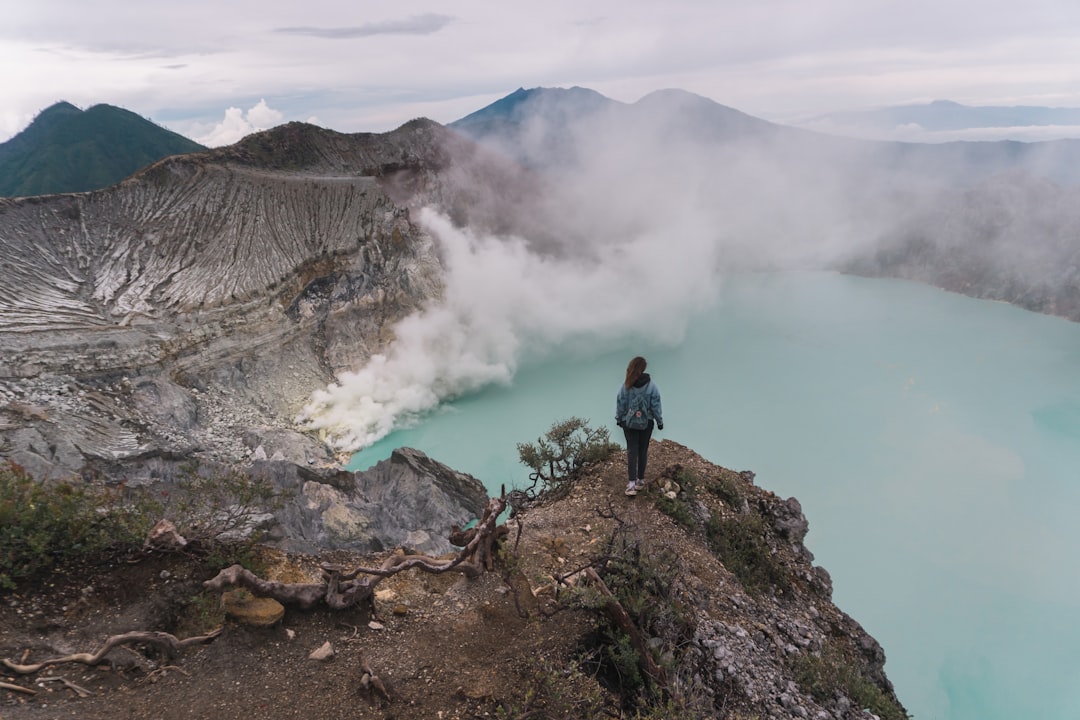
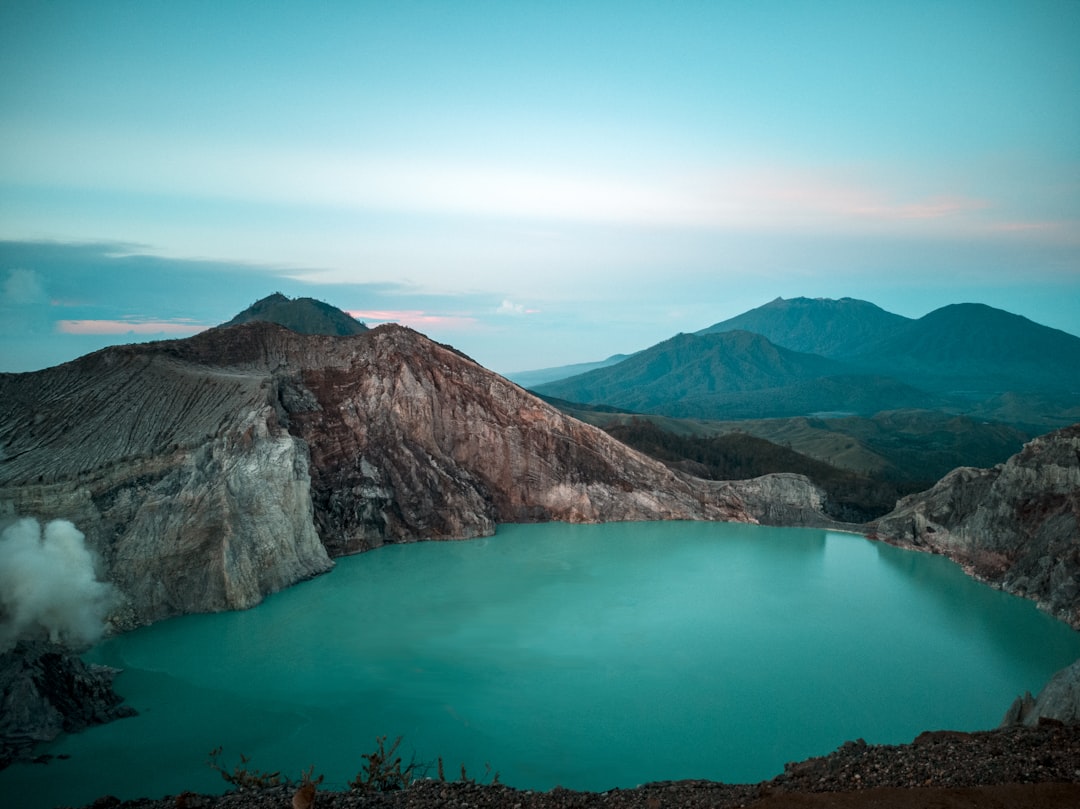
The Ijen crater is located at a height of 2,386 meters and is part of the Ijen-Raung volcanic complex. Inside it lies one of the most acidic volcanic lakes in the world: a basin of about 1 kilometer in diameter filled with concentrated sulfuric acid, with a pH estimated to be close to zero. The color is an intense and unreal turquoise, almost fluorescent, contrasting with the gray walls of the crater and the sky that, in the early hours of the morning, shifts from black to pink. No photograph truly does justice to that hue.
The blue flames: a rare phenomenon visible only at night
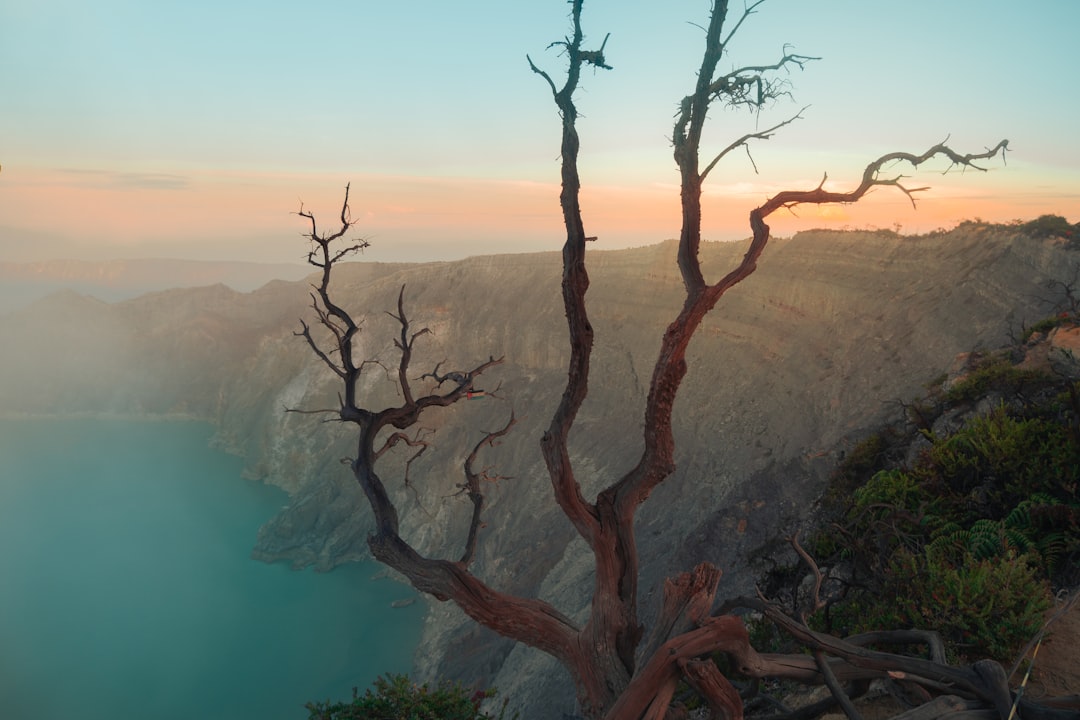
The main reason why thousands of visitors choose to arrive before dawn is a geological spectacle that occurs only in the dark: the so-called blue flames. These are not lava, but sulfurous gases that escape from the cracks of the volcano at high temperatures and ignite upon contact with oxygen, producing a combustion of electric blue color. The flames can reach heights of several meters and are only visible during the night hours because daylight renders them invisible. Ijen is one of the very few places in the world where this phenomenon can be observed.
To see them up close, one must descend into the crater, along a steep and slippery path that leads to the edge of the lake. The descent requires caution: the ground is unstable, the rocks are sharp, and gas emissions can suddenly become dense. Miners traverse this same stretch every day, often without adequate protection, a detail that makes the visit even more laden with human significance.

The sulfur miners: a hard and ancient job
The sulfur mine inside the Ijen crater has been active for decades. The workers, who belong to the local communities of the Licin and Banyuwangi areas, collect the solidified sulfur that deposits around the fumarole mouths. The sulfur is then primarily used in the sugar industry and in the production of fertilizers. Each miner makes on average two trips a day, earning an amount that varies based on the weight transported, generally around a few tens of thousands of rupiah per trip.

Watching these men at work is one of the most intense experiences that the crater offers. Many wear rudimentary gas masks or simply a cloth over their face. Some have adapted to carve sulfur into decorative shapes — flowers, animals, objects — to sell to tourists as souvenirs. It is a gesture of practical adaptation that tells a lot about the resilience of those who live and work in this extreme environment.
How to get there and when to go

The starting point for the ascent to the crater is the Paltuding Visitor Center, reachable by car or motorcycle from Banyuwangi, the nearest city located at the eastern tip of Java. From Banyuwangi, the transfer takes about an hour by road. Alternatively, you can arrive from the Bondowoso province side, through Sempol. Many visitors choose to arrange the transfer through local guesthouses or agencies in Banyuwangi, which offer packages with guides and transportation.
The hike from Paltuding to the crater rim takes about 1.5-2 hours on a well-marked but challenging trail. To see the blue flames, it is necessary to leave by 2-3 AM. The entrance fee for foreign visitors is about 150,000 Indonesian rupiah on weekdays and may increase on weekends or during holiday periods. It is mandatory to rent a gas mask at the entrance point or bring your own: sulfur dioxide emissions inside the crater are dangerous and can cause severe respiratory irritation. Do not underestimate this aspect, even if the sky seems clear.
What to expect physically and what to bring
The temperature at the crater during the night can drop to around 10-15 degrees Celsius, a stark contrast to the humid heat of the coast. Bringing a thermal layer is essential. Sturdy-soled hiking shoes are indispensable, as well as a headlamp with spare batteries. Lighting along the trail is absent or poor.
In the light of dawn, when the sun begins to illuminate the lake, the crater transforms again. The turquoise of the acid lake becomes even more saturated, the white fumaroles rise slowly into the cold air, and the miners continue their work silently. What remains, after the descent, is not only a mental photograph of an extraordinary landscape but the awareness of having seen something that belongs simultaneously to geology and human history.


