
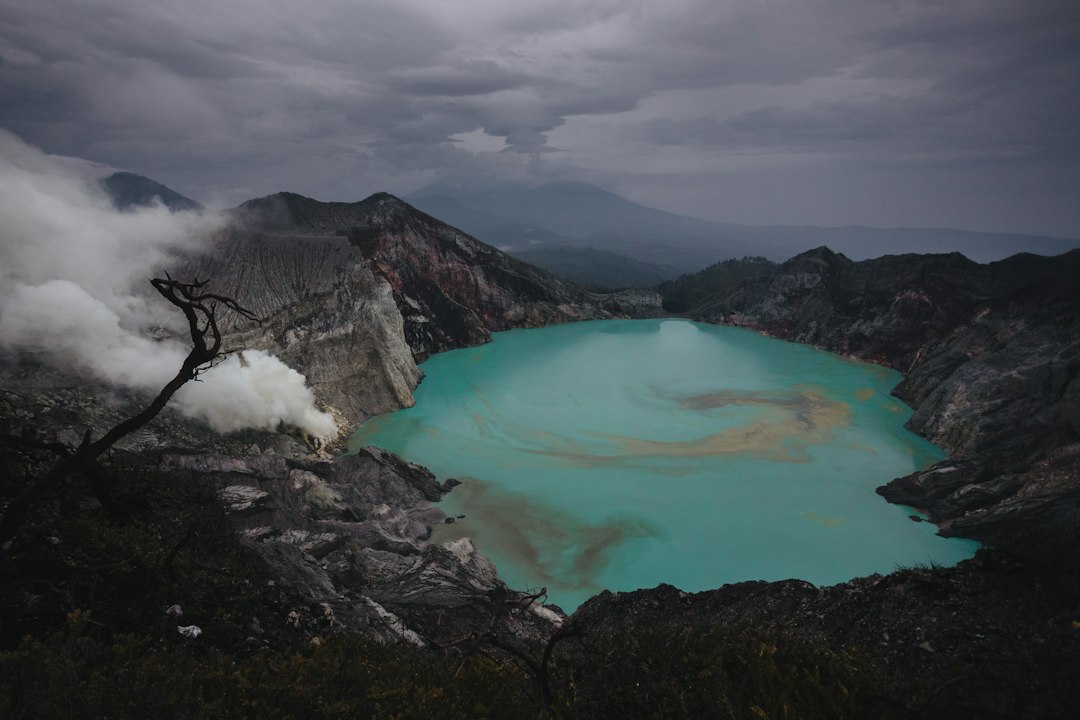

At three in the morning, with a headlamp and a gas mask tightly on the face, one begins to climb along the path that leads to the edge of the crater of Kawah Ijen. The air already smells of sulfur. In total darkness, hundreds of meters below, something burns with a light unlike any fire ever seen: it is electric blue, almost purple, as if someone had turned on a neon light inside the earth. What is being observed is liquid sulfur igniting upon contact with oxygen, producing flames that can reach 5 meters in height. It is not a special effect. It is chemistry.
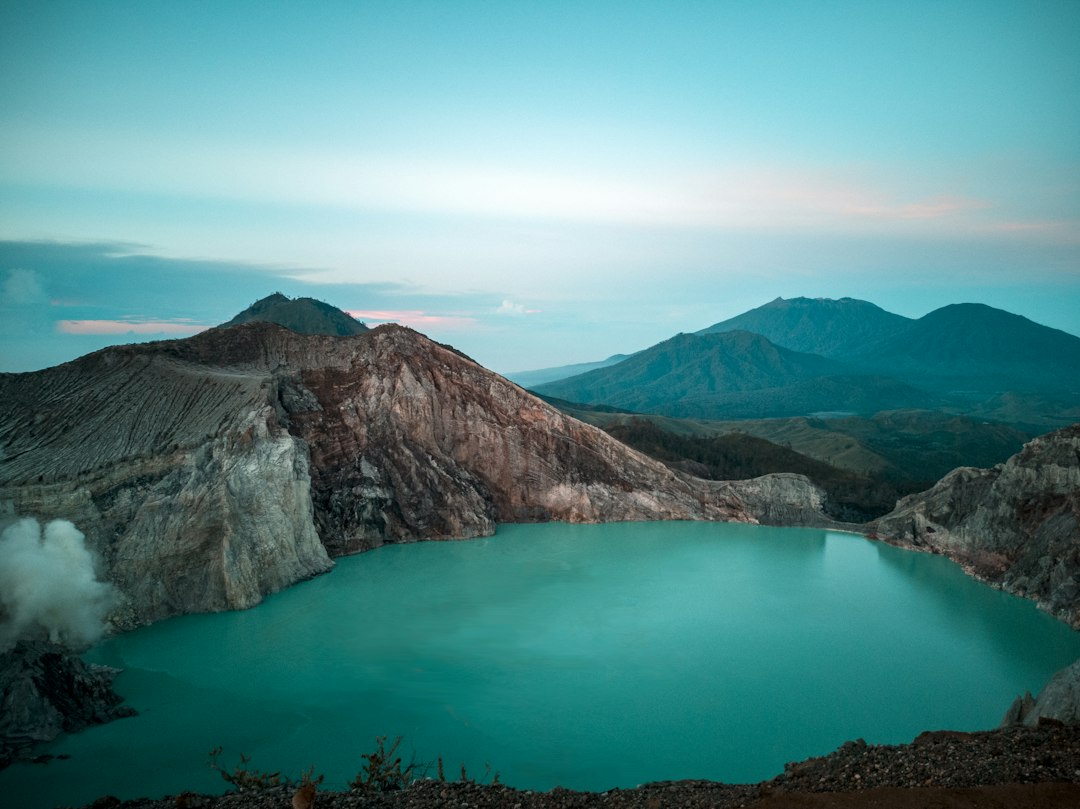
The Kawah Ijen is located in the region of Banyuwangi, at the eastern tip of the island of Java, in Indonesia. The volcano is part of the Ijen volcanic complex, a collection of calderas and cones that extends for dozens of kilometers. The main crater hosts one of the most acidic volcanic lakes in the world: about 200 million cubic meters of water with a pH close to zero, colored with a bright turquoise that during the day seems almost unreal. Beneath that beautiful and poisonous surface, the lake reaches a maximum depth of about 200 meters.
The blue flames: when and why to see them
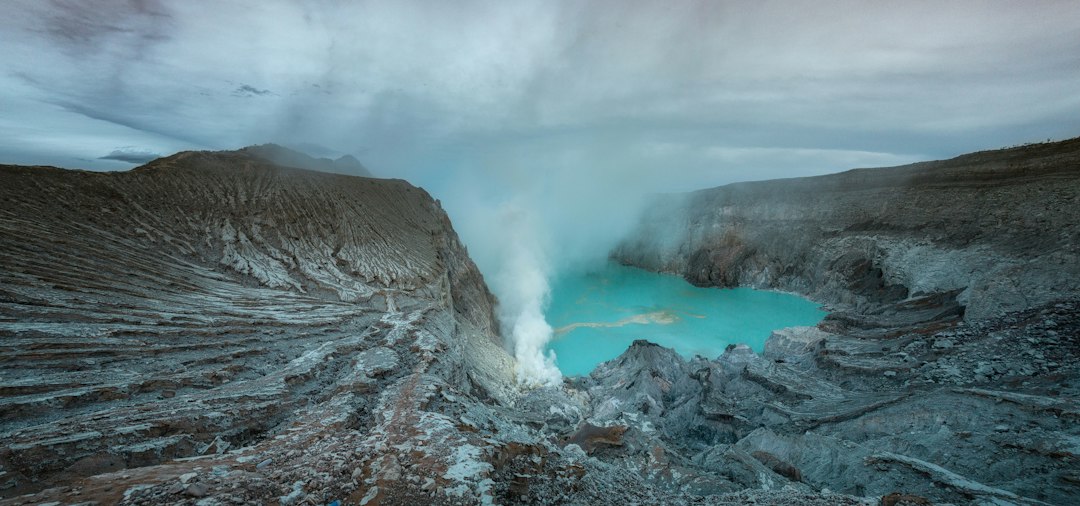
The phenomenon of blue flames is only visible at night, when the darkness allows one to perceive the light emitted by the combustion of sulfur gas. During the day, the same flames still exist, but they are invisible in sunlight. For this reason, most visitors begin their ascent between midnight and two in the morning, walking about 3 kilometers uphill to reach the edge of the crater, and then descending another 800 meters to the bottom where the active fumaroles are located.
Being close to the fumaroles means exposing oneself to high concentrations of sulfur dioxide: using a gas mask with specific filters for acid gases is not optional, but essential. Surgical masks do not provide protection. Some local guides rent them at the entrance of the park, but the quality is variable: those with respiratory issues should bring their own equipment from home. The typical visit time, from departure to return to base, is about 4-6 hours.
The sulfur miners: a job that still exists
Along the same path that tourists take with their technical jackets and trekking poles, every night and every morning, men pass by with bamboo baskets loaded with raw sulfur. The miners of Kawah Ijen work inside the active crater, manually breaking the solidified sulfur flows with iron bars and loading them onto their shoulders. Each trip carries between 70 and 90 kilograms of sulfur, traversing the steep path that leads out of the crater multiple times a day.
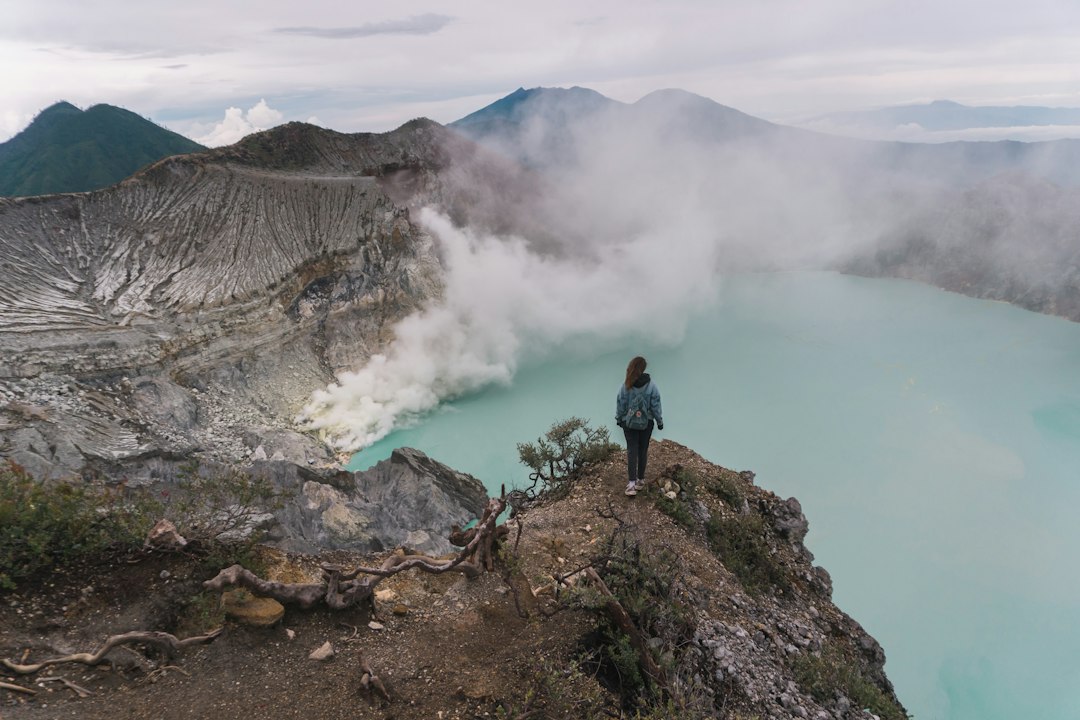
The sulfur is sold to local plants that primarily use it for the production of rubber and refined sugar. The earnings for the miners are calculated by weight: an amount that, while representing double the local average agricultural wage, remains very low in absolute terms. Encountering these men on the path, seeing them walk barefoot or with worn sandals under loads that few would be able to lift while standing still, is one of those moments that remain permanently etched in memory.
The turquoise lake: what you see during the day
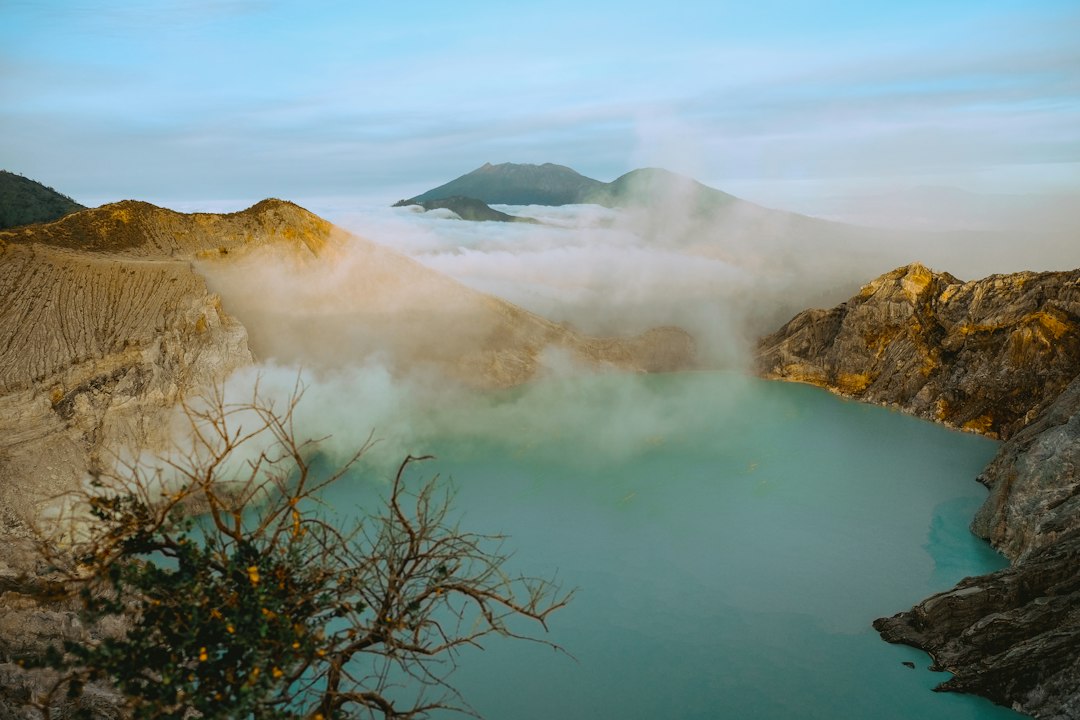
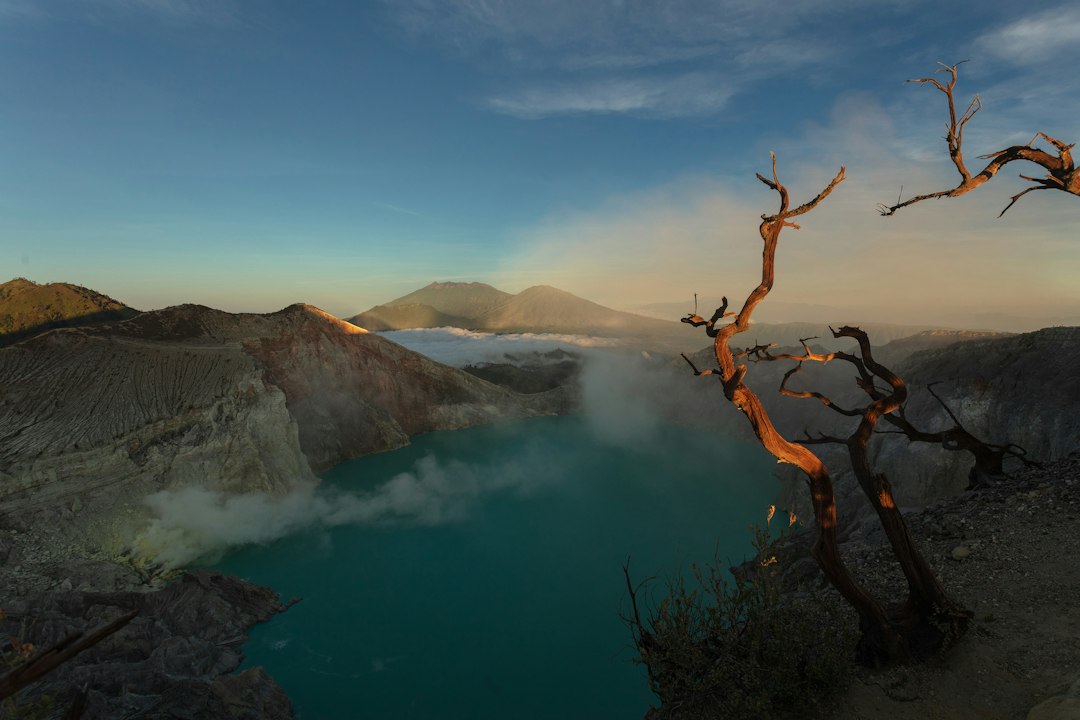
With the morning light, after the blue flames fade into dawn, the crater reveals its second spectacularity. The acidic lake of Kawah Ijen has a turquoise-green color that changes shades with the varying light and the underlying geothermal activity. The fumaroles continue to emit white vapors that mix with the morning fog, creating a landscape that alternates between moments of total visibility and others in which the crater completely disappears into the mist.
The walls of the crater are colors ranging from the intense yellow of deposited sulfur to rusty orange, to the gray of bare volcanic rock. There are no fences or barriers: the edge of the crater is exposed, with steep slopes down to the lake. It is an environment that requires constant physical attention, not suitable for those who suffer from vertigo or have significant motor difficulties.
Practical information for organizing the visit
The starting point for the ascent is the Paltuding Visitor Center, reachable by car from Banyuwangi in about an hour and a half. The entrance fee for foreign visitors is about 150,000 Indonesian rupiah on weekdays, with higher rates on weekends. The best season to visit Kawah Ijen is during the dry season, between May and October, when the chances of finding the crater free from low clouds are higher. In the rainy season, between November and March, the path can become slippery and visibility at the crater is often compromised.
Those departing from Bali can reach Banyuwangi by ferry from Gilimanuk, a journey of about 45 minutes. From there, many visitors choose organized tours that include overnight transportation to Paltuding. Bringing warm clothing is essential: at over 2,000 meters above sea level, nighttime temperatures drop significantly compared to the coast.


