



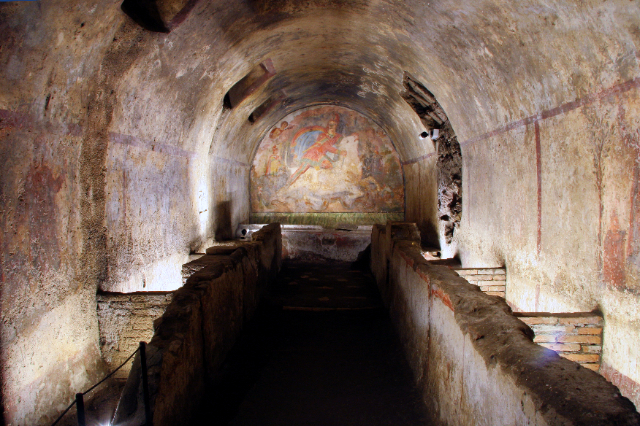
The Mithraeum of Santa Maria Capua Vetere is one of the most important mithraea in the world. It is located near the Campanian Amphitheater and the Archaeological Museum of ancient Capua. Since December 2014, the museum, amphitheater and mithraeum have been under the management of the Museum Pole of Campania.
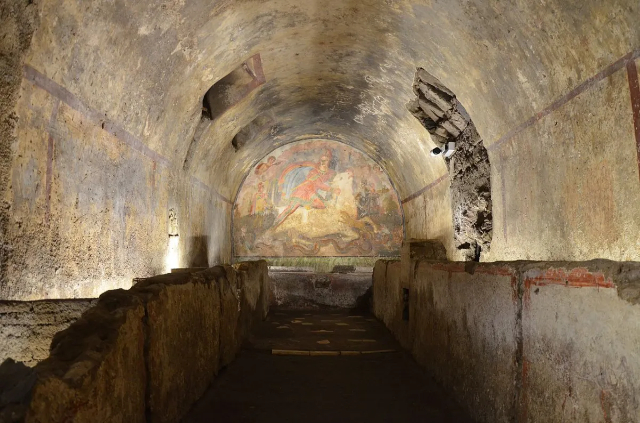
The mithraeum was accidentally found in 1922, during excavation for the construction of a building.
Capua, site of the famous Campanian Amphitheater, saw the spread of the mithraic cult during Roman rule perhaps brought precisely by the eastern gladiators usually linked to this cult. The construction of the mithraeum is thought to date back to the second century AD.
The Mithraeum was a mystery cult site dedicated to Mitra, a deity of ancient Persia who became popular among Roman soldiers and other members of the elite during the period of the Roman Empire. The cult of Mithras was characterized by secret and initiatory rituals, and its adherents often belonged to cult associations called "mysteries."
The mysteries of Mithras focused on themes such as the struggle between good and evil, rebirth, and spiritual renewal. Worshippers gathered in mithraea, which were often located underground or in man-made caves, to perform religious rites, make sacrifices and participate in initiation ceremonies.
The interiors of the mithraea were decorated with frescoes, reliefs and symbols depicting the various stages of the myth of Mithras, including his heroic deeds and triumphs over creation. The worshippers gathered around a central altar to participate in rituals and celebrations.
The Mithraeum of Santa Maria Capua Vetere, in addition to being an important archaeological site, offers valuable information on the art, religion, and society of Roman times. Its discovery and study provide a unique window into the world of mystery cults in ancient Rome.
