
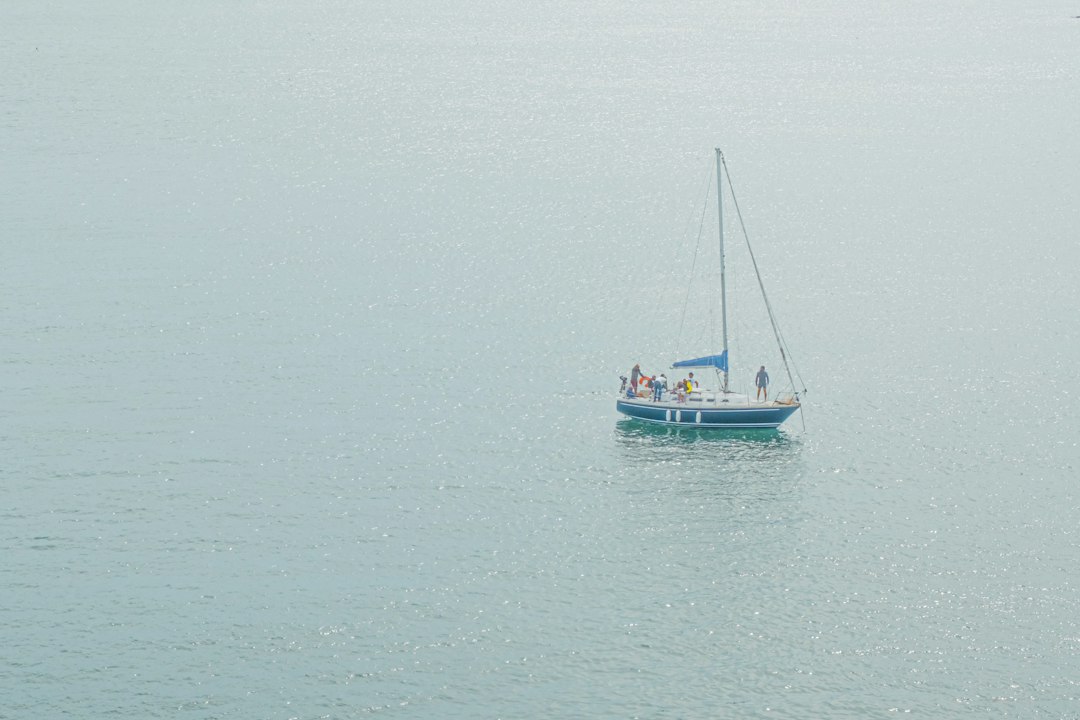
The ferry takes about ten minutes to cover the stretch of sea that separates the tip of Arcouest from Île-de-Bréhat, and when the bow touches the dock, it is immediately clear that one has entered a different world. There is no noise from engines to welcome you, no traffic jams or honking: only the Atlantic wind, the cries of seagulls, and the crackling of bicycle wheels on the pavement. Bréhat prohibits the circulation of private motor vehicles, and this choice transforms every corner of the island into something rare for contemporary France.
The island is located in the Côtes-d'Armor department in Brittany, and it is technically an archipelago of two main islands connected by a bridge built in the eighteenth century. The total area is about 3.5 square kilometers, which can be traversed on foot or by bicycle in a few hours. Yet the compactness does not detract from the variety: Bréhat hosts surprising vegetation for its latitude, with mimosa, figs, agapanthus, and even palm trees that thrive thanks to the Gulf Stream, which here moderates the climate and provides mild winters.
The pink granite and the coastal landscape
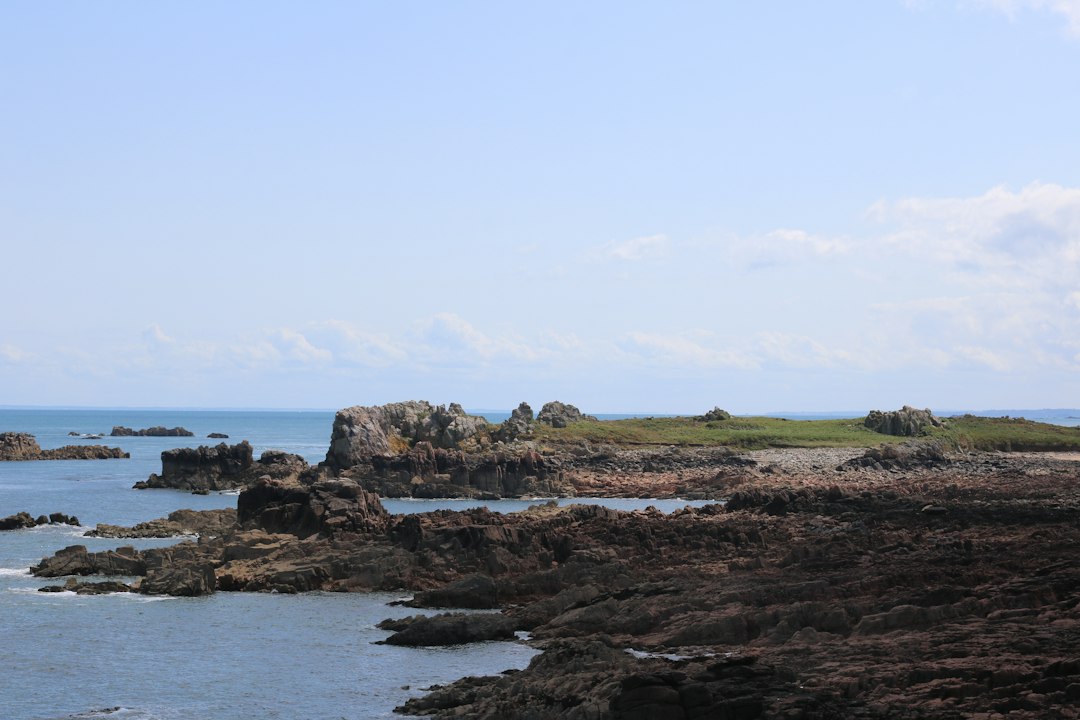
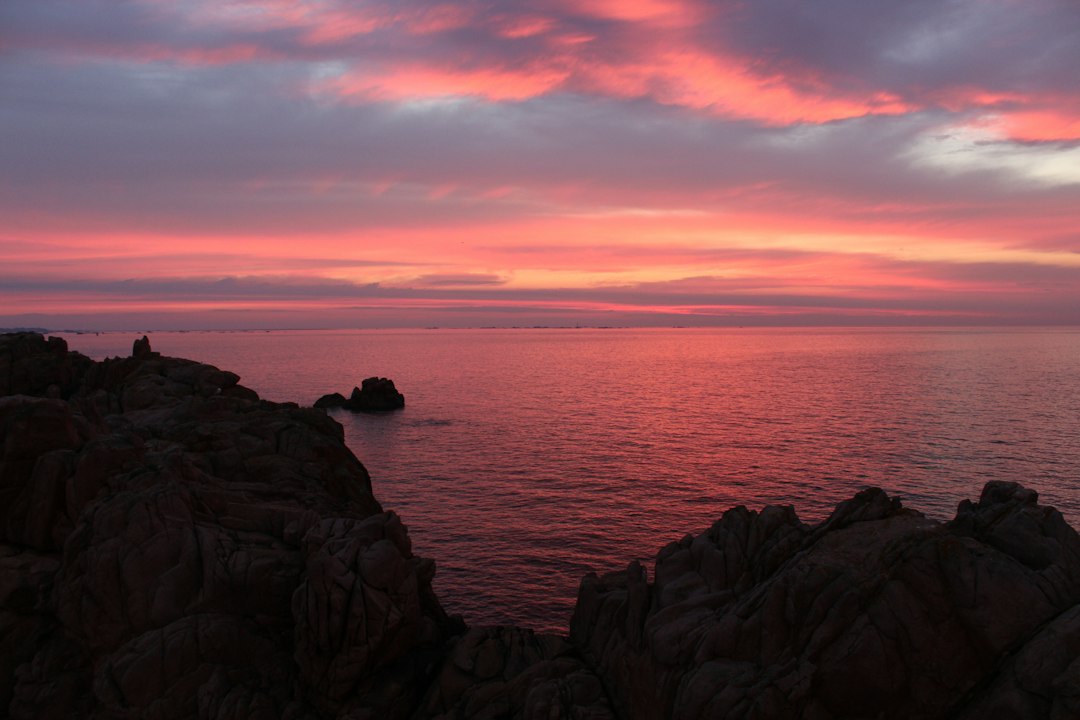
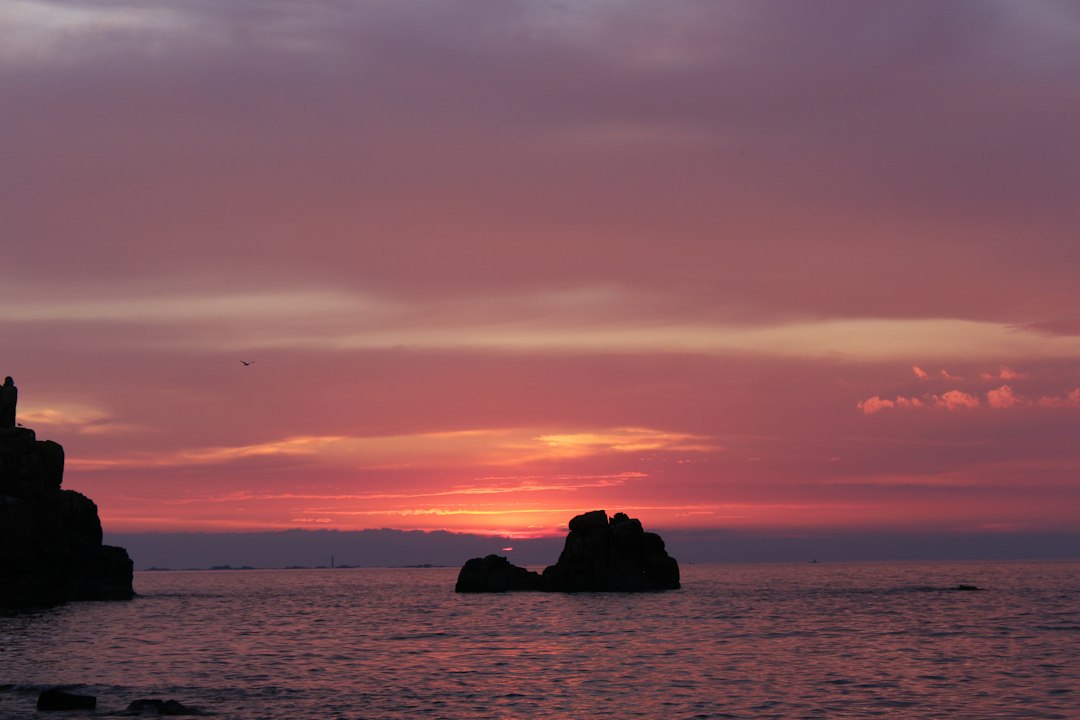
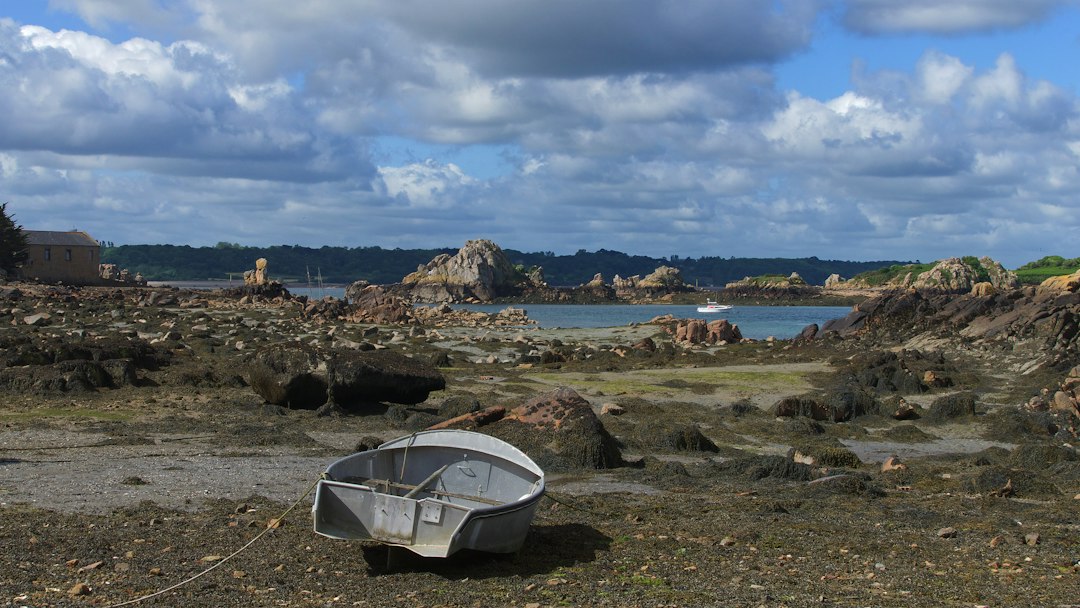
The most immediate visual characteristic of Bréhat is the pink granite rocks that emerge from the sea along the entire northern coast. This granite, with shades ranging from pale pink to bright orange, belongs to the same geological formation found further east, in the famous Pink Granite Coast around Ploumanac'h. In Bréhat, the rocks blend with the low vegetation of the Breton heath, creating chromatic contrasts that change with the light of day: at sunset, when the slanting sun colors the mineral surfaces, the landscape takes on almost unreal tones.
The coastal paths allow you to circumnavigate much of the island by walking directly on the rocks or along the edges of the meadows. The Paon lighthouse, at the northern tip of the island, is one of the most visited landmarks: from there, a view opens up over the archipelago and the waters that, at low tide, reveal expanses of seaweed and emerging rocks. The tides in this area of Brittany have a significant range, and the landscape changes radically in just a few hours.
Subtropical vegetation: a Breton anomaly
Seeing a fig tree laden with fruit or a blooming mimosa in Brittany always surprises those who arrive for the first time. In Bréhat, this spectacle is normality: the island's microclimate, sheltered from the coldest winds and warmed by the North Atlantic current, allows for the growth of typically Mediterranean or even subtropical species. Blue agapanthus bloom along the walls in summer, and private gardens hide plants that elsewhere in Brittany would not survive the winter.
This botanical peculiarity is not a tourist gimmick but a reality established over time, documented by botanists and naturalists who have studied the microclimate of the archipelago. Walking through the main village, Le Bourg, one notices the gardens that surround the granite houses: each property seems like a small spontaneous botanical collection, where climbing roses coexist with exotic plants without anything seeming out of place.
Life on the island and the main village
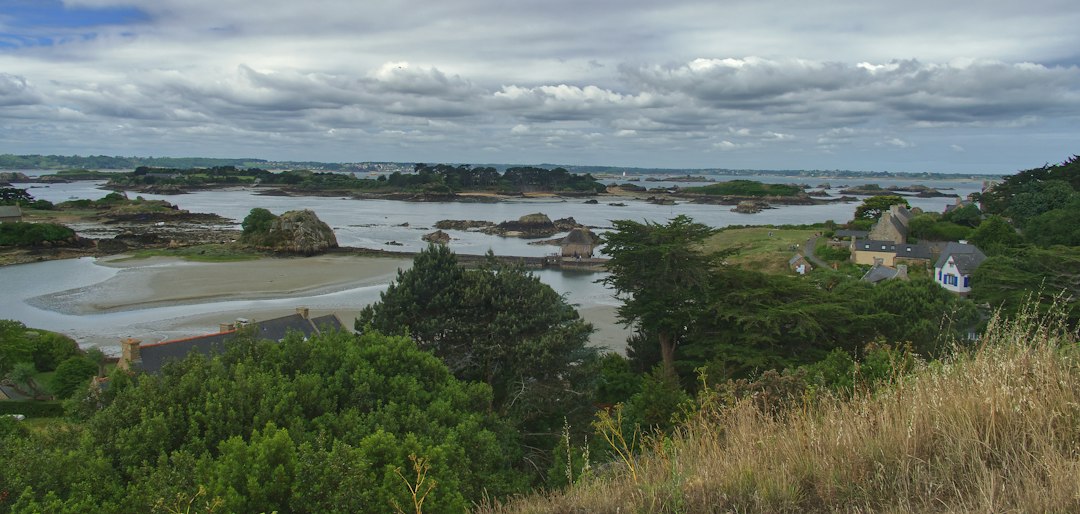
Bréhat has a small resident population, estimated at a few hundred inhabitants, which multiplies in the summer with the arrival of tourists and vacation home owners. The village of Le Bourg is the center of island life: a square, a few shops, restaurants serving local fish and seafood, and the church of Saint-Michel that dominates the inhabited area. The atmosphere is typical of Breton island communities, with a slow pace that is not a pose but a geographical necessity.
Bicycles can be rented near the dock upon arrival of the ferry, and they represent the most convenient means to systematically explore the island. Alternatively, the walking paths are well marked and allow access to all the main points without particular technical difficulties. The most useful practical advice is to visit Bréhat in May or June, when the vegetation is in full bloom, the days are long, and ferries depart frequently from Pointe de l'Arcouest but the tourist pressure is still lower compared to July and August, when the island becomes significantly crowded.
How to get there and how much time to dedicate
The ferries to Bréhat depart from Pointe de l'Arcouest, reachable by car from Paimpol in about five kilometers. The crossing takes about ten minutes and the trips are frequent during the tourist season. It is possible to visit the island in a day, but those who want to fully enjoy the isolation and unique atmosphere of Bréhat should consider staying at least one night: without the hustle and bustle of daytime ferries, the island regains all its tranquility in the evening.
Wearing suitable shoes for walking on rocks is essential for exploring the northern coast. The granite surfaces can be slippery when wet, and the informal paths that lead down to the sea do not always have protections. With the right equipment and a little attention to the tides, Bréhat offers a direct contact experience with the Atlantic landscape that few European islands of this size can still guarantee.