
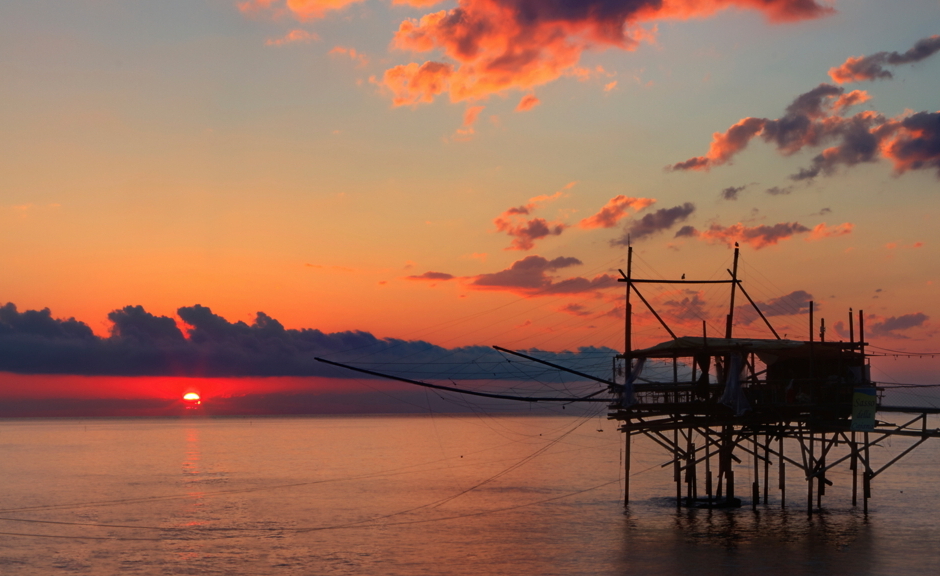

Perched on the jagged cliffs of Ortona along the Adriatic Sea, the trabucco stands as a testament to Italy's rich maritime heritage. This iconic wooden structure, resembling a giant crane, embodies centuries of fishing tradition, ingenuity, and resilience. The trabucco, with its sprawling platform and crane-like arms, tells a story of a coastal community's relationship with the sea—a relationship that has shaped local culture and livelihoods for generations.
The origins of the trabucco can be traced back to ancient fishing practices along the Italian coastline, with evidence suggesting that similar structures may have existed as early as the Roman period. However, the trabucco as we know it today began to gain prominence during the Middle Ages. Designed to withstand the turbulent waters of the Adriatic, these fishing machines provided a stable platform for fishermen to cast their nets, especially in adverse weather conditions when sailing was perilous. The design was not only practical but also innovative, allowing fishermen to catch fish without the unpredictability of open waters.
Architecturally, trabucchi are remarkable examples of traditional wooden construction, often made from sturdy pine logs and reinforced with ropes and nets. Each trabucco features a large platform that extends over the water, supported by massive wooden beams. The most striking elements are the long, horizontal arms—reminiscent of cranes—that stretch out over the waves, allowing fishermen to lower and raise their nets with ease. The craftsmanship involved in building these structures reflects the skill and dedication of local artisans, who have passed down their techniques through generations. In fact, the Trabocco of Punta Aderci, near Ortona, is not only a working fishing machine but also a popular spot for photographers and those seeking to capture the beauty of this architectural marvel against the backdrop of the stunning coastline.
Local culture in Ortona is deeply intertwined with the trabucco, which has become a symbol of the region's fishing heritage. The community celebrates this connection with various customs and festivals, most notably the Festa del Trabocco, held each summer. During this vibrant event, locals come together to honor their fishing traditions, featuring music, dance, and, of course, food. Visitors can enjoy freshly caught seafood prepared in traditional ways, showcasing the bounty of the Adriatic.
Gastronomy in Ortona is heavily influenced by the sea, with dishes that reflect the local fishing culture. Brodetto, a rich fish stew, is a staple, made with a variety of local fish and seasoned with herbs and spices. Another popular dish is spaghetti alle vongole, which highlights the fresh clams harvested by local fishermen. The region is also known for its excellent white wines, particularly Trebbiano and Pecorino, which pair beautifully with seafood. Dining at a trabucco restaurant, where fresh fish is served straight from the nets, offers an immersive experience that connects visitors to the region’s culinary traditions.
Beyond their historical and architectural significance, trabucchi are steeped in lesser-known curiosities that enrich their story. For example, each trabucco is often named after a local fishing family, serving as a reminder of the personal legacies tied to these structures. Additionally, the fishing methods employed on a trabucco are unique; fishermen still rely on traditional techniques, such as using traps and nets, handed down through the ages. Some trabucchi have even been converted into charming restaurants, allowing diners to experience the magic of these fishing machines while enjoying the stunning coastal views.
For travelers eager to explore Ortona and its trabucchi, the best time to visit is during the late spring and early autumn months, when the weather is mild, and the fishing activity is vibrant. The Festa del Trabocco, typically held in July, is an excellent opportunity to immerse oneself in local culture, but visitors can also enjoy the tranquility of the off-peak season. To fully appreciate the trabucchi, consider taking a guided tour that not only emphasizes their historical significance but also offers hands-on experiences, such as fishing or preparing local dishes.
While in Ortona, don’t miss the chance to explore the surrounding natural beauty, including the nearby Costa dei Trabocchi, a scenic stretch of coastline dotted with these fascinating structures. Hiking along the trails that connect the trabucchi offers breathtaking views of the sea and an intimate glimpse into the lives of local fishermen.
As you plan your visit to Ortona and the enchanting trabucchi, consider using the Secret World app for a personalized itinerary that unveils the hidden gems of this captivating region.


