
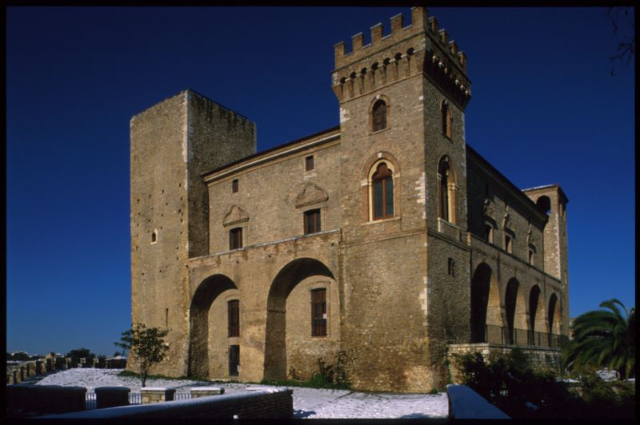

Perched elegantly between the serene rivers of Arielli and Rifago, the Ducal Castle of Crecchio stands as a testament to the layered history and vibrant culture of the Abruzzo region. This imposing fortress, with its quartet of corner towers, has watched over its surroundings for centuries, offering visitors a glimpse into Italy’s richly woven tapestry of the past.
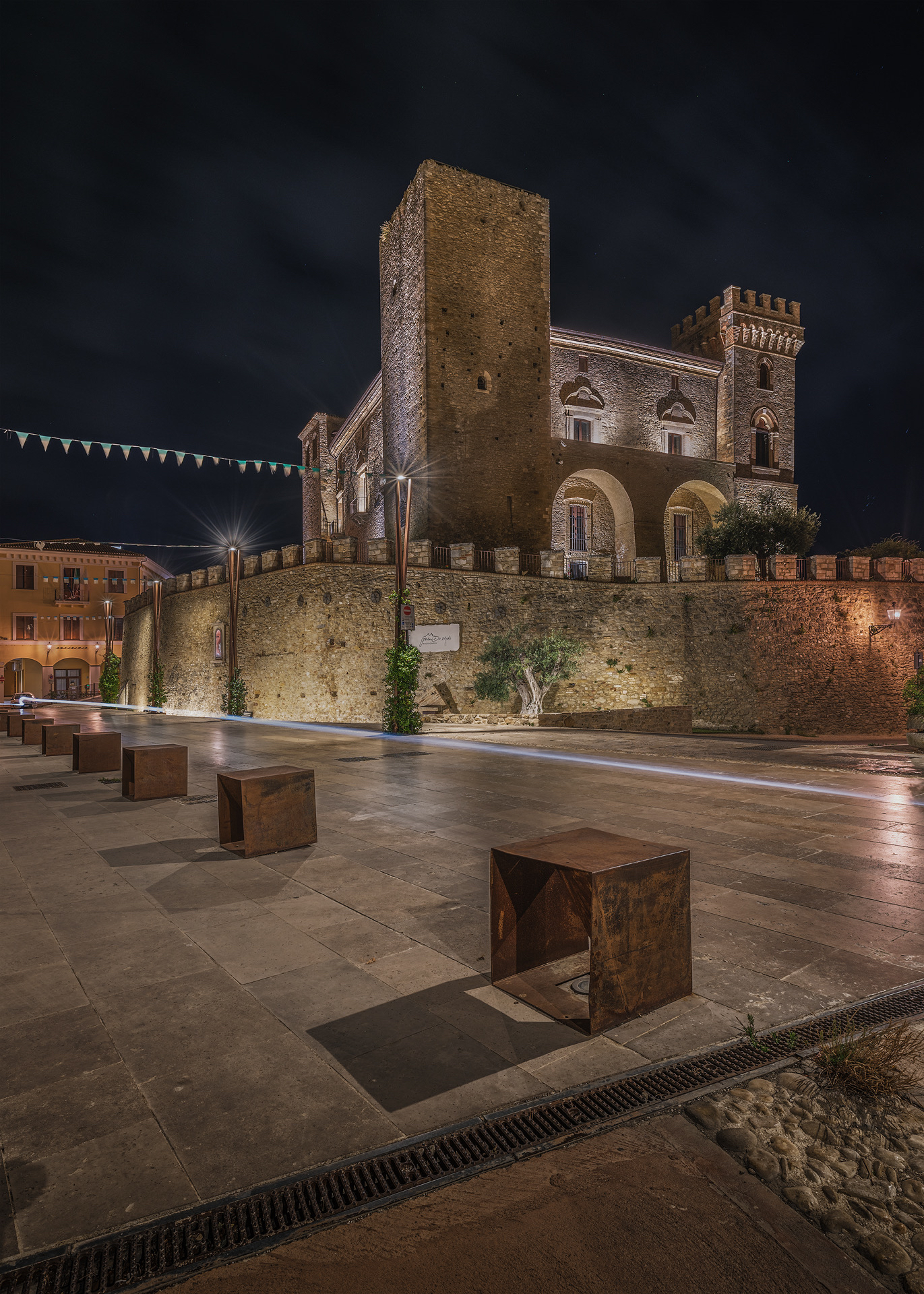
The origins of the Ducal Castle date back to the Middle Ages, with its first definitive mention appearing in records from the 13th century. It was initially erected as a defensive stronghold, a common practice in response to the era’s frequent skirmishes and territorial disputes. Over time, it evolved in both form and function. The castle became a noble residence, housing influential families like the De Riseis and the De Martino, who significantly altered its structure and purpose. One particularly notable historical episode occurred during World War II, when King Vittorio Emanuele III and the Italian royal family sought refuge here after fleeing Rome in 1943, marking the castle’s place in contemporary history.
Architecturally, the castle is a fascinating mosaic of styles, reflecting its various phases of development. Originally a simple fortress, it gradually adopted elements of Renaissance and Baroque architecture. The four corner towers, each unique in design, encase the castle’s heart like sentinels, lending it an air of timeless strength. Inside, the castle’s most remarkable feature is the Archaeological Museum of Byzantine and Early Medieval Abruzzo. This museum houses a treasure trove of artifacts, including intricate mosaics, coins, and everyday objects that paint a vivid picture of life during the Byzantine and early medieval periods in Italy.
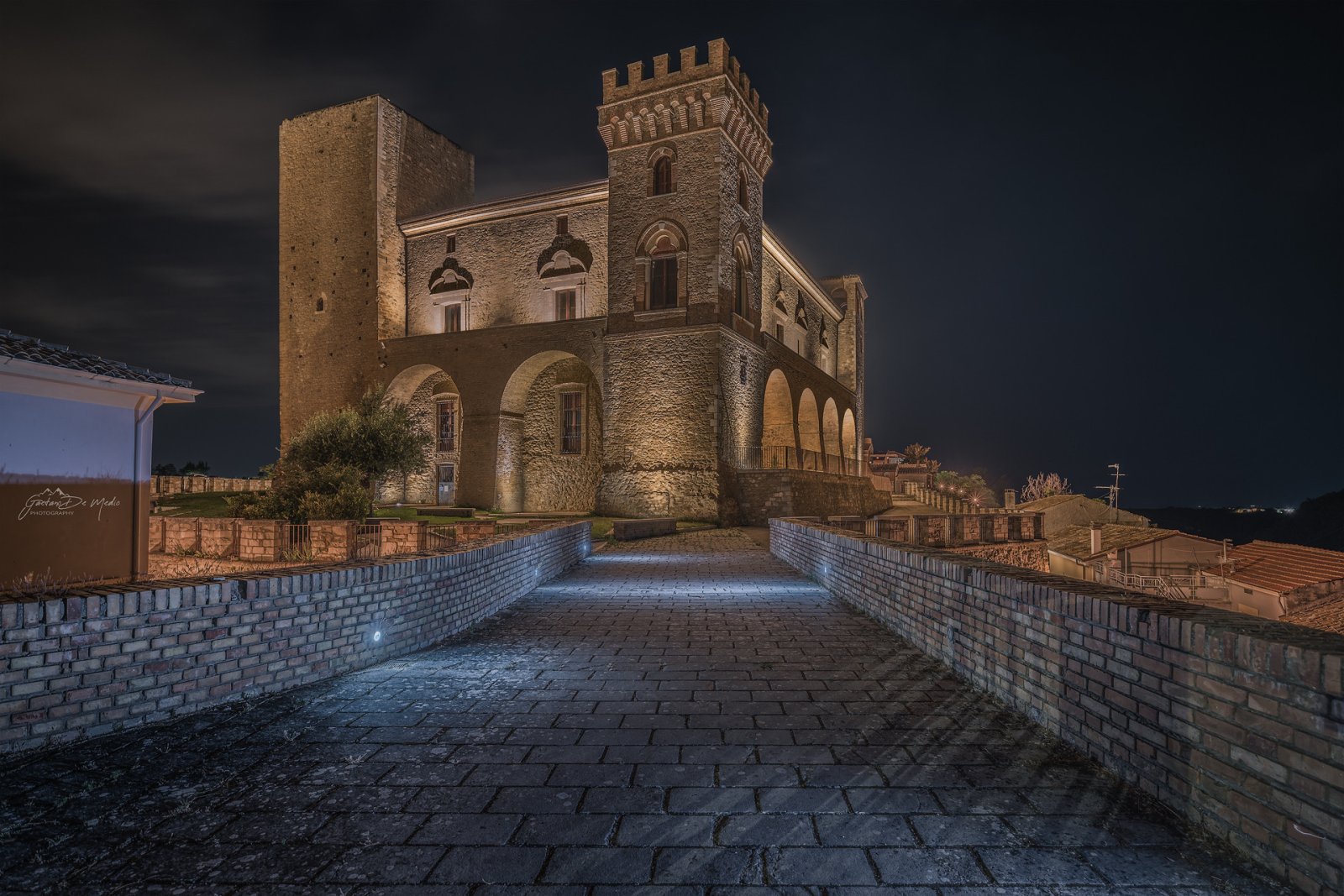
Crecchio itself is a village steeped in tradition, where age-old customs thrive amid modernity. The annual Crecchiano Wine Festival is a celebration that encapsulates the region’s spirit. Held every August, this festival transforms the village into a vibrant carnival of flavors and music, drawing locals and visitors alike to sample the region’s finest wines and partake in traditional dances. The festival is a testament to the locals' enduring connection to their land and its bounty.
In terms of gastronomy, Crecchio and its surrounding region offer a delightful culinary journey. The local cuisine is deeply rooted in the agricultural heritage of Abruzzo, with dishes like 'arrosticini', skewers of succulent lamb seasoned with simple herbs, and 'maccheroni alla chitarra', a type of pasta known for its unique square-cut strands. Accompanying these dishes is often a glass of Montepulciano d'Abruzzo, a robust red wine that perfectly embodies the area's fertile terroir.
Beyond the well-trodden paths, the castle holds lesser-known curiosities. One such tale involves the underground passageways rumored to extend from beneath the castle to various points in the village. These secret tunnels are said to have been used during times of siege, providing a clandestine route for escape or the transport of supplies. Although largely unexplored by modern archaeologists, these stories add a layer of mystery and intrigue to the castle’s already rich narrative.
For those planning to visit, the best time to explore the Ducal Castle of Crecchio is during the spring or early autumn. The mild weather during these seasons enhances the experience, allowing for leisurely strolls through the castle grounds and the surrounding village. Visitors should take time to examine the details of the castle’s masonry, where centuries-old craftsmanship is evident in every stone. And, of course, no visit would be complete without a tour of the archaeological museum, where each exhibit offers a window into the distant past.
In navigating the castle’s storied halls and the vibrant life of Crecchio, one finds a unique convergence of history, art, and culture that serves as a microcosm of Italy’s illustrious heritage. The Ducal Castle stands not just as a monument to the past, but as a living, breathing part of the community, inviting all who enter to step back in time and savor the rich tapestry of human experience it represents.


