
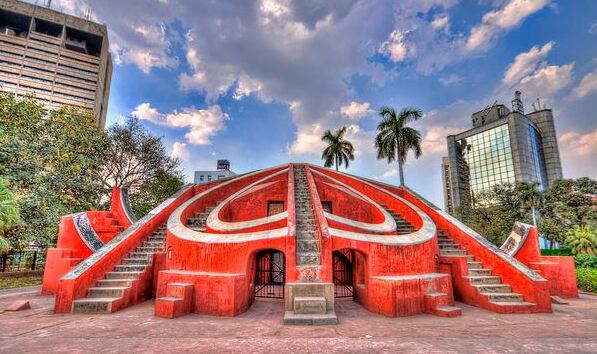

In the heart of Jaipur, a city steeped in history and vibrant culture, lies Jantar Mantar, an astronomical marvel that captivates visitors with its grand scale and intricate design. Built in 1728 by Sawai Jai Singh II, the rajah of Jaipur, this remarkable observatory is not just the world's largest sundial but also a testament to the scientific acumen of its creator. Jai Singh II, a keen astronomer and mathematician, sought to enhance the understanding of celestial bodies, and he dispatched emissaries around the world to collect the most accurate astronomical data. Upon their return, he commissioned the construction of the Jantar Mantar complex, which included five observatories across India, with Jaipur's being the largest and most impressive.
The architectural style of Jantar Mantar is a blend of Rajput and Islamic influences, showcasing a unique assortment of geometric shapes and towering structures made primarily of stone. The largest instrument, the Samrat Yantra, stands at an impressive 27 meters (approximately 88.6 feet) tall and is designed to accurately measure time to the nearest second. The meticulous craftsmanship is evident in the finely carved details and the precise alignments of each instrument with the stars. Each structure, from the Misra Yantra to the Daksinotthapana Yantra, serves a specific purpose, whether it’s tracking celestial bodies, measuring time, or determining the positions of planets.
As you wander through Jantar Mantar, the air is thick with the echoes of history and culture. The observatory is not only a scientific hub but also a cultural symbol of Jaipur. The city, known for its colorful festivals and rich traditions, celebrates numerous events throughout the year, including the Jaipur Literature Festival and Teej, a festival dedicated to the monsoon and the worship of goddess Parvati. Local customs are deeply tied to the community's appreciation for art, music, and dance, with traditional performances often held in and around the observatory, enhancing its cultural significance.
When in Jaipur, indulging in local cuisine is a must. The culinary landscape is vibrant and diverse, with dishes like Dal Baati Churma, a combination of lentils, baked wheat rolls, and a sweet dish made from coarsely ground wheat, captivating the taste buds. Don't miss the chance to try Ghevar, a traditional Rajasthani dessert, particularly during the festival of Teej. Pair your meals with a glass of lassi, a yogurt-based drink that cools the palate and complements the spicy flavors of Rajasthani cuisine.
For those looking to delve deeper into the mysteries of Jantar Mantar, there are several lesser-known curiosities worth exploring. One such detail is the fact that the instruments were not only used for astronomical observations but also served as a means of determining the best times for agricultural activities. Moreover, the observatory's design reflects a profound understanding of both Hindu and Islamic cosmology, showcasing the intellectual synthesis of the period.
Visiting Jantar Mantar is best experienced during the cooler months from October to March, when the weather is pleasant, making it easier to explore the sprawling complex. Early morning or late afternoon visits allow for softer light, perfect for photography and contemplation. The observatory is generally less crowded during weekdays, providing a more intimate experience with this scientific marvel.
As you explore the intricate structures, take time to observe the shadows cast by the sun, a reminder of the passage of time, and the ingenuity of ancient Indian astronomy. Be sure to look for the detailed inscriptions that explain the purpose of each instrument, offering a glimpse into the sophisticated knowledge of the stars that existed in India centuries ago.
In conclusion, Jantar Mantar stands not only as an architectural wonder but also as a symbol of the rich cultural tapestry of Jaipur. As you plan your visit, consider using the Secret World app to create a personalized AI itinerary that will guide you through the enchanting streets and sights of this remarkable city.


