
← Back

Jesi: The Pianetti Palace

Via XV Settembre, 10, 60035 Jesi AN, Italia ★★★★☆ 646 views
Ranita Edison
Jesi
🏆 AI Trip Planner 2026

Get the free app

Discover the best of Jesi with Secret World — the AI trip planner with 1M+ destinations. Get personalized itineraries, hidden gems and local tips. Free on iOS & Android.

🧠 AI Itineraries 🎒 Trip Toolkit 🎮 KnowWhere Game 🎧 Audio Guides 📹 Videos
Download on the App Store Get it on Google Play
Scan to download Scan to download

Palaces, Villas and Castles · Jesi

Jesi: The Pianetti Palace - Jesi | Secret World Trip Planner

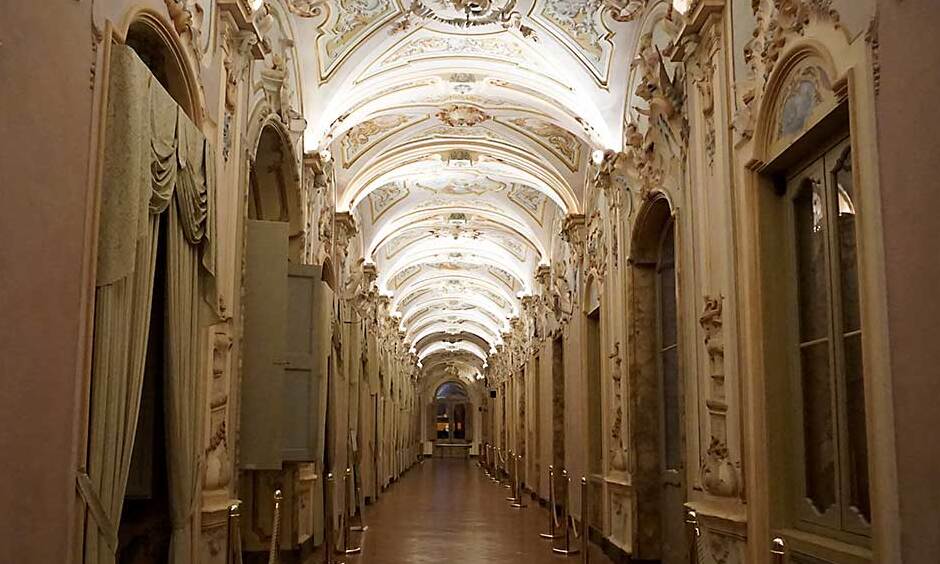
Palazzo Pianetti, the current seat of the Municipal Art Gallery, is a significant example of 18th century architecture. Begun in 1748 on commission of the noble family of the Marquises Pianetti by the painter-architect Domenico Luigi Valeri (1701-1770) and finished around 1781, it has a central body with two floors and at the extremities two wings that extend towards the Italian garden, architecturally closed by a terrace that runs around the courtyard. A marble staircase with a double ramp built by the architect Angelo Angelucci da Todi, in 1858, allows access to the upper floors: on the walls are stucco bas-reliefs depicting poets, musicians and scientists. On the first floor are the "Gallery" with stucco and "rococo" paintings and the rooms decorated with the Stories of Aeneas. On the second floor are the rooms where the Pianetti family lived: halls, studies, sitting rooms, bedrooms, bathrooms decorated at the end of the 18th century by the painter Luigi Lanci and later by the Florentine artist Olimpio Bandinelli with gallant themes and Arcadian scenes. In the attic there are small apartments for servants. The internal façade overlooking the garden is marked by horizontal stringcourses and vertical pilasters and presents a rhythmic alternation of doors and windows, some of which have a small balcony, the work of the Venetian Antonio Croatto. The façade overlooking the street is not by Valeri but probably by a pupil of the architect Alfonso Torreggiani and it recalls the scheme and the typology of Palazzo Aldovrandi, built in Bologna in 1744. In 1859, on the occasion of the marriage between Vincenzo Pianetti and the Florentine countess Virginia Azzolino, the palace underwent extensive renovations by the architect Angelucci. The intervention was not limited to the masonry work, but extended to the furnishings, the design of new doors and windows, fireplaces, wall hangings and interior decorations. On this occasion the still existing staircase was built. The worsening of the economic situation of the family led, in 1891, to the works of rationalization of the interiors and their adjustment in view of the rent of part of the property. In 1901 there is the final sale of the palace in favour of the Tesei family. In the last forty years the Municipality of Jesi has gradually acquired Palazzo Pianetti which, after the necessary restoration work, has become the seat of the Pinacoteca Civica.

Jesi: The Pianetti Palace - Jesi | Secret World Trip Planner
🗺 AI Trip Planner

Plan your visit to Jesi

Suggested itinerary near Jesi: The Pianetti Palace

MAJ+
500.000+ travelers worldwide
  1. 🌅
    Morning
    Jesi: The Pianetti Palace
    📍 Jesi
  2. ☀️
    Afternoon
    Jesi | Carisj Foundation Museum
    📍 0.3 km · Jesi
  3. 🌆
    Evening
    Historical oil mill S. Dolci
    📍 9 km · Jesi

Buy Unique Travel Experiences

Powered by Viator

See more on Viator.com

Explore nearby · Jesi

Frequently Asked Questions

Palazzo Pianetti currently serves as the seat of the Municipal Art Gallery, making it a must-visit destination for art lovers. The palace showcases its original 18th-century decorations alongside curated artworks, allowing visitors to experience both the architecture and the art collection.
The palace was begun in 1748 by the painter-architect Domenico Luigi Valeri (1701-1770) on commission of the noble Pianetti family and was finished around 1781. The street-facing façade was likely designed by a pupil of architect Alfonso Torreggiani, drawing inspiration from Palazzo Aldovrandi in Bologna.
The palace features a stunning double-ramp marble staircase built in 1858 with stucco bas-reliefs of poets, musicians and scientists, rococo-decorated galleries, rooms depicting the Stories of Aeneas, and lavishly decorated family apartments with gallant themes and Arcadian scenes painted by Luigi Lanci and Olimpio Bandinelli. The internal garden façade showcases elegant horizontal stringcourses and rhythmic alternations of doors and windows with small balconies.
In 1859, architect Angelo Angelucci da Todi led extensive renovations to celebrate the marriage of Vincenzo Pianetti to Florentine countess Virginia Azzolino, which included the construction of the marble staircase and updates to furnishings, doors, windows, fireplaces, and interior decorations. These changes represent the final major architectural intervention documented in the palace's history.
The palace features a central body with two floors, with two wings extending toward the Italian garden closed by a terrace around the courtyard. The first floor houses the rococo Gallery and rooms with Stories of Aeneas, while the second floor contains the family's private apartments including halls, studies, sitting rooms, and bedrooms, with servant apartments located in the attic.
