
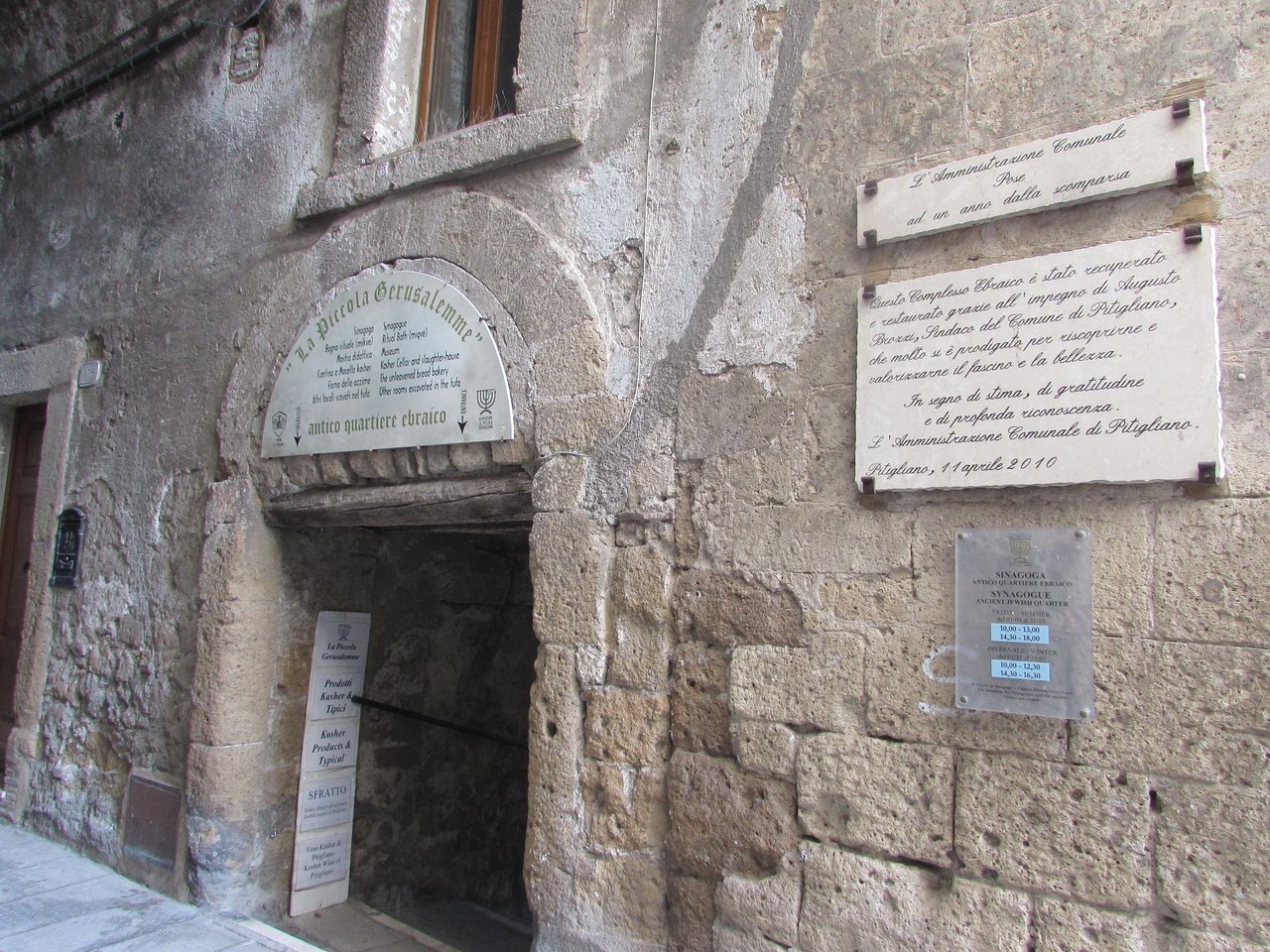

Nestled in the captivating hilltop town of Pitigliano, Italy, the Jewish Museum of Pitigliano offers a profound glimpse into the rich tapestry of Jewish life and history in this enchanting locale. Established within the confines of the Synagogue, which dates back to 1598, this museum stands as a testament to the resilience and continued vibrancy of the Jewish community in this part of Tuscany.

The origins of Jewish life in Pitigliano can be traced back to the late 15th century, when a small group of Jews, fleeing persecution, found refuge in this picturesque town, known for its dramatic tuff cliffs. The community flourished, particularly during the 16th and 17th centuries, becoming an integral part of the town's social fabric. However, the community faced tremendous challenges, especially during World War II, when the Synagogue was damaged by bombing raids. Thankfully, following the war, restoration efforts breathed new life into this historic site.
Architecturally, the Synagogue is a reflection of the Mannerist style that characterizes many buildings in Tuscany. Visitors are greeted by a striking façade adorned with intricate details and a classic double staircase leading to the entrance. Inside, the wooden aron kodesh (holy ark) draws the eye, beautifully crafted and richly decorated, showcasing the artistry and devotion of the community. The museum also houses a collection of ceremonial artifacts, including Torah scrolls, ritual objects, and colorful textiles, representing the artistic significance of the Jewish culture in the region.

The Jewish Museum of Pitigliano does not merely dwell on the past; it is a living testament to the traditions and customs of the Jewish community. As you wander through the museum, you'll discover a series of rooms carved into the tuff rock, each representing different aspects of communal life. Among these, the mikveh (ritual bath) is particularly noteworthy, providing insights into the spiritual practices of women in the community. The butcher’s shop and dyeworks reveal the everyday lives of Jewish families, while the unleavened oven underscores the culinary traditions that persist to this day.
Speaking of gastronomy, Pitigliano is home to a unique blend of culinary traditions influenced by both Italian and Jewish cultures. The local cuisine features dishes such as crostini di fegato (liver pâté on toasted bread) and stracciatella soup, which are often served during festive occasions. The town also produces Kashrut wine, which is especially significant for Jewish rituals and celebrations. Exploring the local markets, you'll find artisanal breads and pastries that reflect the rich cultural heritage of the region.
For those curious about lesser-known stories, the Jewish Cemetery located on the outskirts of the town is a hidden gem. The cemetery dates back to the 16th century and is a serene place, where beautifully engraved tombstones tell the tales of the community's elders. It's a poignant reminder of the once-thriving Jewish population that contributed so much to Pitigliano's identity. Additionally, the annual Pitigliano Jewish Festival, held each summer, celebrates the community's heritage with food, music, and storytelling, drawing visitors from around the world.
Visiting the Jewish Museum of Pitigliano is best done during the spring or early autumn months when the weather is mild and the town’s beauty is in full bloom. Plan your visit on weekdays to fully explore both the Synagogue and the museum’s various exhibits. Remember that the Synagogue is closed on Saturdays and Jewish holidays, but the ancient ghetto remains accessible for exploration.
As you immerse yourself in the rich history and culture of Pitigliano, take time to appreciate the breathtaking views of the surrounding countryside. The town, often referred to as Little Jerusalem, is a testament to the enduring spirit of a community that has thrived against the odds.
To ensure a seamless experience in this incredible destination, consider using the Secret World app to create a personalized itinerary tailored to your interests in Pitigliano.


