



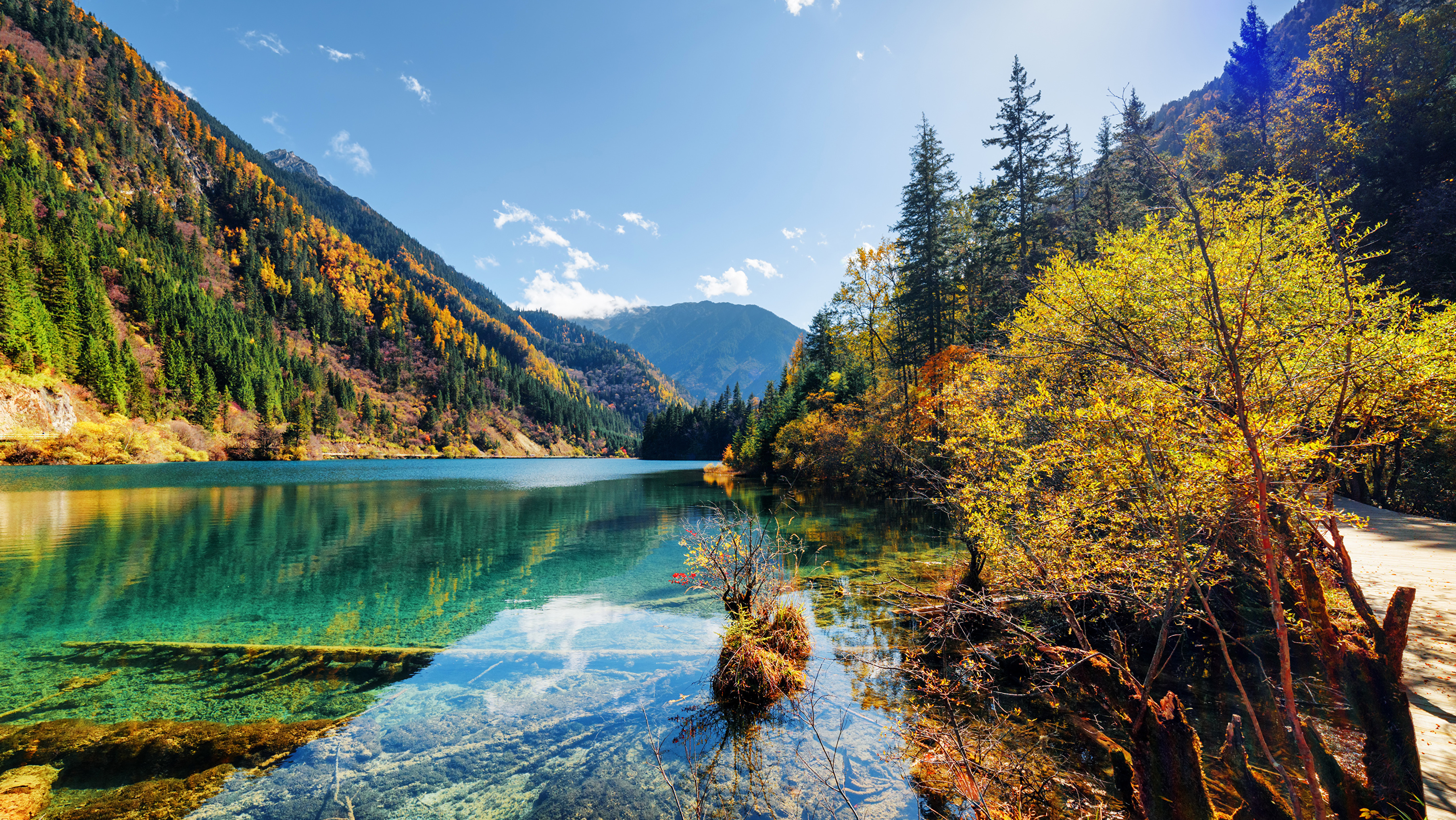
Nestled in the heart of the Aba Tibetan Autonomous Prefecture in Sichuan Province, Jiuzhaigou Valley is a breathtaking tableau of nature where crystal-clear lakes, cascading waterfalls, and snow-capped peaks harmoniously blend into a utopian landscape. This UNESCO World Heritage site is not just a feast for the eyes; it’s a place steeped in rich history and cultural significance.
### History and Origins
The origins of Jiuzhaigou Valley can be traced back to the ancient Tibetan culture, where the region was primarily inhabited by the Qiang and Tibetan peoples. According to local legend, the valley was once home to a beautiful Tibetan girl named Wang Mei, who fell in love with a mortal boy. Their tragic love story, filled with celestial magic and sorrow, is said to have led to the creation of the colorful lakes that dot the valley today.
In the late 1970s, Jiuzhaigou was recognized for its natural beauty and unique ecosystem, leading to its designation as a national park in 1982. The area was opened to tourists in 1984, attracting not just nature lovers but also those keen to explore the rich Tibetan heritage.
### Art and Architecture
Though Jiuzhaigou is primarily known for its natural wonders, it also serves as a canvas for Tibetan art and architecture. The traditional Tibetan houses that dot the landscape showcase intricate wood carvings and vibrant frescoes, reflecting the spiritual beliefs and daily life of the local community. The Milu Temple, located within the valley, is particularly notable for its stunning architecture and serves as a place of worship where visitors can witness traditional Tibetan rituals and ceremonies.
Artistic significance in Jiuzhaigou extends to the local handicrafts as well. Skilled artisans create beautiful thangkas (traditional Tibetan scroll paintings) that depict Buddhist symbolism and narratives, enriching the cultural tapestry of the region.
### Local Culture and Traditions
The local culture is a vibrant blend of Tibetan and Qiang influences. Festivals play an integral role in the community, with the Tibetan New Year (Losar) being the most significant celebration. Traditionally, it is marked by feasting, dancing, and rituals meant to ward off evil spirits. Local residents dress in colorful traditional attire, showcasing their heritage through elaborate costumes and jewelry.
Visitors may also witness the Qiang New Year, celebrated in late summer, which features unique customs such as traditional archery, horse racing, and folk songs. Engaging with the locals during these festivities offers an authentic glimpse into the customs and cultural significance of Jiuzhaigou.
### Gastronomy
The culinary offerings in Jiuzhaigou are as diverse as its landscapes. Tibetan cuisine is characterized by hearty dishes that reflect the region's high-altitude climate. A must-try is momo, Tibetan dumplings filled with meat or vegetables, served with a spicy dipping sauce.
Another local favorite is tsampa, a roasted barley flour mixture often eaten with butter tea, a traditional beverage made from tea, butter, and salt. The flavors of the region are further enhanced by spices such as cumin and coriander, commonly used in local dishes.
### Lesser-known Curiosities
Beyond its stunning vistas, Jiuzhaigou Valley harbors some lesser-known curiosities. For instance, the lakes, known locally as Haizi, are not only visually captivating but also serve as important ecological zones. The unique mineral deposits and rich biodiversity contribute to the surreal colors of the lakes, particularly Five Flower Lake, which is renowned for its vibrant hues and underwater forest.
Additionally, the valley is home to numerous endangered species, including the giant panda, which is occasionally spotted in the surrounding forests. The area is also rich in folklore, with legends of mystical creatures said to inhabit the region, adding an air of mystery and intrigue for curious travelers.
### Practical Visitor Information
To truly experience the enchanting beauty of Jiuzhaigou Valley, the best time to visit is during the autumn months from September to November when the foliage transforms into a riot of colors. Early mornings offer the best light for photography, capturing the lakes in their most magical state.
Travelers should be prepared for high altitudes and varying weather conditions, so layering clothing is advisable. The park offers well-maintained walking paths, but exploring off the beaten path can lead to hidden gems. Don’t forget to bring a camera, as the breathtaking scenery is a photographer’s dream.
### Conclusion
Jiuzhaigou Valley is more than just a destination; it’s a journey into a world where nature, culture, and history converge in spectacular harmony. From its vibrant lakes to its rich traditions, every corner of this valley tells a story waiting to be discovered. To plan your personalized itinerary for this enchanting place, consider using the Secret World app for tailored travel insights.
