


The noise arrives before the image. Still hidden by the curve of the path, the Lower Falls of Johnston Canyon announces itself with a dull roar that bounces off the gray limestone walls, growing louder with each step. When it finally appears — a column of water plunging into a narrow gorge just a few meters wide — the din becomes physical: the air vibrates, droplets settle on the jacket, on the glasses, on the skin.

Johnston Canyon is located in Banff National Park, in Alberta, about 26 kilometers west of downtown Banff along the Bow Valley Parkway. It is not just a simple hike along a river: it is a path that literally runs attached to the vertical walls of the canyon, on metal walkways bolted into the living rock, suspended above the rushing water a few meters below. The canyon has been carved over thousands of years by Johnston Creek, which has eroded the soft limestone creating a narrow and winding corridor, in some places less than six meters wide.
The two waterfalls: Lower and Upper Falls
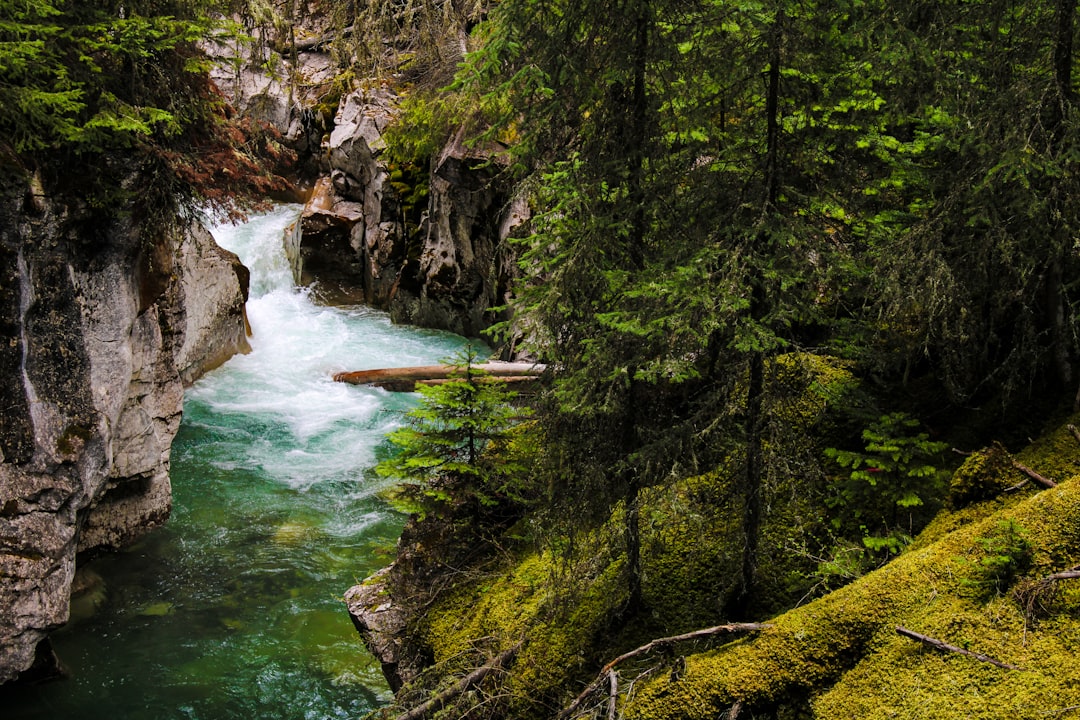
The main trail splits into two distinct sections. The first, about 1.1 kilometers long, leads to the Lower Falls: a waterfall of about 10 meters high that plunges into an emerald pool visible from an observation platform carved directly into the rock, accessible through a short tunnel dug into the limestone wall. The view from that point is very close — you are practically inside the water jet, enveloped in mist and noise.
Continuing for another 2.7 kilometers you reach the Upper Falls, taller and more powerful: about 30 meters of free fall into a natural amphitheater of dark rock soaked by perpetual humidity. Here the canyon opens slightly, light filters from above, and the walls show the horizontal streaks of the geological layers deposited during the Paleozoic era. The difference in character between the two waterfalls is striking: the Lower is intimate and claustrophobic, the Upper is theatrical and open.

Beyond the canyon: the Ink Pots
Those who stop at the Upper Falls miss the most unusual part of the hike. Continuing beyond the canyon for about 3 kilometers, the trail emerges from the gorge and ascends towards an alpine plain where the so-called Ink Pots are located: seven natural cold water springs that bubble up from the ground creating pools of varying colors between aquamarine, turquoise, and opaque blue, depending on the angle of the light and the concentration of dissolved minerals. The chromatic effect is real and documentable: the water flows at a constant temperature of about 4 degrees Celsius all year round, and the contrast between the open plain, the surrounding mountains, and these still and colorful pools is visually stunning.
The total round trip distance to the Ink Pots covers about 11.6 kilometers with a positive elevation gain of about 215 meters: accessible to hikers in decent physical shape, but not suitable for those with mobility difficulties, especially in the section of the narrower walkways.
When to go and practical advice
Johnston Canyon is one of the most frequented trails in Banff National Park, which means that in summer — between July and August — the parking lot fills up before nine in the morning on weekends. The most effective advice is to arrive by seven thirty, or to use the shuttle bus service that departs from Banff and Canmore: Roam Transit covers this route during the summer season, and it is the most convenient solution to avoid the parking problem and reduce environmental impact.
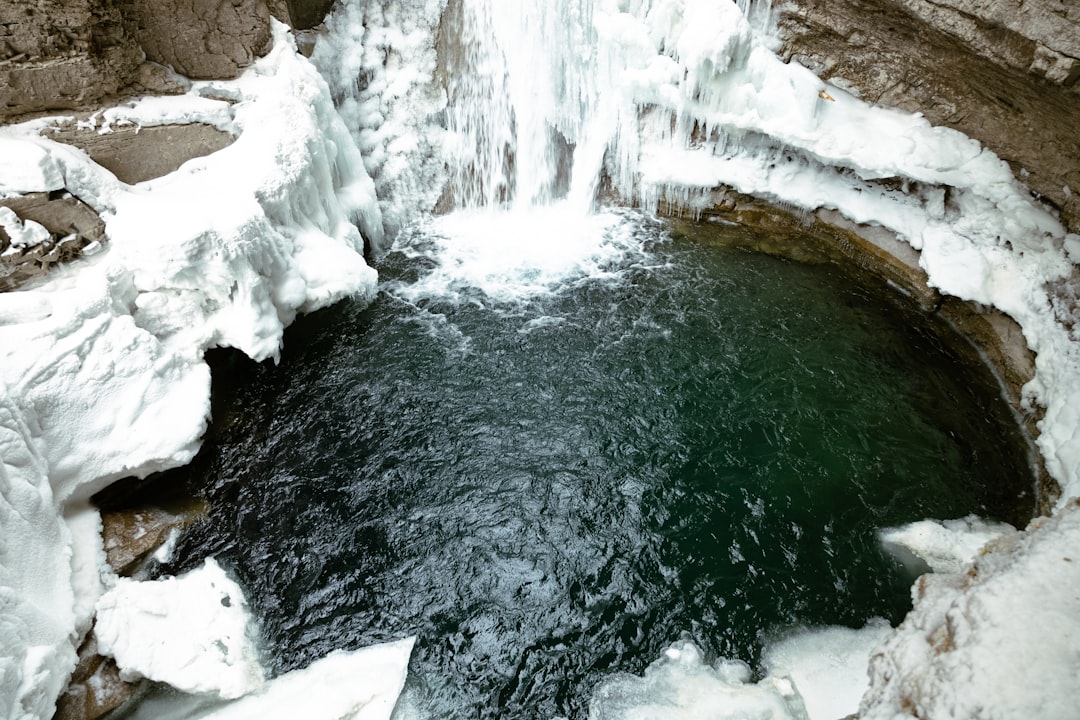
The trail is also accessible in winter, when the waterfalls partially freeze creating spectacular ice formations, but in that case, crampons are essential. In summer, the metal walkways can be slippery due to the mist produced by the waterfalls: shoes with non-slip soles are strongly recommended. Entrance to Banff National Park requires a Parks Canada Discovery Pass or payment of the daily ticket, which for an adult is around 10-11 Canadian dollars.
The sensory experience of the canyon
What distinguishes Johnston Canyon from many other hikes in the Rockies is the total sensory dimension. You do not walk beside the water: you walk within the sound of the water, within its humidity, within its refracted light. The limestone walls sometimes come so close that you can touch them with both hands at the same time, and at those points the canyon becomes almost dark even in broad daylight.
The rock itself tells a story: the water-smoothed surfaces show veins and fossils of marine organisms dating back hundreds of millions of years, when this region was covered by a shallow sea. Searching for them, while waiting for a group of hikers to pass on a narrow walkway, transforms the wait into a moment of involuntary geological observation — one of the small unexpected pleasures of this canyon.


