



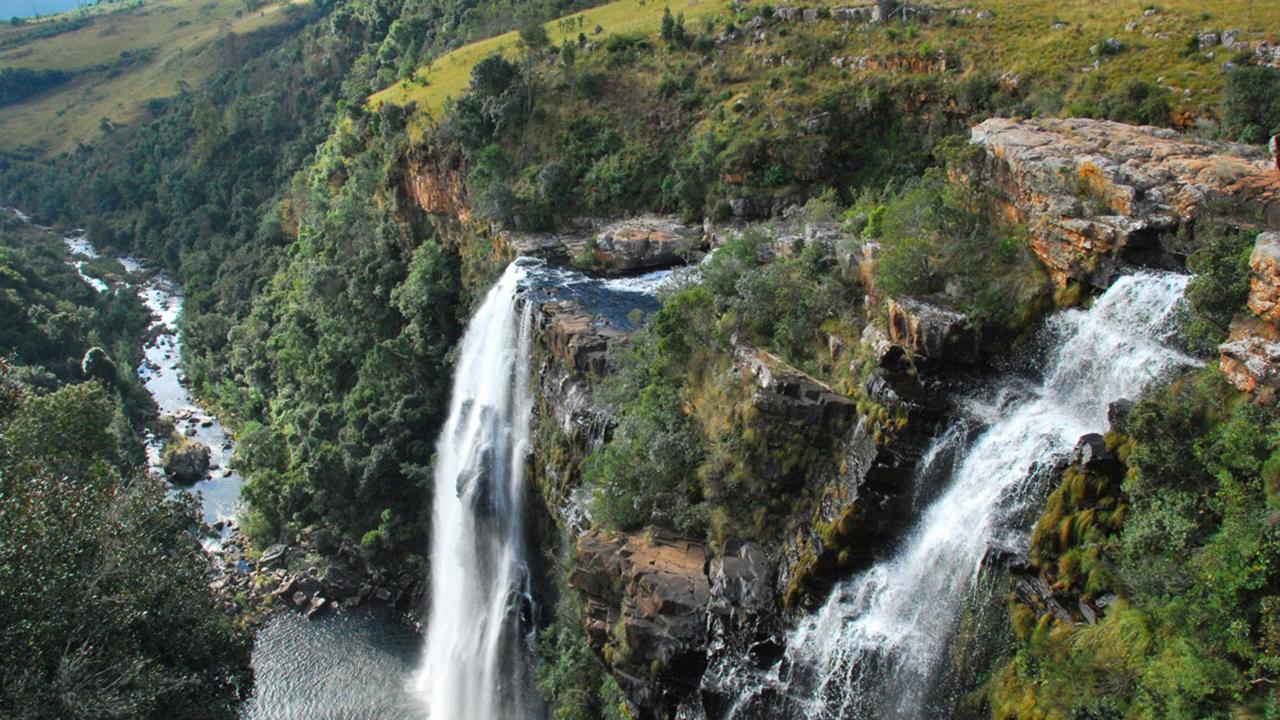
Hidden within the breathtaking landscapes of Mpumalanga, South Africa, the Kadishi Tufa Waterfall stands as a majestic testament to nature's artistry, cascading nearly 200 meters down the rugged cliffs of the Blyde River Canyon. As the second highest tufa waterfall on the planet, Kadishi is a geological marvel that captivates both the eyes and the imagination.
The origins of this stunning waterfall are deeply rooted in the ancient geological history of the region. Formed over millennia, tufa waterfalls like Kadishi are created by the precipitation of calcium carbonate from the water, gradually building up layers of porous limestone. This process has sculpted the waterfall into an awe-inspiring spectacle, drawing on the rich lime content of the region’s soil. The Blyde River Canyon itself dates back to around 200 million years ago, during the formation of the Drakensberg Escarpment, making it one of the oldest geological formations on Earth.
While the waterfall itself is a natural wonder, the surrounding area is steeped in cultural richness. The indigenous people of the region, including the Pedi and Ndebele, have long regarded the canyon and its waterfalls with spiritual reverence. This area was historically a meeting point for various tribes, fostering a rich tapestry of cultural exchange. The name "Blyde" translates to "joy" in Dutch, a testament to the explorers' relief upon reuniting with their fellow travelers in the 19th century. Such stories are woven into the fabric of the region, offering a glimpse into its vibrant history.
Art and architecture find their expression in the natural beauty of the Kadishi Tufa Waterfall. While human-made structures are minimal, the canyon itself is a masterpiece of natural architecture. The interplay of water and rock creates a dynamic canvas of textures and colors, reminiscent of a living sculpture. This setting has inspired countless artists and photographers, who seek to capture the waterfall’s ever-changing moods. The nearby town of Graskop hosts several galleries where local artists display works inspired by these natural wonders.
The local culture around the Kadishi Tufa Waterfall is a vibrant mosaic of traditions and customs. Visitors might be fortunate enough to witness traditional Ndebele ceremonies, where vibrant beadwork and intricate geometric patterns play a central role. Festivals celebrating the region's heritage often feature traditional music and dance, offering a deeper understanding of the local way of life. These cultural expressions are not only a celebration of history but also a living testament to the enduring spirit of the people who call this place home.
No visit to this part of Mpumalanga would be complete without indulging in its rich gastronomy. The local cuisine is a delightful blend of indigenous flavors and colonial influences. Dishes such as pap and vleis (corn porridge and meat) and boerewors (a type of sausage) offer a taste of traditional South African fare. For a sweet treat, try malva pudding, a rich dessert with Cape Dutch origins that has become a beloved staple. Pair these meals with locally brewed beers or the refreshing taste of rooibos tea, a signature drink of South Africa.
Beyond the well-trodden paths, the Kadishi Tufa Waterfall holds secrets that often go unnoticed by the casual visitor. One such curiosity is the waterfall's nickname, "The Weeping Face of Nature," due to the way the water and rock formations resemble a human profile. The waterfall is also home to unique flora and fauna, including rare species of ferns and birds that thrive in the misty environment. The region's diverse ecosystem offers opportunities for birdwatching and nature photography, rewarding those who venture a little further off the beaten path.
For those planning a visit, the best time to experience the Kadishi Tufa Waterfall is during the rainy season, from November to March, when the water flow is at its most impressive. Hiking trails around the canyon provide panoramic views and intimate encounters with nature. It's advisable to wear sturdy footwear and bring along a camera to capture the breathtaking vistas. Guided tours are available for those who wish to delve deeper into the area's history and ecology, providing enriching insights that enhance the experience.
In the heart of Mpumalanga, the Kadishi Tufa Waterfall is more than just a visual marvel; it is a place where nature, history, and culture converge, offering a journey into the soul of South Africa. Whether you're drawn by its natural beauty, captivated by its cultural stories, or simply seeking a moment of tranquility amidst its serene surroundings, the waterfall promises an unforgettable adventure.
