
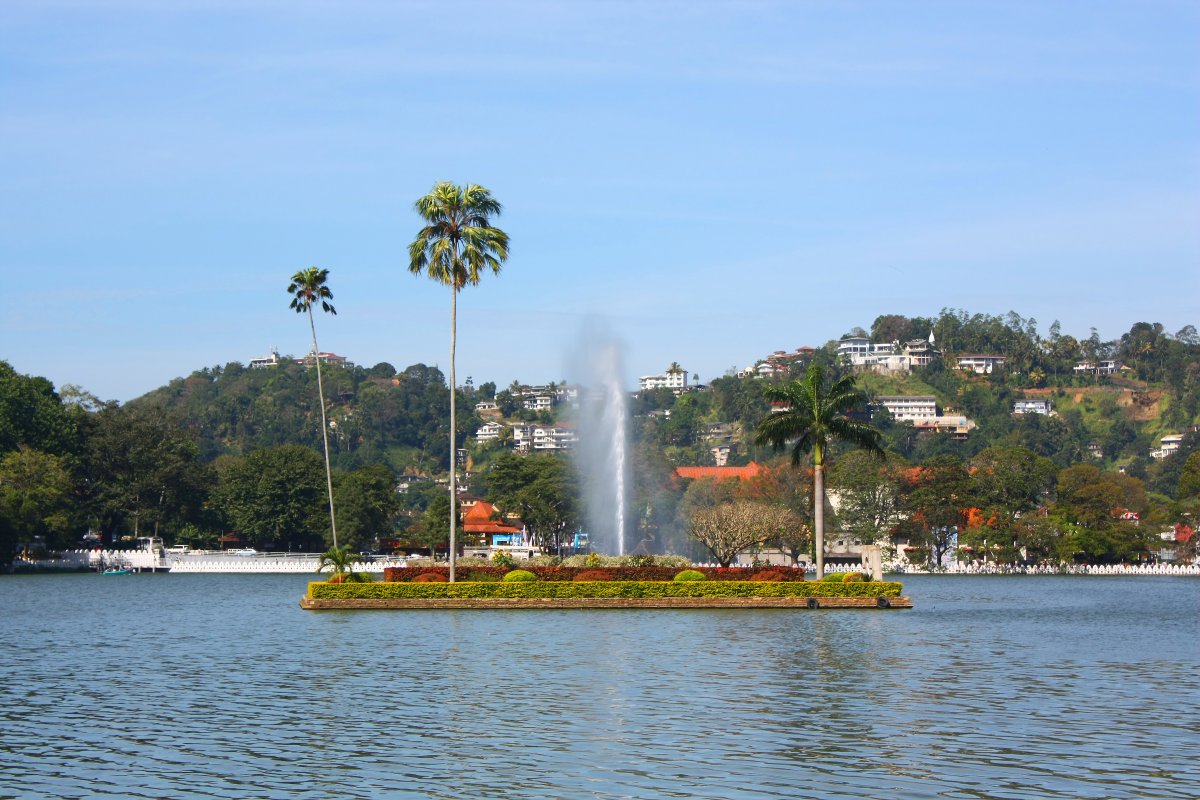

The Kandy Lake appears as a stretch of tranquil water surrounded by lush hills in the heart of Sri Lanka. The path that encircles it, about 4 kilometers long, was traced around this artificial mirror of water created in 1807 by King Wickrama Rajasinha. Walking along this route means traversing a landscape that mixes tropical nature with architectural testimonies dating back to the British colonial era and the centuries before.

The walk is not just a simple natural excursion: it is a path where every curve of the trail reveals Buddhist temples with their golden spires, Victorian-style buildings constructed during British rule in the nineteenth century, and well-kept gardens that slope down towards the water. Locals frequent it early in the morning and late in the afternoon, when the heat is less intense and the light creates fascinating reflections on the surface of the lake.
The route and starting points
The trail forms a complete circuit around the lake, generally starting from the central area of Kandy, near the Temple of the Sacred Tooth (Sri Dalada Maligawa). The path is well-defined and easily navigable, with sections of asphalt and parts on dirt trails. Most visitors take between 60 and 90 minutes to complete the entire circumference, depending on their pace and photo stops.
During the walk, there are several public access areas where it is possible to descend to the water's edge. Some points offer benches and small shelters, particularly useful during the monsoon season. The trail passes by the Royal Palace, the royal residence built in the eighteenth century, and continues through quiet residential areas where private gardens open up to views of the lake.
Temples and architectures along the path
As you walk along the trail, you encounter the temple of Asgiria, one of the main Buddhist monasteries in Kandy, recognizable by its golden decorations and colorful prayer flags. The religious structures are not isolated from the path but integrated into the landscape, allowing visitors to observe traditional Sri Lankan architecture with its multi-tiered roofs and carved wooden decorations.
The British colonial influence is evident in the public buildings and historic residences overlooking the lake. Masonry constructions with arched windows, covered verandas, and English gardens contrast with the lush tropical vegetation. These buildings, dating back to the nineteenth and early twentieth century, represent the period when Kandy was a favored hill station for British colonists escaping the heat of the plains.
The vegetation and fauna of the lake
The landscape around the lake is characterized by tropical fruit trees, palms, and dense vegetation that creates natural shaded areas along the path. During the walk, it is possible to spot various species of water birds, particularly cormorants and herons, especially in the early hours of the morning when activity is highest. The fish in the lake are visible from the shore in clear waters, especially on days without rain.
The biodiversity of the place reflects the tropical ecosystem of Sri Lanka: common lizards, squirrels, and occasionally primates such as the gray langur frequent the surrounding wooded areas. The vegetation is not wild but managed, with grass regularly mowed in public areas and trees pruned to keep the path passable and the views of the lake open.
Practical tips for the visit
The best time to walk around the lake is between 6:00 and 8:00 in the morning, when the weather is cooler and the path is less crowded. During this time, the light is optimal for photography and the sun is not yet at its peak. Avoid the central hours of the day, between 11:00 and 15:00, when the heat and humidity make walking tiring. Bring a reusable water bottle: there are no kiosks along the way, although in the central areas you can find small shops.
Access to the trail is free. Wear lightweight hiking shoes, as the ground can be wet and slippery during the rainy season (from May to September). The trail is reachable on foot from the center of Kandy in about 15 minutes, or by tuk-tuk if you prefer to start from a specific point. No entrance ticket is required to access the public trail, although some temples may request a small voluntary contribution if you wish to enter inside.


