
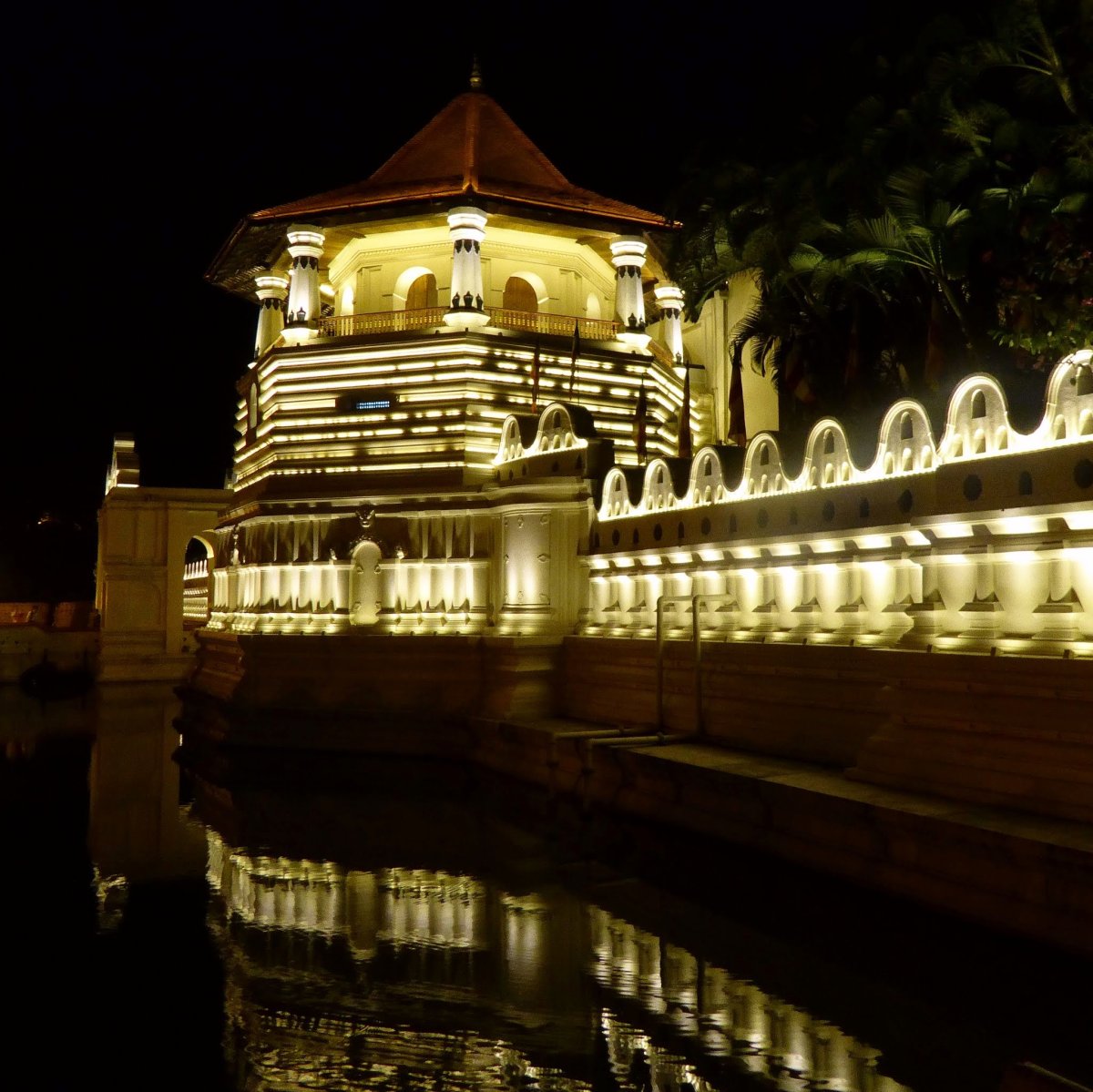

The walls of the Royal Palace of Kandy hold the silence of a dynasty that resisted European colonial pressures for centuries. This complex, sober in appearance but rich in historical significance, was the seat of power of the Kandyan kings until 1815, the year in which the last sovereign, Sri Vikrama Rajasinha, was deposed by the British with the signing of the Kandy Convention. From that moment on, the history of the independent kingdom of Sri Lanka came to a definitive end, and the palace remained as a tangible testimony of an unrepeatable era.
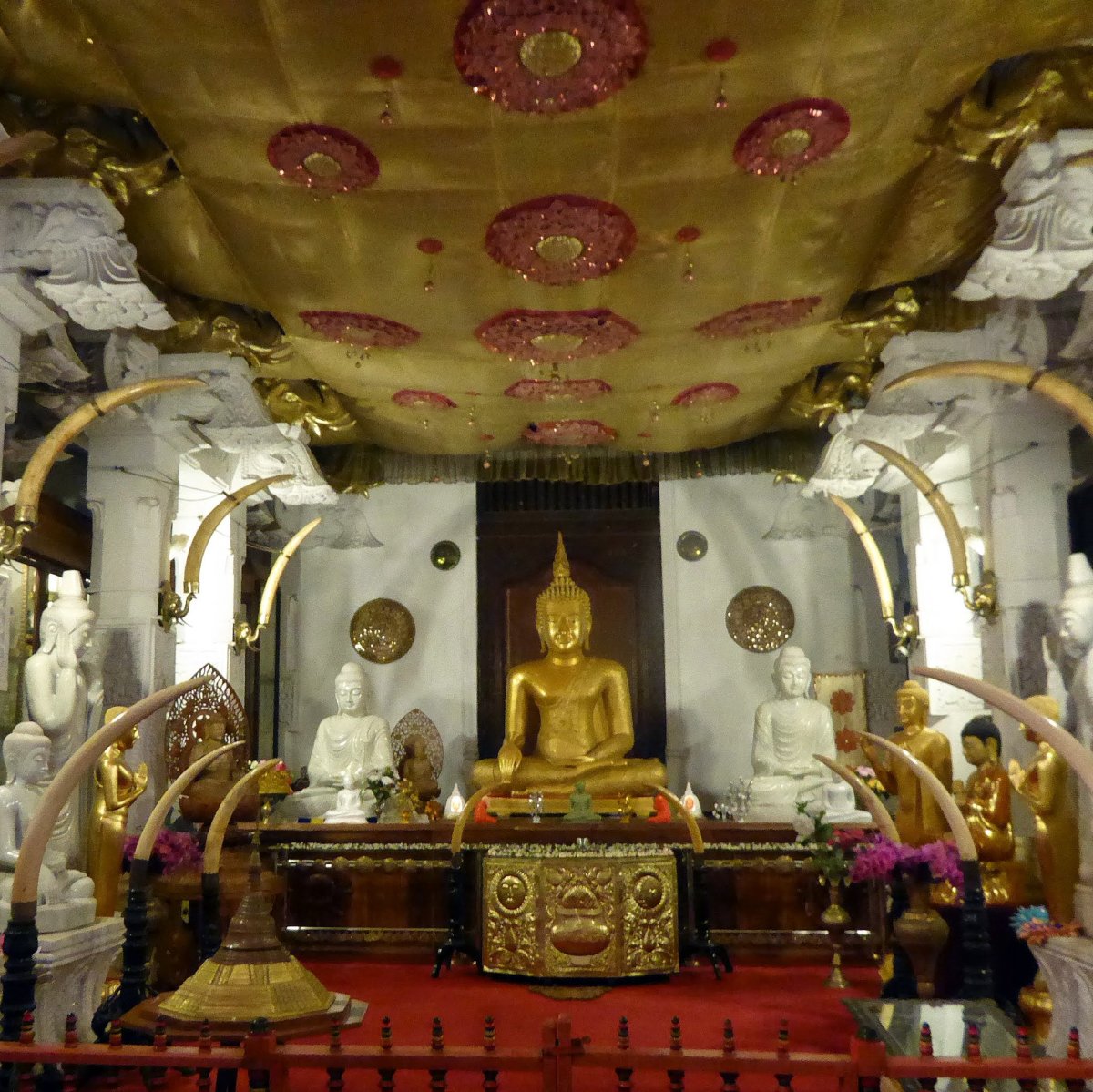
The complex is located in the heart of the city of Kandy, adjacent to the famous Temple of the Tooth — the Sri Dalada Maligawa — which houses the relic of the Buddha's tooth. This proximity is not coincidental: the Kandyan kings tied their political legitimacy to the custody of the sacred relic, and the physical closeness between the palace and the temple reflected this indissoluble union between temporal power and spiritual authority.
Kandyan Architecture: Simplicity and Function
Those expecting the baroque magnificence of European palaces will be surprised by the modest scale of this complex. Kandyan architecture is distinguished by the use of carved teak wood, double-pitched roofs with pronounced eaves, and squared stone columns. The Magul Maduwa, or Audience Hall, is one of the most significant architectural elements of the complex: it is an open pavilion where the king received dignitaries and foreign ambassadors, with columns decorated with floral and stylized animal motifs typical of Kandyan art.
The wooden ceilings still show traces of painted decorations, although time and historical events have left their mark. The original structures were rebuilt and expanded several times over the centuries, particularly during the reign of Narendra Sinha in the 18th century. Observing the architectural details, one can see how the local aesthetic has blended with influences from southern India, especially visible in the portals and sculptural decorations.
The royal gardens and the artificial lake
The palace was surrounded by royal gardens that are now partially accessible to visitors. The green space around the complex opens up towards the Kandy Lake, an artificial body of water created at the behest of Sri Vikrama Rajasinha in the early 19th century. The lake, with its perimeter of about five kilometers, was built as an ornamental and defensive element, and its surface still reflects the profiles of the temple and the surrounding hills today.
Walking along the edge of the lake allows one to observe the palace complex from an overall perspective, capturing the relationship between architecture and landscape that the Kandyan rulers wanted to create. The inner gardens of the complex, more intimate, preserve some varieties of tropical plants traditionally associated with the royal court.
Artistic treasures and objects of the court
Within the complex, it is possible to visit spaces that house objects related to court life: furnishings, ceremonial weapons, royal garments, and historical documents. Some of these objects testify to the diplomatic contacts between the Kingdom of Kandy and foreign powers, including the Dutch and Portuguese embassies that succeeded one another before British domination. The lacquers, embroideries, and worked metals on display show the level of refinement achieved by Kandy artisans.
Particularly interesting are the ivory artifacts and the chased silver works that decorated the representative environments. The wood carving — visible in the door panels and friezes — is considered one of the highest expressions of traditional Sinhalese craftsmanship, with motifs that combine lotus flowers, elephants, and mythological figures.
Practical Information for the Visit
The Royal Palace of Kandy is accessible to visitors and can be easily reached on foot from the city center, following the perimeter of the lake. Entrance to the complex is generally included or linked to the ticket for the Temple of the Tooth, but it is advisable to check the updated rates directly on-site, as they may vary for foreign tourists. Plan for at least an hour and a half to calmly visit the palace and the adjacent gardens.
The best time to visit is early in the morning, when natural light enhances the architectural details and the crowd is still limited. Respectful clothing is recommended — shoulders and knees covered — as the complex is located near an active place of worship. Avoid the days of Poya, the holidays related to the full moon, when the influx of pilgrims makes the area particularly crowded.


