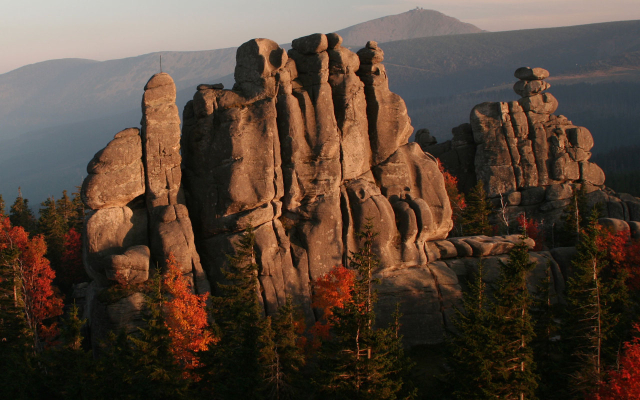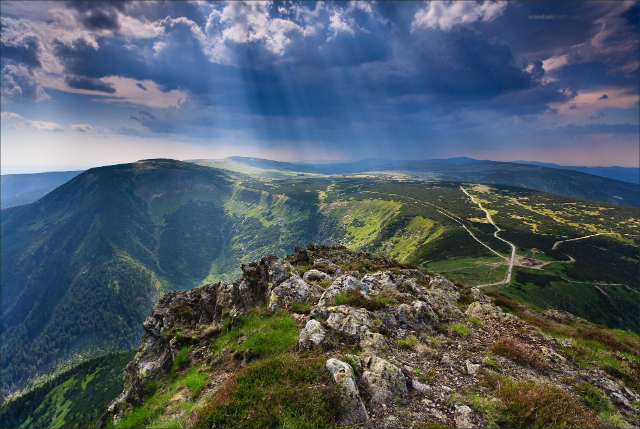

The Karkonosze National Park covers the main Karkonosze range from Mumlawski Wierch on the west to Okraj mountain pass on the east. The National Park has a status of a national geopark and is the part of UNESCO Biosphere Reserve and Natura 2000 Areas. This lands are famous for rich flora and fauna and also the unique geological structure.
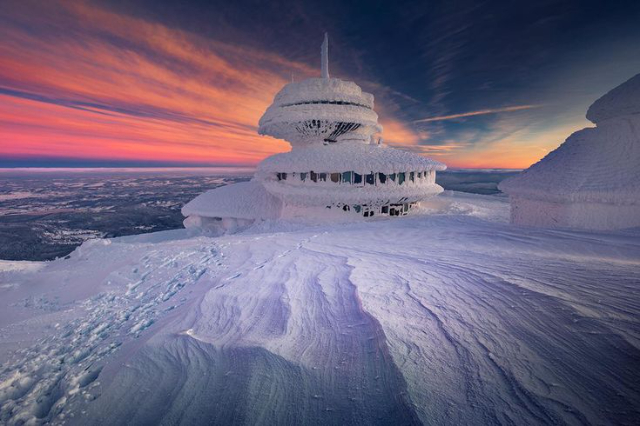
The park was opened in 1959. Its hallmark is the mentioned exceptional geological structure which consists of many types of rocks and minerals. The Park also includes two separate enclaves: Szklarka Waterfall and Chojnik Mountain with a castle: The highest mountain in Karkonosze is Śnieżka (1602 m above sea level) which can be reached by trail leading from the chairlift to Kopa. On Śnieżka top there is Saint Lawrence chapel (17th century), a meteorological observatory and a restaurant. The Park landscape is very special, and this because of its direct proximity of typical mountain forms and marshes. Extensive, plane top parts with peat bogs and marshes are accompanied by steep rock walls of postglacial cirques. The landscape is completed with mountain lakes and rocks in unusual shapes, and names stimulating imagination, such as: Pilgrims, Horse Heads, Three Little Pigs, Raven Rocks. Near the Park border, there is the highest waterfall in the Polish part of Karkonosze – Kamieńczyk waterfall (27 m high), and in a separate Park enclave, Szklarka waterfall – one of the most recognizable and picturesque waterfalls in Poland.