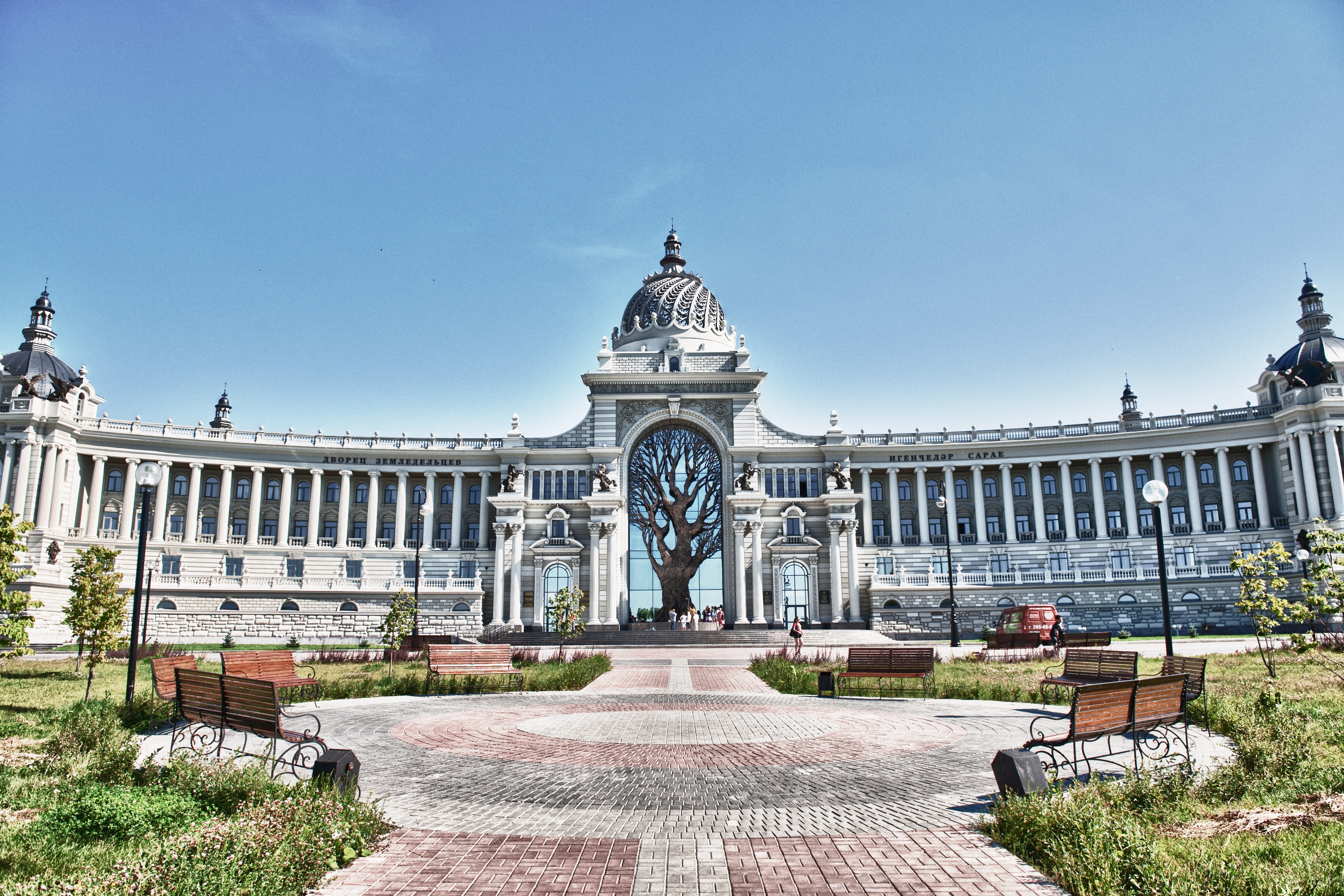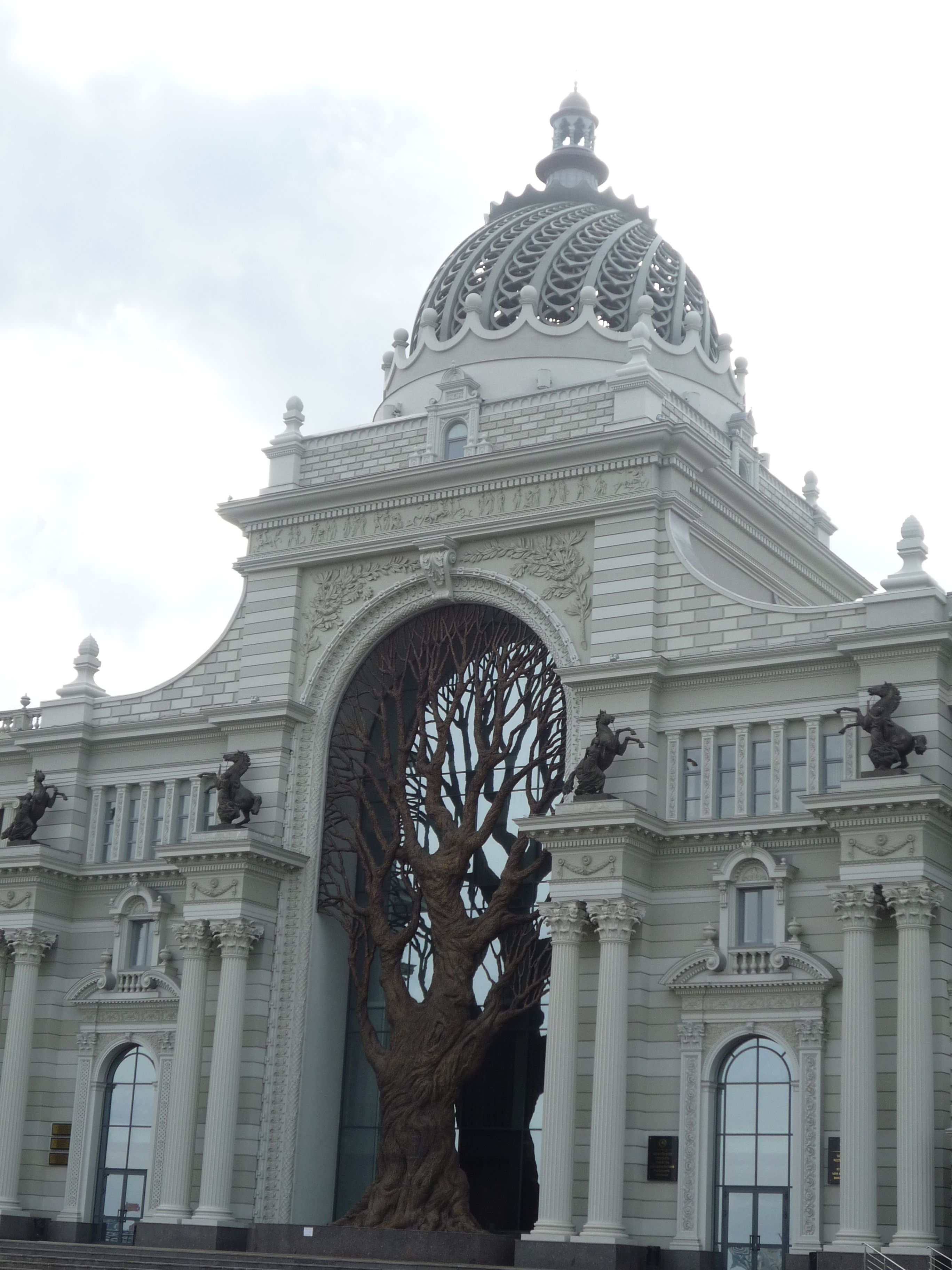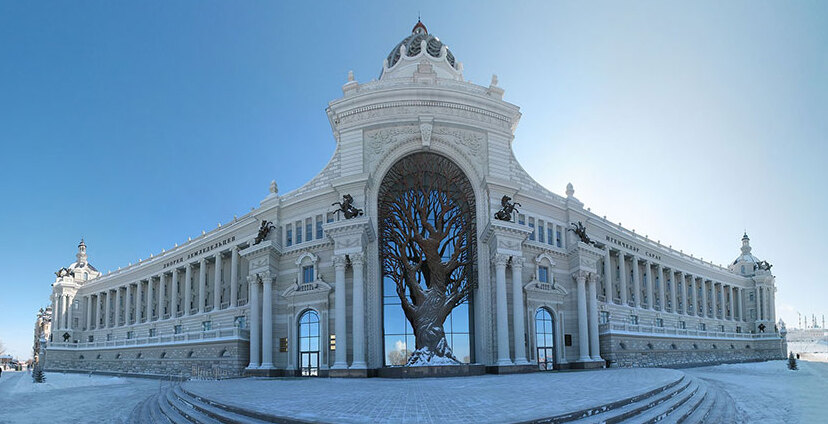

{"title": "Kazan's Ministry of Agriculture: Architectural Marvel in Russia", "description": "In the heart of Kazan, the capital of Tatarstan, stands the Ministry of Agriculture's building, a striking testament to the rich tapestry of Russian architecture. Completed in recent years, this eclectic masterpiece elegantly marries modern design with the ornate influences of Imperial Russian architecture, steering clear of the stark, utilitarian forms of Soviet brutalism. As you approach the building, its most captivating feature catches the eye—a massive wrought-iron tree, meticulously designed to cast its shadow on the lobby below, evoking a sense of pastoral beauty and agricultural homage.\n\nHistory and Origins \nKazan, steeped in ancient history, has long been a cultural crossroads between East and West. Founded over a millennium ago, the city has witnessed significant events, including the establishment of the Kazan Khanate in the 15th century and its eventual conquest by Ivan the Terrible in 1552. Each era has left its mark, shaping the identity of Tatarstan and its capital, influencing everything from language to architecture. The Ministry of Agriculture building is part of a broader effort to modernize Kazan, reflecting a resurgence of Tatar culture and heritage amid Russia's diverse tapestry.\n\nArt and Architecture \nThe architectural style of the Ministry of Agriculture's building is an exquisite blend of Baroque and Gothic elements, showcasing the ornate details characteristic of Imperial Russian designs. Its façade is adorned with intricate carvings and elegant arches, while the interior is equally captivating, featuring modern art installations that celebrate the agricultural heritage of the region. The wrought-iron tree is not just a decorative element; it symbolizes growth and vitality, resonating with the agricultural themes that the ministry represents. This artistic vision, crafted by the Russian construction firm Antica, signifies a forward-thinking approach to public architecture in a city rich with history.\n\nLocal Culture and Traditions \nKazan is a melting pot of cultures, primarily influenced by its Tatar heritage and Russian majority. The city celebrates numerous festivals, most notably the Sabantuy, a traditional Tatar harvest festival that takes place in June. During this vibrant celebration, locals and visitors alike engage in traditional games, enjoy folk music, and savor local delicacies. The Kazan Kremlin, a UNESCO World Heritage site located across from the Ministry of Agriculture, houses the Qol Sharif Mosque and the Annunciation Cathedral, highlighting the city’s religious diversity and cultural significance.\n\nGastronomy \nNo visit to Kazan would be complete without indulging in its culinary delights. The city is famed for its Tatar cuisine, offering dishes like Echpochmak, a savory pastry filled with meat and potatoes, and Börek, a flaky pastry often stuffed with cheese or vegetables. Another must-try is Chak-Chak, a sweet dessert made from fried dough soaked in honey, symbolizing the sweetness of life. Washing down these delicacies with Kefir, a fermented milk drink, or Tatar tea provides an authentic taste of the region’s gastronomy.\n\nLesser-known Curiosities \nWhile many tourists flock to the Kremlin and the vibrant streets of Kazan, few may know about the hidden art installations throughout the city. One such gem is the **"