
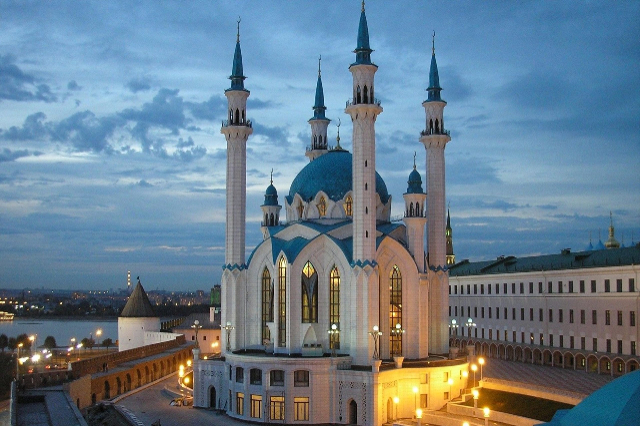

The Qolsharif Mosque, also known as the Kul Sharif Mosque, is an iconic symbol of Tatar culture and Islamic heritage, located in the historic heart of Kazan, Russia, within the walls of the Kazan Kremlin. This mosque, originally one of the largest in the Eurasian region, was destroyed during the siege of Kazan by Ivan the Terrible in 1552.
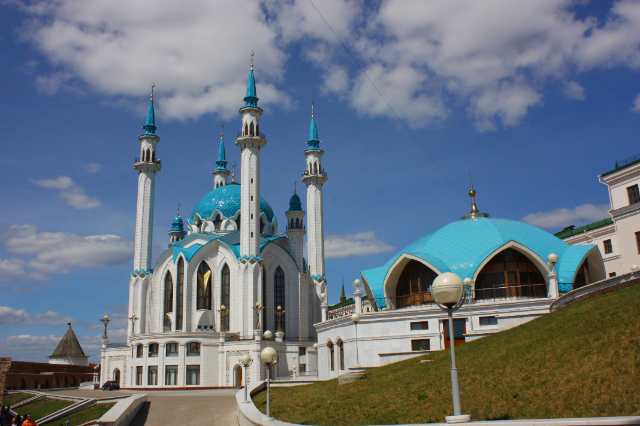
Its reconstruction, completed in 1996, coincided with the 1000th anniversary of the city of Kazan, serving as a monument to the city's rich history and resilience.
The architecture of the Qolsharif Mosque is a contemporary interpretation of traditional Tatar and Islamic designs, blending elements of modernity with historical motifs.
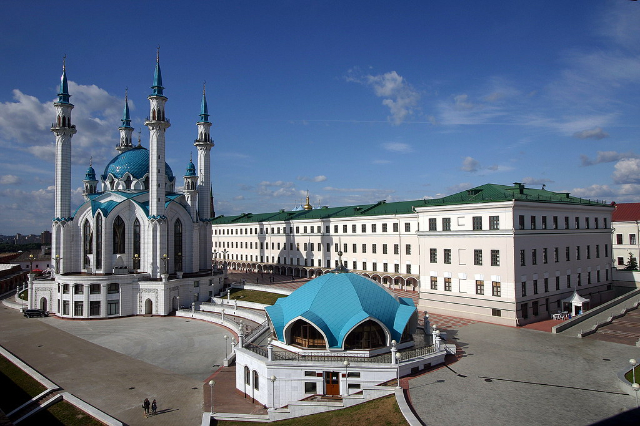
The mosque complex is a grand architectural endeavor consisting of three main parts: the mosque itself, a memorial stone, and an administrative building. The mosque's structure is particularly striking, featuring a series of blue and turquoise domes and minarets that rise elegantly against the Kremlin's skyline.
One of the mosque's most significant functions, beyond being a place of worship, is housing a rich collection of ancient Islamic books. This collection includes many rare and valuable manuscripts that offer insights into the spiritual and intellectual life of the region's Muslim community over centuries.
These texts are a vital resource for scholars and add to the cultural and educational importance of the mosque.
Additionally, the mosque serves as a cultural bridge and a symbol of reconciliation between different religious and ethnic groups in the region, embodying a spirit of coexistence and mutual respect. Its presence in the Kazan Kremlin, a UNESCO World Heritage site that includes Christian Orthodox structures, highlights the diverse heritage of Tatarstan and its capital.
Today, the Qolsharif Mosque is not only a central place of worship for Muslims in Kazan but also a major tourist attraction, admired for its stunning architecture and its historical significance.
It stands as a testament to the historical depth and cultural richness of Kazan, making it one of the most important landmarks in the city.


